
Viveka von Rosen: Women Redefining What’s Next
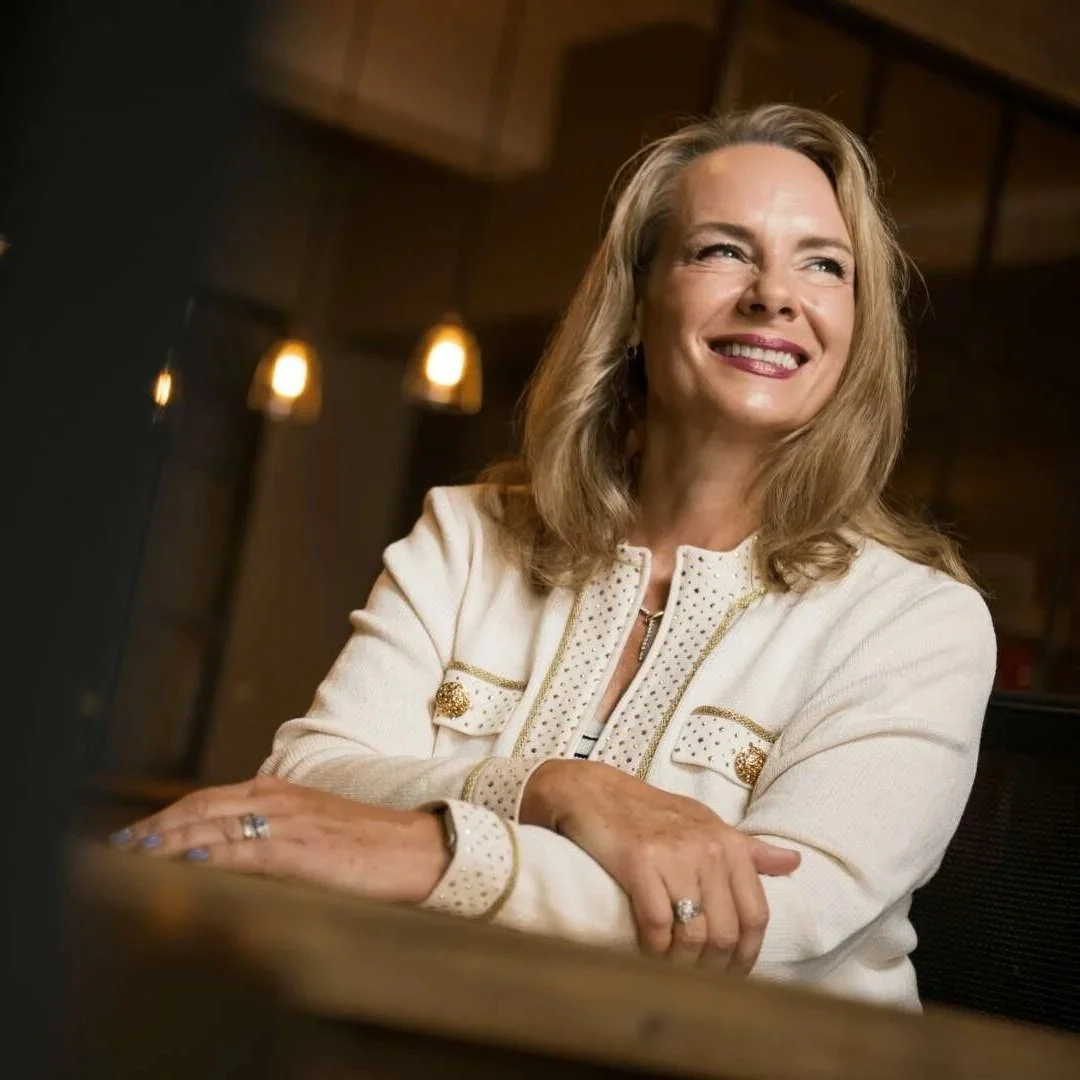
When I think about Women’s History Month, I don’t start with a headline or a statistic. I start with my mom.
She grew up in a world that told her there were two lanes for women: teaching or nursing. She chose the former. Eventually she also chose family, stepping away from her career to raise me and my brother. And years later, when most people would have told her the professional chapter of her life was closed, she reinvented herself once again. Only that time, she stepped into corporate America, climbed the ladder, and ultimately landed in a global leadership role no one had ever told her was possible.
That journey is why Women’s History Month has always been so personal for me. In one recent interview of Rounding the Bases, I was joined by a guest who amplifies what’s possible for accomplished women who refuse to settle, and in many ways, it felt like a continuation of my mom’s story.
Viveka von Rosen is a social media authority, business strategist and founder of Beyond the Dream Board who has catalyzed countless reinventions from executive to entrepreneur. By blending hard earned wisdom with modern technology, she empowers women in their 50s, 60s and beyond to relaunch careers built for the person they’re becoming…not the one they’ve already been.
SINGLE: Refusing to be invisible
One of the most powerful parts of our conversation was something Viveka didn’t fully see coming earlier in her career: the invisibility that can hit women, especially over 50. Not just being overlooked, but being present and somehow still not seen.
“Being younger, I didn’t understand about the invisibility of being a women over 50,” she said. “I didn’t understand about the fact that women don’t get their receipts a lot of the time in boardroom . . . until I was actually in that situation.”
She put language to a situation many women still experience but don’t always articulate: the need to “get your receipts”. It was a powerful choice of words, but an accurate one as well. Because too often, the idea is heard, but credit goes elsewhere. For progress to continue, it’s not enough for a women’s idea to drive the strategy itself if her name isn’t specifically attached to the outcome.
“In the boardroom, a women will have an idea and the man will get credit for it,” Viveka explained. “You got to get your proof.”
That’s where organizations need to take a look in the mirror. Because empowering women with a seat at the table is no longer enough to maintain progress. It’s about what happens after they speak. Are they getting the credit they deserve? Equitable compensation?
If the answers don’t align with the value being created, the deck is still stacked. Just in quieter, more polite ways than before.
DOUBLE: Reinvention as a power move
From the outside, Viveka had already built what many would call a dream career. Early (and recognized) LinkedIn authority. Best-selling author. Global speaker. Co-founder of a successful company. But that success without alignment came at a cost.
It was a feeling she described as wearing a “Teflon suit” that didn’t fit. Instead of ignoring the feeling, she made a move that takes real courage: walking away from it all.
Now, her focus is on helping women age 50 and older reinvent themselves, often through entrepreneurship. Not as a fallback, but a way to finally build something that reflects their own voice, experience and values. And here’s what stood out to me: the results aren’t just financial, even though she does enjoy watching clients triple their income. The real win is watching the from meet someone elses expectations to reclaiming their own identities.
“For whatever reason, the great thing about entrepreneurship is there’s no on telling you that your voice is not worth being heard,” Viveka said. “You still get to say your piece.”
The most powerful shift from fitting someone elses model to designing your own. Because when no one controls your voice, you don’t have to ask for permission to use it.
TRIPLE: Progress is not linear
One idea I shared during our discussino is that we all have to prove ourselves, but we don’t all start at a same place on the hill. for women - especially those of color or who are later in their careers - the incline is still very real.
At the same time, there has been real progress with signals that are hard to ignore. Younger men are more used to women as bosses, leaders, and broadcasters, and younger women are less willing to accept “that’s just how it is.” Viveka sees that in the women she mentors, and expects it to only become more pronounced as time goes on.
“I just don’t think the Gen Z women are going to take it,” Viveka told me. “They’re just powerful young women. And I have hope for the future when I see women like that.”
But progress is never linear. As women’s power rises, so too does backlash, resistance and regression. Sometimes it shows up as policy, other times it’s more subtle. But that’s why persistence matters more than perfection. Real change comes when those of us with any level of influence have a responsibility to keep pushing, especially when it would be more comfortable not to.
HOME RUN: reintroding yourself to tech
One of the more eye-opening parts of my conversation with the recognized social media authority centered on LinkedIn’s evolving algorithm, specifically how AI is now evaluating things like “clarity” and “coherence” across someone’s professional presence. On paper, that sounds reasonable. In practice, it’s created unintended consequences.
Professional women in their 50s and 60s often have non-linear careers. To an algorithm that has been developed based on neatly defined patterns, multiple pivots and layered expertise can appear incoherent. To a human, it’s a reflection of rich experience.
“It’s AI, so its getting informed by 35-year-old white males,” Viveka explained of the mass of content not being developed by 60-plus year old women. “And so, there’s literally been a dampening of voices because of AI.”
If the systems we use don’t recognize your story, it can quietly sideline your voice. Many of the women she works - herself included - saw their visibility plummet when LinkedIn shifted away from simple engagement metrics. But the fix isn’t to abandon tech…it’s to beat it at its own game.
“You have to have a very clear audience. You have to have a very clear offer,” she told me of the strategy it takes to master the modern algorithm. “You have to go Marie Kondo your LinkedIn profile”.
In a world where algorithms increasingly decide who gets seen, this kind of strategic clarity becomes a new form of self‑advocacy, especially for women whose stories don’t fit a narrow template. And what could be more empowering than a life that aligns with you are now, not who you were ten years ago?
Listen to the full interview here or tune in to Rounding the Bases every Tuesday, available wherever you get your podcasts.
LEARN MORE ABOUT progress FROM JOEL
Book Joel Goldberg for your next corporate event. He draws on over 30 years of experience as a sports broadcaster. In addition, he brings unique perspectives and lessons learned from some of the world’s most successful organizations. Whatever your profession, Joel is the keynote speaker who can help your team achieve a championship state of mind.
FULL TRANSCRIPT
Joel Goldberg 0:00
Hey everybody, welcome into another episode of Rounding the Bases presented by Community America Credit Union: Invested in You. A shout out to my friends right here in Kansas City. My guest is not, by the way, in Kansas City. You don't have to be, but if you're in the market for a job or you're looking to hire someone or just a great resource, check out my friends at Chief of Staff Kansas City. You can be nationwide to be able to do that as well, just they believe in culture and people and and that's why I love to align with them, chiefofstaffkc.com. Making Connections That Matter. My guest today has amplified what's possible for accomplished women that refuse to settle. Her name is Viveka von Rosen, a social media authority, business strategist and founder of Beyond the Dream Board, who has catalyzed countless reinventions from executive to entrepreneur by blending hard earned wisdom with modern technology. She empowers women in their 50s, 60s and beyond to relaunch careers built for the person they're becoming, not the one they've already been. Legacy only calls once. When it does, be sure to answer with your whole voice. And here to talk about that and much more today is my friend Vivika. And I believe, if I remember correctly, it was my our mutual friend, Howie Fleischer, that connected us. And so, so happy right now to be joined by Viveka. How are you?
Viveka von Rosen 1:29
I am good. Yeah. I was just thinking, Howie is just such a connector. He's such a great person. I love it.
Joel Goldberg 1:36
Perfect. Yeah. Well, he is the definition of peopleing, and that's who he is. He was born for that. I'm always happy when I remember who connected us, because sometimes you don't but, but a Howie connection is always a good one. And I know you and I have gotten to know each other a little bit virtually over time. First off, because this is a legitimate question for anyone, but certainly for you, where are you right now?
Viveka von Rosen 1:59
Yeah, so right now I'm in Colorado. In my house at Colorado, yeah. Loveland, Colorado. The land of love.
Joel Goldberg 2:05
The land of love. The love land the land of love. So much to talk about, and I'm glad that you are kicking off our podcasts in Women's History Month. I was telling you that that just, this is important for me from a representation standpoint. I think so much about the work you're doing, and I think I think about some of the women that I wrote about my second book, including my mom, who had similar stories from back in say, the 60s, that they reinvented themselves later in their careers, if they even had the chance to have a career, right? You know, she did. She had a career in education as a teacher because she was told that that's all she could do, teach or be a nurse. And and then she became a stay at home mom. Eventually, she reinvented herself and climbed the ranks and and ended up in corporate America and in a leadership role traveling the world that no one ever told her was possible. And so I wonder about the work that you're doing now, in part, helping women maybe reinvent themselves and find something else out there at whatever stage of life they're in. Is, is the need to do that, or the desire to do that now, a sign of progress? Lack of progress? I mean, my mom had to do it because there was never a choice. Is the deck, I guess what I'm asking, still stacked against women the way it was back then, or at least in some ways?
Viveka von Rosen 3:33
Yeah, you know, I would say yes. And I'm sad to say yes, because I had a very strong mother and grandmother for that reason, also, I was born and raised in Canada, and so I grew up thinking, Well, of course, I can do whatever I want. And, you know, I think to some extent I did, and I was lucky early on in my career. And you know, I was so fortunate and the mentors that I had around me and being younger, I didn't understand about the invisibility of being a woman over 50 and having been mostly an entrepreneur. I didn't understand about the the fact that women don't get their receipts a lot of time in the boardroom, until I was actually in that situation. And now, you know, being a woman in my 50s, reinventing myself, and then working with a lot of women who are 50 plus, also reinventing themselves. The stories are pouring in. And I was, I'm I'm blown away at this time in our world that this is still an issue. That we get paid less, you know, and I'll take some responsibility for that, but, and I think women should take some responsibility for that, because we're not demanding our receipts. But that being said, like, how is this possible? Without getting into a political discussion.
Joel Goldberg 5:02
Well, look, I'll go there briefly, because I'm always hesitant on political discussions too, because I don't know who wants to talk politics. You know, it just gets you in trouble. But I mean, look, as we're recording this, not quite a month before it airs.
Viveka von Rosen 5:22
Yeah.
Joel Goldberg 5:22
I'm willing to bet that by the time this airs the Jeffrey Epstein stuff. And here's a way for me to not make it political, because from what I could tell, there are people from all affiliations that are on that list doing those things, and all I keep thinking about is everybody trying to save themselves having done something so awful and so unthinkable that I'm comfortable talking about it. One, my name is not on the list. I don't think I'm getting any phone calls. Two, I don't even know how that works, but what I what I keep thinking about, and I know I'm going off on a tangent, but it's all going to come back to where we're going here, what I keep thinking about and why I feel like it's safe, because this is not political, this is decency. This is common sense. Is that this is a bunch of very wealthy men that have always been able to be protected, and if they want to do some things that are bad, there is a very powerful circle involving money and reputation that will protect them across political lines. And so hasn't that really gone on since the beginning of time? Unfortunately?
Viveka von Rosen 6:35
Like, yeah, it really has. And you know, you keep seeing the memes like, why do we even need the Epstein files? Can't we just trust the women? Can't we just believe the women? And then we get the Epstein files, and they're completely redacted, except for exposing the women. And I'm like, isn't this just yet another example of the abuses that that continue to go on at every level? And it's, it's disheartening, and again, you know, I never would have believed in my Canadian idealized upbringing that this, something like this, would would be allowed to continue on and on and on and on, and yet, here we are.
Joel Goldberg 7:15
Yeah, the reason why I brought it up is just that there are a million other things that I'd rather talk about. You'd probably talk about. And there are plenty of other places that you could listen to the Epstein. Hey, again, maybe it's all been solved by the time this thing is not going to be true. There's no There's no way, but no. And when it's not this, it'll be the next thing. I guess the point is, is that the deck has always been stacked to to favor anyone that is in power and comfortable, and that typically has been white men. It's not always tha, there are some women that are up on top there too, that that could be a part of some things. As a matter of fact, Epstein has a pretty strong accomplice that, yeah, yeah, that is a woman had an accomplished she's still alive, but, but, you know, I think about this a lot, Vivika in many different ways. Like, in sports, I remember growing up there, it was a big deal. Doug Williams was the winning quarterback in the Super Bowl for the, at the time, the Washington Redskins, and it was so highly celebrated that a black quarterback won the Super Bowl, and I think was MVP. And at that point, it was like there was this terrible racist bias that if you're a black quarterback, you're not smart enough to be the quarterback. Now I don't know what the number is, but I think it's well over 50% maybe 60% whatever it is. Like you wouldn't think twice about it. You could look in any big game, and both quarterbacks are men of color, and that's just, you don't think twice about it. With women, same thing in my profession, you're seeing more women. They've been on the sidelines, which is a role that I have for years. Now, they're starting to get into the broadcast booth. Now, they're starting to be able to do some roles, and instead of it being like, Oh, what is she doing here? Because people were programmed for that, you don't think twice about it. So I see progress in that type of stuff. Yet it still seems like it's a really massive fight to get there and to prove yourself, and then don't have look we all have to prove ourselves, all right. I have to prove myself that I'm good enough for my job, and then I'm going to treat people right and on and on and on and on and on. But as I so often say on this podcast, when it comes to race, when it comes to gender, some people based on the way they look, or, you know, the way they were born, or whatever it is, have to climb a steeper hill than others. And the hill I know is still steep for women, and so when I talk about that on the broadcast side, I'm guessing that kind of is reflected in corporate America and in the C suite and in the boardroom as well. Is, is it not in terms of, yes, we're starting, we are seeing more, not just this year, but in recent years. But yet, it's still a challenge. How much of a challenge is it? What are women at the highest level dealing with?
Viveka von Rosen 10:09
Yeah, it's such a good point when I think about women in their 50s, 60s, 70s now, and they got into the work space in the 70s, 80s and 90s, right? And so, I mean, I remember, even as little as I played in that world, we had to put on what I call the Teflon business suit. You know, I think of the Grace Jones, like with the big shoulder pads. And, you know, we really had to fit ourselves in to this masculine model. And I think that still plays out unless it's a woman run business with a lot of women in the executive office. I think we're still playing in the male model, and it's really hard to express authentically in that space, and then a lot of times, especially as we get older, if you're not, if you're not following the party line, your voice gets suppressed. And I, my friend Cynthia, talks about this a lot, and you hear it all the time. You're like, oh, surely that's not the case. Like, you know, I'm sure women are making this up, but in the boardroom, a woman will have an idea, and the man will get the credit for it, and, and she's a African American woman, so, yeah, like, as a black woman, she talks about, you got to get your receipts, you got to get your proof. It's, it's all well and good for your ideas to get acted on, but, but not if you're not getting the receipts, right? And so that that just keeps coming up for me in my conversations with the women that I'm having is we've got to get our receipts. And a lot of women are either, you know, they're, they're retirement age, so they're, they're naturally wanting to leave the workspace, or they're getting squeezed out because of what's happening in the world right now, or it just doesn't fit anymore. And that was my case, right? It just didn't fit anymore. And I, like, had to leave. I had this imperative. I had to get out of there. And so, for whatever reason, the great thing about entrepreneurship is there's no one telling you that your voice is not worth being heard. Well, okay, that's not entirely true. There's the whole world and culture. However, other than that, other than that, you still get to say your piece, and you still get to speak out amongst the many different platforms, and depending on the algorithms, you know, you get to be heard.
Joel Goldberg 12:47
Well, let's talk a little bit. I mean, the work that you're doing is, and I'll get more into that in a bit. But, but how did you get here? Because you've, you know, you've had your changes and your your awakenings, I guess, so to speak, and now helping so many others with it, but, but tell me about the the early steps. How did it start, and how did you end up here?
Viveka von Rosen 13:06
Yeah, so, you know, back in 2006...how much detail do I want to go into? Back in 2006, actually 2005, I was introduced to LinkedIn, and at the time, I was running a basically kosher space. And I thought, Oh, how cool is this? You know, there's 7 million people on this network, and what a great opportunity for me to do networking, business networking. And I just dove in deeper and deeper and deeper. And I, you know, part of it was intuition, part of it was timing, part of it was luck, but I really went down that path of LinkedIn and then social media. I was fortunate to get a book deal. You know, that they came to me. Wiley came to me and said, Hey, will you write a book for us? I was fortunate to be at the beginning of this, you know, of back then leading edge, bleeding edge of of social media and technology. And so I was invited to speak at a lot of different events and and actually it was, it was a pretty easy play. I mean, it was just a, it was a really easy play for me. And I got the moniker LinkedIn Expert pretty early, and then I had to prove it was true. And I, and I really, really enjoyed that for about 10 years. Loved what I was doing for about 10 years, and then I kind of got bored with it. And obviously social media changed, and by 2017 I didn't love it anymore. And so then I had the opportunity of co-founding a different type of business. I thought this was going to be my exit plan. A lot of things went right. A lot of things went wrong. But back in 2023 I realized again, like this, Teflon suit does not fit, and it's time for me to break free. And that's when I went, you know what? I really just want to be working with women and helping them find their voice in the world, because at that point I was like, oh, you know, our voices are being muted. Oh, maybe, maybe I can help women get their voices out there in whatever way, shape or form that looks like.
Joel Goldberg 15:13
I'm curious too. As I look at your website, beyondthedreamboard.com, and the offerings that you have one, I'm like, How can I go? I can't, it's for women, but how cool? Like, I think what really stands out to me here is that for all the women that that will be interested in working with you as an executive coach, there are a lot of unique options and offerings. You know, I mean, you want a day. You can do a day. You want to come out and do a retreat in Loveland, Colorado, seems like actually a pretty affordable deal for a one day tech retreat. You want to spend a little bit of money and go somewhere really cool? Oh, by the way, Vivika spends a lot of time in Costa Rica and lives there part of the time, you could go on a cool Tech in the Tropics retreat, I'm guessing. And I think I have a pretty good idea in this that that all of these options and the different people you're meeting and the impact you're having have completely energized you at this stage of your life, I'll say our life, because I'm, you know, same age range as you. Two, and I like, I love this age right now, and I'm wondering what you're getting out of this, as you're giving so much.
Viveka von Rosen 16:31
Yeah, I, for me, it's the women I'm working with. I do some one on one, and those women are just, they're finding their voice in a new way. They're finding their power in a new way. They're excelling in ways that I'm not even excelling in, and it's so gratifying for me. I had a just like a 10 Minute check in with one of my clients the other day, and she's tripling her income, going from $8,000 to $22,000, a month, just, just by following her brilliance. You know, not to get too woo, woo. But it's so gratifying for me, because, again, the things that these women are doing, you know, I've got a realtor who, again, she's just, what she is doing in the world of real estate is game changing. And she wasn't trusting her voice, and now she is and and I mean her, her success, is fantastic to watch and to be a part of. So for me, I'm just I'm I sit in awe every day of these women that I get to work with, and the fact that they look up to me and, you know, and reach out to me and say, I've been pivotal in their growth, is just humbling and an incredible honor. It's so exciting. And then, you know, and then, to a smaller extent, I've got these collaboratives where, you know, more women come in, and then I'm so excited, because I'm a geek. I'm such a tech geek, and I love the world of technology, and I love disappearing down those those rabbit holes, yeah, and when I find something that can actually move the needle, I get to introduce that, that that technology, or someone who can speak to that technology, to my women, and it's so cool to see them getting excited too. I just, it's very exciting. And then to be able to do that one, to do that in person through the retreats, either in Costa Rica or at my house in Colorado, that adds just such a different level. And it's not about making enormous amounts of money. It's pretty hard to make enormous amounts of money doing what I'm doing the way I'm doing it right now. But, I mean, I do okay, don't get me wrong. We just got back from two months in Europe, but it's but, you know, I'm it's not about making billions of dollars and leaving monuments everywhere. It's about, for me, personally, my legacy is helping other women create and leave their legacies. And so being able to do that's just honor and a privilege.
Joel Goldberg 19:17
I think, I think about this a lot, actually. That the women that you're working with right now haven't been thinking about it like in terms of every day, like the women that Vivika, but just like in general, that'd be weird.
Viveka von Rosen 19:34
Are you obsessed with me, Joel?
Joel Goldberg 19:37
I've been stalking. No. But other than we're in the same age, you know, range and and I think that we have opportunities to make impact and really like it's so uplifting to be able to define these things. But no, I've been thinking about it from this standpoint that women my age, my wife's age, oh, she says she's much, much younger than me, by the way, but truth be, be told she's two years younger. But anyway, hopefully she's not listening. But I just wonder, like with the progress or the lack thereof, and I think it's both, but the next generation of women, the Millennials, you may not be working with them per se, they're, yeah, they'll be knocking on the door, getting closer to 50s at some point, and I hope and think the world will look a little better from them and then Gen Z after them. My point is, is that those women did not deal with the same level, I don't think, of sexism and misogyny and what was for my mom's generation, this is just the way it is. And then I think for our generation, there started to be like, hey, maybe we could push back a little bit. And so I just wonder, if you ever thought of what the next generations are going to have, while also not wanting to be naive here, they're still going to deal with stuff. They still deal with stuff right now, I hear it. They tell me, I understand that they're still, there's still microaggressions every single day. Yet I believe that the next generation, let me flip the tables a little bit, the next generation of men, the Millennials and then the Gen Z, it's not abnormal for them to have a female boss. It's not abnormal for them to see a female CEO. So the expectations, I hope, change a little bit like I talked about with, you know, a black quarterback before, wait a minute, what's the big deal? This is just what we do. Do you see that moving in that direction?
Viveka von Rosen 21:30
Yeah, it's interesting. One of my favorite mentees, she's in her early 30s, and she had to break away from a marketing job where her male boss was essentially not allowing her to grow in the way she could. And so she left, and she started own business, and again, within just a few months, matched her income and then has now exploded. So it's it and and a couple other I do work. I do have some Millennial clients, same I mean, they are still working in in businesses where their their voice and their strengths are getting forwarded. And I'm like, No. That being said, Yeah, I think things are shifting. I hope things are shifting. And I just don't think the Gen Z women are going to take it, and I do. I've got a couple interns, Gen Z and interns, and they're just powerful young women. They are just powerful young women. And I have hope for the future. When I see women like that, and as women's power rises, we see, you know, we see the backlash. I mean, we see the backlash every day and and then we see women promoted to positions where it looks like they have a voice, and yet, here they are just parroting the male voice. So it's just it, I don't know, yeah, I don't want to be a pessimist, but I don't, I don't see things changing as much as I thought they had, and as quickly as I thought they would. And I have hope, because I, I think our Gen Z are just are not going to put up with it.
Joel Goldberg 23:20
Yeah.
Viveka von Rosen 23:20
I hope.
Joel Goldberg 23:22
I think across the board, with, with, with anything related to this, meaning, racism, sexism.
Viveka von Rosen 23:30
Sexism. All the isms.
Joel Goldberg 23:32
Yeah, all the isms. Ageism, all of it that, all of it, if you got an ism at the end, it's probably not good. But exactly. But it's because this has gone on since the beginning of time that, oh yeah, Progress. Progress is never linear. It makes sense to me that it should be, but at least in terms of this and every step along the way, because of a lack of comfort, I guess discomfort in you know, well, people are comfortable with the status quo. They just are. I mean, people are comfortable with the status quo, and so people are comfortable with the status quo, because change could be hard, and that also happens to benefit people in power who are going to make sure it stays that way. It stays that way. And so when there's progress, what happens? This is why we go one step back or two steps back. And so it's disheartening, right? I mean, we take two steps back, and then you take one step forward. And so inch by inch, you start going there. It shouldn't be this way. But what do you Yeah, what do you tell women that are look, I think, when they can go out there and do their own thing and just remove themselves from that structure, you've already talked about it, the amount of money, the abilities to go, but they should be able to be within the structure and do what they're doing with equal pay, and all those types of things as well. What are you advising those women that are battling that uphill climb?
Viveka von Rosen 24:52
Yeah, you know, a couple of my women, they tried to go in and create their own business, and it, it just was not happening for them, so they went back into corporate life. But that experience, they found their voice. They found their voice, and they they moved back into corporate, into positions where they they made sure that their voices were heard. And I think it's really, I mean, it's not the area I work in. I really do prefer working with entrepreneurs, but and there are phenomenal consultants out there and coaches who work with women within the the corporate structure. And honestly, that is probably just as much, if not more, so needed in order to change what's going on in the world, you know, we have to affect change from within. My friend Ronelle, she's, she's phenomenal in the work that she's doing with men and women at these top levels, to try and change the voice and change the culture. But, but it is, it the metaphor of voice. You know, it comes back to that I had a dream the other day. I won't go into it, because dreams are creepy and weird, and no one cares about them, except for the person talking about them. But I did. I had this dream where I was just screaming and and like unceasingly. I don't know where the breath came from, just this scream. And then all of these other women joined in with a scream, and I and as we were all screaming unceasingly, there was a shift. I mean, I could literally feel it in my body and and this universal shift. And I think that to me, that's, that's what that was, again, just a metaphor for the our voices need to be heard. And you think about AI it's interesting not to go down a geek rabbit hole too much.
Viveka von Rosen 26:44
No, please do. It's a great geek rabbit hole.
Viveka von Rosen 26:48
LinkedIn just recently changed its its algorithm to something called 360 Brew. So it's an AI based algorithm now, and it happened about March of 2025 is when they launched it. I think it would beta out a little bit earlier than that. But interestingly enough, a lot of the women that I work with and a lot of the women that I'm in community with, their their their stats just plummeted. Mine included, right? And I thought it was because when I made the shift from from corporate, when I made the shift, when I made my pivot, LinkedIn didn't like it, you know? I just thought, well, LinkedIn doesn't like people to pivot. Actually, small part that was true, but, but what really happened was LinkedIn has an AI algorithm. It has completely changed how it looks at profiles, engagement, posting, networks, etc, and so where it used to be based on signals, just how likes, shares, comments, etc, dwell time, things like that, on people's posts, it is now working in these mini sessions and looking at a person's profile and How clear is that profile, and then looking at persons, a person's post, and how clear is that post, and look in person's network, and is it aligned to their their posting, and looking at their engagement, and how aligned and coherent is that? Well, the thing is, for men too, for sure, in their 50s and 60s, but especially for women, we have had such varied careers, and we might still be working in one thing, but launching another, and there's a lack of coherence there, at least according to the AI algorithm. Plus it's AI so it's getting informed by 35 year old white males, and it's getting informed by the mass of content out there, which is not created by 60-plus year old women. And so there's that, there's literally be been a dampening of voices because of AI. Now, I love AI. I use it every day. I'm so grateful for it. It has made such a difference in my business. And when we're looking at things like deep research, and we're looking at AI and forming something as massive as, you know, LinkedIn, at a billion users, it is going to have a negative effect on women over 50, and so, you know, it's, it's a true life example of what I've been speaking about, metaphorically.
Joel Goldberg 29:16
Yeah, and in real time that the deck in real, the deck remains stacked. Whether intentionally or not, or maybe it's just based on representation of who?
Viveka von Rosen 29:26
I think its just representation. I don't think it's intentional. I don't think there's anything nefarious about, you know, 360 Brew and, you know, and it's happening, and there's things we have to do to combat it.
Joel Goldberg 29:39
So how do you, how do you combat that? Before I get to my baseball themed questions.
Viveka von Rosen 29:42
Yes, yes, clarity and coherence. And so it's a lot of going back into your start with your profile. Go into your profile. Look at the headline, look at the about section, especially the first you know paragraph or so. Look at your experience sections. Make it a coherent story. Mm. Yeah, you can't serve multiple you can't be a jack or a Jackie of all trades, right? You can't. Jackie's one of my millennials. You can't be a Jackie or a jack of all trades. You have to have a very clear audience. You have to have a very clear offer, and you need to make sure that that audience and that offer is what your whole LinkedIn profile is focused on, down to the content you feature on it, down to the skills that you have listed, down to the projects. And so there's a lot of decluttering. I'm like, you have to go Marie Kondo your LinkedIn profile. You got it. You got it. You got to streamline it. You got to delete things that are no longer relevant. You have to delete connections that are no longer relevant, which is so fun for me, it I'm down to 20,000 and I got about another 10,000 I need to clear out of there. But, yeah, you got it. You got to clean up your network, and you've got to make sure that the people and the content that you're engaging with, again, is in line, aligned with your with your audience, once you start doing that, though. And again, this is just experimental and experiential, but for myself, and certainly for my clients who are now have taken these actions, their visibility is starting to increase 2x or more. So, whew, there is a way.
Joel Goldberg 31:23
Yeah, yeah, yeah. And of course, with the algorithms, there'll be an adjustment again whenever the next one comes. And that's just part of playing the game, exactly, which is fun for some people. And by the way, to have a label, or self label of tech geek, I think, is a good thing.
Viveka von Rosen 31:40
But yeah, I know. I love it. I always have.
Joel Goldberg 31:43
I'll never, yeah, I'll never be the expert. I'll never be the highest level of, no, what's the word geekdom? Geekiness? I don't know geekiness, but I it's a, it's a fun rabbit hole to go down. A fun rabbit hole, for sure. Yeah, I enjoy it because you're constantly learning, and it's never enough, by the way. Like more need more. Need more. Need more. So, yeah, exactly, whole different discussion on AI and tech, which actually I might have one question left on that in my final four. But let's get to the baseball theme questions. And yes, you've done a lot, you're doing a lot, you're gonna do a lot more. What's the biggest home run that you have hit in your professional career?
Viveka von Rosen 32:20
You know, I think from the outside looking in, most people would say that my time as LinkedIn Expert was my biggest professional home run. You know, like I said, being an early adopter of social media, teaching LinkedIn in its infancy, the book deals, the International speaking career, you know, being able to work with and impact so many professionals growing their business. I mean that that was huge. It was definitely huge for me. But I think what really was the home run was I trusted my intuition early. I followed, like I said, What genuinely energized me and I had the courage, you know, to build something before there was a clear roadmap. No one even knew what social I mean, most of my classes back in the day was teaching, what is social media, and then how do you use it? I mean, it was crazy. But I think it's that willingness to listen to my instincts and to take those risks that created the results that they did, and that, if I look back, has been pretty consistent across my career, being able to see change coming early, and then really take something that's kind of complex, or at least appears complex, and make that clear for people, so that they don't feel overwhelmed or left behind or just give up. And that's, that's really what I'm doing with my women today too.
Joel Goldberg 33:50
It's a great home run. And I mean, you've talked about LinkedIn a lot, I guess when you're internationally known as the LinkedIn Expert, that's a home run.
Viveka von Rosen 33:58
They keep pulling me back in.
Joel Goldberg 34:01
That's how other people will see you, and that's a great thing, yeah, but I love the home run there. How about a swing and a miss along the way? And what did you learn from it?
Viveka von Rosen 34:09
Yeah, it's funny, because again, from the outside, it's like, Oh, that wasn't a miss. But when I co-founded Vangresso, it looks it looked like a home run, because we were financially successful. You know, we grew the business really quickly. It helped that we were, you know, teaching digital selling during Covid. But for me, it was a miss, because I was moving further further away away from the work that was meaningful to me that and that really reflected my voice and strength. And ironically, you know, my title is Chief Visibility Officer, but I became less and less visible and my voice became less and less heard. So I mean for me, the miss was I was out of alignment, and I, the win in that was that I learned my intuition wasn't a nice to have. Like it is a super strategic asset that I absolutely have to follow. And and, you know again, the miss the swing and the miss was Vangresso. Wasn't a miss, but I stayed too long trying to chase after what I thought I was, you know, the the exit strategy, the retirement plan, the, I mean, the it was nice making that much money, not gonna lie, but it wasn't worth it. It wasn't worth it in the long run for me.
Joel Goldberg 35:40
All right, that's a good one. How about small ball? The little things that add up to big results. What's small ball to you?
Viveka von Rosen 35:47
Yeah, and, you know, not to get too woo, woo, but it's the it's the it's the morning journaling, it's the meditation, it's the it's the it's the it's the actions that build up my intuition, because that really is the only thing I have to go, go go by. Because if we've not learned anything, we've learned that all of this out here is not real and and there is no truth, and there is no reality. And if we're going to, if we're going to be successful, for whatever we call success, right? It comes from within, and we got to trust from within. And the other thing we talked about the very beginning was, was peopling, which is for me, simply, whenever someone pops into my my mind like I'll call them, sometimes I'll get lazy and text, but I'll call them and and those conversations inevitably lead to something that that moved me forward in my life or work, or move them forward in in in life or work. And I noticed, like I said, we were in Europe for seven weeks. And, you know, just because we were in Europe and the time zones were wacky, I wasn't peopling because I wasn't sleeping well and and and again, time zone. I wasn't journaling, I wasn't med. I wasn't and, man, I I just felt misaligned. And it took me, it took me a while to get back into my practices, and now I'm feeling more coherent and more cohesive. But yeah, those small balls like I got to do them right, to stay grounded, responsive and effective.
Joel Goldberg 37:25
It's really interesting that you said I just, I don't know, just some synergy here, because that's kind of become my small ball in the last year. So the journaling, not so much. I haven't found the ability to repeat that, even if I'm typing it into my phone, because I can't read my handwriting, but, yeah, but the but the morning meditation? Yep, for some reason I'm running late or whatever. It's still gonna ask me at least five minutes, but typically 10 to 15, and my day is better because of it. I feel it. And by the way, when I'm distracted, if I can't help it, and I start scrolling a little too much, which I try not to do before I wake up, the meditations never is good when I'm watching too much news and my mind is on some of the junk that's going on in the world, I am not as good. So it's just a reminder. You know, going, going and unplugging for a month in December and living on the beach was like, I saw what the other side looked like, yeah, yeah. And then, and then, and then you get pulled back.
Viveka von Rosen 38:22
It's hard. Not Yeah, you know, it's, it's tough. I, you know what you said about journaling and and I get, not everyone's a writer I am, but not everyone is.
Joel Goldberg 38:31
I am a writer. I just don't know. I haven't been able to create this writing habit.
Viveka von Rosen 38:35
THIS writing habit. But what a lot of people are starting to do now, which is interesting. And there's, there's, there's gpts all over the place that help with this. My friend Maggie just created a really cool one. But also you could just do the verbal download. And what's been really interesting is, I was at an event recently, and I can't even remember who the person was or what they were talking about, but we were talking about the three o'clock cortisol, wake up. I think mostly women have it. I don't know about men, but we get at three o'clock in the morning menopause. I'm awake. And one of the ways of combating that is just earlier in the day, not right before you go to bed, but just go like, just get on your, your and just turn your your audio on and just verbally get all of the complaints and the concerns and the worry and the thoughts and the things, and you can just leave it at that, or you can plug it into AI, which will make sort of sense of it for you. But she was saying that when she does that, she doesn't wake up at three o'clock in the morning with the bump, yeah, and I, and so I've been doing it a couple days, and I'll be damned, does it actually work.
Joel Goldberg 39:47
I want to be careful here. I'll just say I'm going to pass that story on to someone I know. Yes, please do. I might get up to the three in the morning. I mean, I think anyway, we'll leave it. We'll leave it at that. Let me get to the four final questions as we round the bases. And, you know, we always, and my executive producer, Ashley does a great job of all my research. And some guests, you're one of them have, like, I look at it and I'm like, I could probably do 10 final questions. So that's you. So I got to figure out which four I want to do. I mean, when I start reading up and down the list here, just the charitable involvements are so unique. But then the awards, Top 10 Most Influential Women in Social Media, 2019, it's there with you forever. Top Ranked Blog, Top 50, so on and on and on. Right LinkedIn Top 25. You've, you've received all that. I understand what awards are. I understand what they're not, but you've been recognized, rightfully so, for all of that. But then there's just the unique interests and the background. You are the first ever Countess, or born a Countess, guest that I've ever had on this show. So So there, I'm speaking to a noble woman here, at least in terms of the course of history. Can you explain this a little bit? Because, if I understand it correctly, you were a Countess until you got married, and I don't know if that's exactly how it works. And then I was also reading something that someone at one point said that you had a better chance of getting struck by lightning than ever getting married.
Viveka von Rosen 41:29
Yeah, yeah. Oh, my God, Doug, the toad. So, so, yes, my father's a Count. Was a Count. It's interesting, because one of the big things that we did when we were in Europe was we went back to the, you know, the family homes. And by homes, I mean big ass castles. And my husband, absolutely. He's addicted to ancestry.com, so he is. He has been taking such a deep dive into my family history, my dad's side, Swedish family history, back to the 12th century. And I discovered so I've been blaming him for losing my title, but I get to keep my title. But if we had had children, they so my husband doesn't get a title by being married to me, and if we'd had children, they would not have been titled. But technically, I am still a Countess. Also, I kept my last name, okay, other than his. So yes, you can, you can
Joel Goldberg 42:18
Change the introduction and
Viveka von Rosen 42:19
Yes, Countess Viveka von Rosen, it's done so much for me in my life. Funny story though, my my my husband's son, one of his young friend back when they were like, 13, came over and Alan, and I'm like, why is this kid not looking me? Like he was talking to me like this? Why is this kid not looking at me in in the face? Like, why isn't he not looking at my eyes, you know. And apparently, Alan had told him that I was a Countess and he was not allowed to look at me. And
Joel Goldberg 42:48
Oh, my God.
Viveka von Rosen 42:49
Anyway, it's still a funny story to this day.
Joel Goldberg 42:54
Yes, it's a tried and true tradition in the in the history of noble men and noble women. You are not allowed to look them in the eye.
Viveka von Rosen 43:04
Not allowed to look at them in the face. You may look at me in the face, and then, oh yeah, Doug the toad. So back when I was in my late 20s, I worked for this Canadian lawyer in Miami. All the bad things you think about. I have some lawyer friends who are amazing, don't get me wrong. But anyway, when you think about like all the bad things lawyers are, he was one of them, and he Yeah, he literally told me, because I wasn't married at the time. I was, I was living with my my boyfriend slash kind-of fiance, but he basically told me that women had a better chance of getting hit by lightning than they did of getting married after they were 30. So I actually thought of him when I got married at 50 years old for the first time to my husband now. Like, two middle fingers to you, Doug.
Joel Goldberg 43:58
By the way, Doug is not the sign of progress anyway.
Viveka von Rosen 44:01
No, indeed. Oh, and he had the most phenomenal wife, who he married for her money, and who he cheated on the entire, like, he was probably in the Epstein files, is all I'm saying.
Joel Goldberg 44:12
Yeah, yeah. Well, if he's not, someone like him, is.
Viveka von Rosen 44:16
Exactly.
Joel Goldberg 44:17
Alright, we'll move on. We'll move on from Doug. It was really just my way of weaving all this together with the story about the Countess. And now I'm glad to hear that you still technically are a Countess.
Viveka von Rosen 44:27
Yes, I am.
Joel Goldberg 44:28
More importantly, more importantly, you're married, but your husband just can't become a Count, I guess.
Viveka von Rosen 44:35
Exactly, exactly, it's something he's got to live with.
Joel Goldberg 44:35
He gets to go visit the castles. It's all
Viveka von Rosen 44:40
And kiss the ring upon occasion.
Joel Goldberg 44:43
I mean, we all should be doing that. So second question, as I round the bases. You know, some people have interesting highlights. I was reading that you became a hang glider pilot at 15. But I also read that you could do underwater basket weaving. Um. Oh, actually, I like what Ashley wrote here. Can do also do underwater basket weaving, underwater, as opposed to the over water. Really? You can do that?
Viveka von Rosen 45:09
I could, technically. My mom was actually a nationally known basket weaver. She after her whole education career, and she also moved through the ranks, etc. When she retired, she just loved creating, right? So she she was, she was a nationally, internationally known, I guess, basket weaver taught basket weaving, and so I learned how to do that also. I'm a scuba diver. So I was thinking that would work out really well, because the reeds would be wet, they would be malleable, like that could be a whole thing underwater basket weaving. It really could be maybe that's what I'll do next.
Joel Goldberg 45:34
Yeah, I mean, you do strike me as a person that's always finding the next thing, and although it seems to me like you're really enjoying where, where you're at right now, you and your husband has spent a lot of time traveling through Europe. I know you're well traveled. Do you have a Do you have a bucket list spot, third question, or somewhere you either love so much you have to go back to or somewhere that that is on your list?
Viveka von Rosen 46:08
Well, I definitely need to go. I mean, I absolutely love New Zealand. I've been gifted the opportunity to speak there a few times, and I'd love to go back and just spend more time there. Really want to go diving Ram Malaysia. Scuba diving Ram Malaysia, we haven't done that yet, and from everybody I talked to, is just the most superb diving in the world. So that is most definitely on the bucket list.
Joel Goldberg 46:33
All right, walk off question. And everyone that wants to learn more about all of Viveka's work beyondthedreamboard.com, you can learn about the podcast, Gray Matters. You can learn about whatever it is, LinkedIn, blog, books, the whole works. It's all there. Last question. I talked about it before, what in tech is most exciting to you right now?
Viveka von Rosen 47:02
All of it. I mean, it's such a hard it's such a hard answer. I'll say all of it. And then with the caveat that I'm loving Substack right now. I don't have a huge audience, but it feels to me like social media did back in 2006, 2007. It feels more clean and more pure. Yeah, so I'm just loving Substack right now.
Joel Goldberg 47:21
I think that's a good point that you make, too, because I was a little inspired when we first met to try to do a little bit more exploring on on Substack. And then I think I wrote one thing, and, you know, nobody looked at it, and I, I let my ego get in the way. I'm like, Yeah, whatever. But I, but I remember you saying, like, it's not, you're not going to get a lot of numbers on there, or maybe eventually you do. So I think just, just write, right?
Viveka von Rosen 47:45
Just write, just write to get and I think someone like you could kick butt on it. But the not, this is a whole other show, but there's the posts, which is the long form articles that that you probably wrote, but what's going to get you seen by the bigger audience is the notes that go along with the posts, and just the notes that you write, which is the shorter form. And so for you being who you are and what you do, and the audience that you've already inspired, get those notes out there. And I think you'll start seeing more, more engagement.
Joel Goldberg 48:16
We'll get there. Add it to the list, right?
Viveka von Rosen 48:18
Add it to the list. One more thing.
Joel Goldberg 48:19
Including the LinkedIn facelife and on and on and on. It never stops.
Viveka von Rosen 48:23
I left you with lots of homework.
Joel Goldberg 48:25
Yeah. Well, you know that means you're challenging me, which is good. Viveka, keep up the great work. This is so much fun. Congrats on all the success and all the impact that you're making. And I look forward to continuing to follow and staying in touch. And thanks for spending time today.
Viveka von Rosen 48:40
Absolutely. Thank you so, so much. It's been an absolute pleasure.