
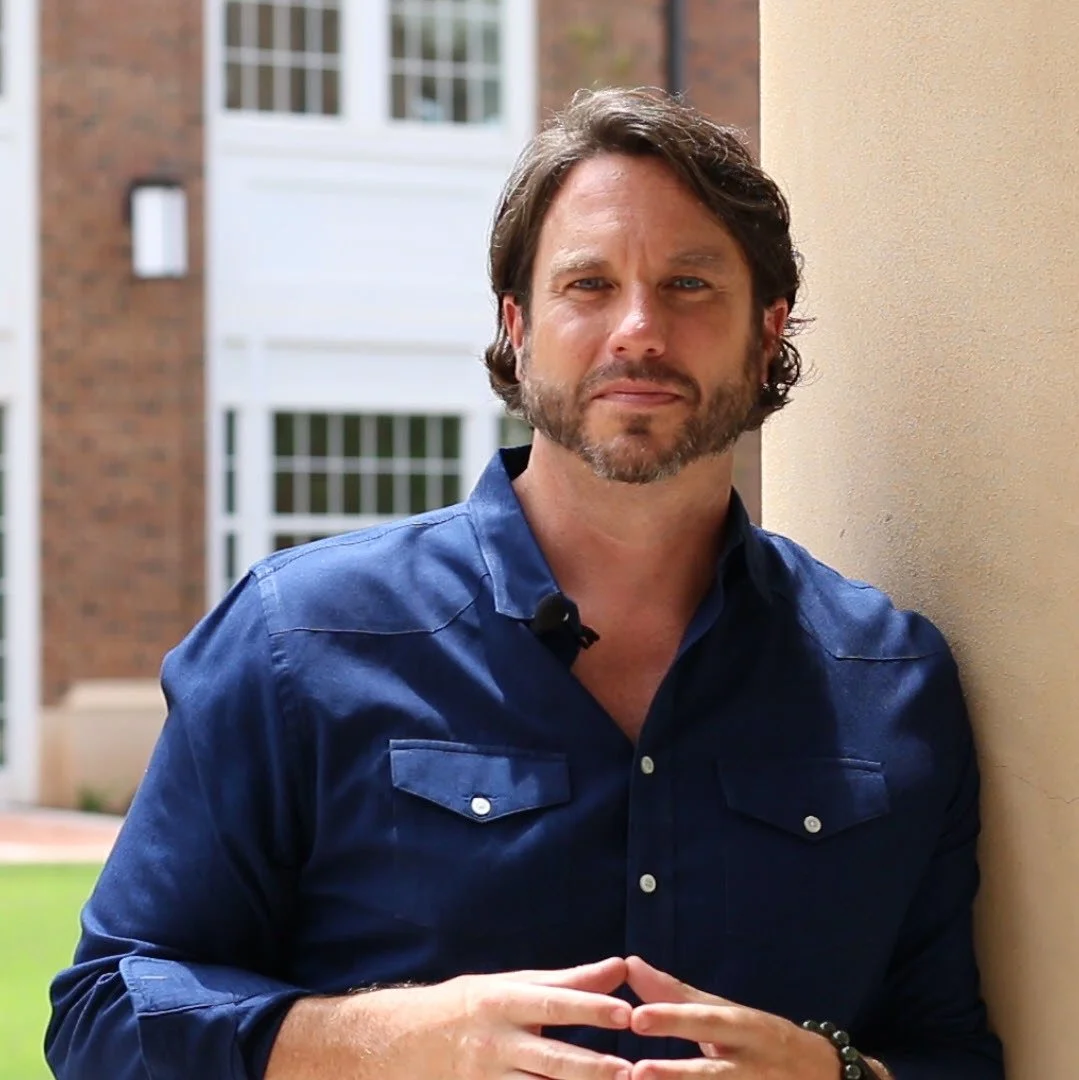
Tommy Breedlove: Stop Chasing. Start Building.
Over the course of my 30+ year career as a sports broadcaster, I’ve learned that scoreboards tell you what happened, but not always what it means.
As seasons unfold they bring big wins and big losses, but it the moments in between that reveal who people really are. And I don’t mean that only in the context of sports, either. It’s as true in the corporate world as it is in baseball, which is why I cite those “in between” moments often in my keynotes on trust and culture.
But it’s during my podcast Rounding the Bases that I really get to take listeners beyond the highlights. That’s exactly what I did in one recent interview, and the lesson left even more of an impact than usual.
My guest Tommy Breedlove had reached what many would consider to be the pinnacle of success. On paper, he was a high-achieving businessman. But when he looked beneath the surface, it wasn’t everything he’d hoped. Before turning the page to the next chapter, he was forced to confront what the previous one had taught him…and the things left unresolved.
SINGLE: recognizing what the season reveals
Tommy reached a level of professional success he had once only dreamed of. He imagined the immense happiness it would bring him, only to learn that it didn’t actually resolve any of the pain or insecurity he carried. In some ways, success only made them harder to ignore.
“Money and success is a magnifying glass,” Tommy said. “And they’re fleeting.”
With every promotion, pay raise, and accolade earned he hoped that he could silence the emptiness he carried. Instead, he leaned they only amplified.
“I thought if I worked my way all the way up to the top I would be happy,” he explained, before continuing, “But success without fulfillment, success without significance, and success without purpose…is just success.”
Acknowledging that sometimes that things we achieve on the outside don’t change what is happening on the inside can be the hardest part of any chapter. Tommy’s success was real, and so too were his accomplishments and work ethic.
The problem was that they were answering a question he was no longer asking. And you can’t know what belongs in the next chapter until you’re willing to be honest about what isn’t working in this one.
DOUBLE: the value of the chapter
Conducting an honest inventory of your life today naturally leads to another question. If this chapter isn’t where I’m meant to stay, what is it meant to give me?
For Tommy, that turned out to be quite a lot.
His years in finance gave him experience, discipline, relationships, and a deep understanding of business. They formed the foundation of something substantial, and he didn’t try to minimize the effort it took to get there.
“I worked my ass off for it, man,” he told me. When I asked whether he could go back into that world and succeed? His replied unequivocally, “I would crush it.”
Tommy was more than able to do the job. He chose to walk away from it because he realized that being capable of something and being inspired by something are two very different things.
“It wasn’t my calling to do financial engineering, mergers and acquisitions, and public accounting,” Tommy explained. “My calling was to go help business leaders make even greater impact of their life.”
It’s possible to reflect on experiences that are over without feeling they were wasted. I like to think of turning the page as giving myself permission to keep the best of what came before…the skills, lessons, and perspective earned the hard way.
The only parts that get left behind are the ones that no longer fit. And sometimes, what we learned in a season we thought we had outgrown becomes exactly what we need for the one ahead.
TRIPLE: Seeing with clarity
Tommy’s story is one of transformation, but it was possible because he didn’t take it on alone.
Before finding corporate success, Tommy found himself in prison. He had fallen victim to the cycle of violence he grew up witnessing, and at a pivotal point in his youth, an older inmate named Tony helped him find a different way forward.
“With his accountability and his guidance, when I got out, I went to work for a factory in the day, community college at night,” Tommy shared. “I went from literally a jail cell to one of the top financial and public accounting firms in three years.”
Tony showed Tommy that a different life was possible. Years later, as Tommy began to wrestle with the kind of self-destructive behaviors glamorized in The Wolf of Wall Street, he again found strength, this time in his marriage.
“She loved me when I couldn’t love me,” he said. “That’s one of the mountains I had to overcome.”
There is something profound in that, and sometimes we need someone who can show us our potential, especially when we can’t quite see it yet ourselves. Before you turn to your next chapter, don’t just evaluate what happened. Also look at who was there with you.
As much as we all like to think of personal growth as something we accomplish on our own, it rarely happens without someone else. They’re the ones who help us really understand it.
HOME RUN: purpose as a lesson
Eventually every page has to turn, which is why being intentional about what to keep and what to edit out matters.
For Tommy, that meant leaving behind a career that no longer fit so that he could more forward forward something that did. Today, he helps business leaders pursue success while being mindful of who they are the impact they’re making.
“Everybody has a purpose until their last breath,” he shared. “It changes throughout your season of life.”
When Tommy described what he hopes people will one day say about him, he didn’t point to a title. Instead, he talked about how he treated people and his approach to living.
“I hope they will say that he led with love, that he was curious and not critical, and that he was a learner and not a knower,” Tommy told me. “I want to be a net giver . . . to be able to receive what people give me, but I want to give more than I receive.”
That’s not a scoreboard you’ll find hanging in a stadium, but it might be the most meaningful way of keeping score I’ve come across yet.
Listen to the full interview here or tune in to Rounding the Bases every Tuesday, available wherever you get your podcasts.
LEARN MORE ABOUT turning the page FROM JOEL
Book Joel Goldberg for your next corporate event. He draws on over 30 years of experience as a sports broadcaster. In addition, he brings unique perspectives and lessons learned from some of the world’s most successful organizations. Whatever your profession, Joel is the keynote speaker who can help your team achieve a championship state of mind.
FULL TRANSCRIPT
Joel Goldberg 0:01
Welcome into Rounding the Bases, presented by Community America Credit Union, Invested In You. I'm Joel Goldberg. I've got just a phenomenal guest today, a guy that I know you're going to want to meet and you're going to be inspired by. We'll get to him in just a moment. I always love to give a shout out to my good friends at Chief of Staff Kansas City. Whether you're here in Kansas City, on the Kansas side or the Missouri side. If you're local and you get this, and that seems to matter to you, doesn't matter to me. By the way, I've lived here 19 years, and I live on the Kansas side and shop on the Missouri side, and vice versa. Don't hate me for that. It doesn't really make a difference. But they're just on the Kansas side of the State Line here, but you could be anywhere around the country. If you're looking for a job, if you're looking to hire someone, if you're looking for a great resource in this rapidly changing world of AI, and it feels like everything is different every single time you look up and turn around...they are a phenomenal resource. That's why I partner with them on so many events. ChiefofstaffKC.com. Making Connections That Matter. I have a brand new connection today. It goes back a little bit because I, I got, I was lucky enough to to get this book in the mail. Legendary. And we're gonna, we're gonna talk about that with our guest. It's a simple playbook for building and living a legendary life and being remembered as a legend. No one is born a legend, but anyone can become one. Today on Rounding the Bases, I'm joined by a guest who did just that. Tommy Breedlove achieved the kind of high-level success many only dream of. Then came a career crisis that forced him to rethink his priorities, sparking the transformation of a lifetime. Today, he's a best-selling author, internationally recognized keynote speaker, and a leadership coach helping high achievers break free from stories they've been sold. Because prestige is one thing. Building a life you're proud of? That's legendary. And I'm so happy right now to bring on to the podcast Tommy Breedlove. And Tommy, it's so good to have you. And I think just reading that and hearing it makes me want to run through a wall and find that legendary life too. And,and, and maybe in many ways I have, but I just your transformation without having fully heard the story, read it, speaks so much to me because I think this is available to everyone. Anyway, we'll get to that in a minute. How you doing?
Tommy Breedlove 2:21
Joel, just humbled. An honor to be here, brother. I wish we would recorded our five minutes off camera. That was borderline legendary because we got real fast.
Joel Goldberg 2:29
Yeah, we did get real fast. That's why I knew that we had a great connection because I could just feel that from you right away. You have an incredible energy to you, and I, I think I want to do this. And we'll go back to your previous life in a little bit. But I think that we're all wired if we know what we want to do, to say, okay, this is it. Or if we don't know what we are going to do, we think we have to find something, and whether that is it or not, we so often don't realize what else is out there or a deeper meaning. And when it comes to you in a great way, and you're really, really successful-at least based on the definition of what you think success is-that's pretty darn good, and it sounds like that's what you had.
Tommy Breedlove 3:13
Yeah, I did, man. And I thought, you know, I come from extremely humble beginnings, and made it all the way to the top of very large, for those of you who know, like I started at Deloitte in the public accounting and financial world. That's like I'll say the Kansas City Chief, not Chiefs, Kansas City Royals, and the either one, either one work over there. Yeah, yeah. And thought if I worked my way all the way up to the top, get the corner office, gets the the fancy cuff links, the pretty girl, all those things, the status, the power, the respect, and I did get all those that I would be happy. Unfortunately, I never dealt with that internal stuff, right? That anger, that insecurity, those fears, all those things, man. And so, you know, success without fulfillment, success without significance, and success without purpose is is is just success, and you know, all of those things. I mean, you come from, you see the elite of the elite every day, both on the TV space and in the sports space, and you see so many of us who have so much going for them and so much talent, but we're maybe not so elite in who we are, not so elite in our relationships, and not so elite, and in the things that actually matter. And I, I want to be one of those. Not and or I want to be successful and joyful and happy. And for 36 years, I was not that, my friend.
Joel Goldberg 4:33
Well, I mean, and and I know you you write about a lot of this, and and you're open about a lot, but but from humble beginnings and a tough childhood, if I'm saying that correctly. When you achieve what you did, I'm thinking the the thought has to be, how dare I question that? I came from that world and I've made it to this. You better be grateful. End of story. I'm, I'm guessing that's a little bit of what you went through?
Tommy Breedlove 5:04
It, it was, and my why back then was the F U backpack. I'll show you. You know, look at me. I'm going to win no matter what. I'm going to compete no matter what. I'm going to get to the top of the game no matter what. And it served me right. You know, from a competition standpoint, from a work ethic drive, moving up the ladder, it really served me. But you know, money and success is a magnifying glass, and they're fleeting, right? I mean, money can go away like that. Success and respect, reputation can go away like that. For me, you know, when I got to that level, I thought I would be happy and joyful and fulfilled, and you know, I'd go live a. You know, my wife and I would go off into the sunset, and all it did was magnify that anger, and magnify that fear, and magnify that insecurity. I'm like, why am I not happy? And then I went and sought it in so many other ways that a lot of men and women do when they get unfulfilled by the things that we thought were going to make us happy, so yeah. It's a big deal, man. And it, I never, I always had the gratitude for the the where I came from and what I became, but I never loved who I am. And my wife and I say this; we've been together now almost 31 years, and that she loved me when I couldn't love me, right? And so, until that sounds a little woo woo talking from two alpha males, but it's real, man. If you don't lead, love and respect yourself, how are you going to lead, love and respect others really well? And so that's one of the the mountains that I had to overcome, for lack of a better word.
Joel Goldberg 6:33
Yeah, it might be woo. I feel like in in this day and age, the some of the alpha males are getting a little bit more comfortable with that. Maybe that's progress for for so many of us in understanding that wait a minute there is a a better place for it too and I'll I'll ask you in a moment about the aha moment and when all that happened but I think it's interesting too because your, your wife was there every step of the way. And, and I'm wondering, not to get too deep into it, but like, did, did she sort of see this journey the exact same way you did, or was she seeing it from a different perspective? I mean, she can't quite be a mirror; she's probably more of a mirror to you than anybody else in this world. But it's one thing to see yourself or not see yourself; it's another thing to have that partner that that can look along and and either get pulled into it or wish it was something else. What was her perspective on all this?
Tommy Breedlove 7:23
Yeah, we talked about this off camera, right? And we'll talk about this more. I came from violent, you know, violence outside the home, and a lot of violence inside of the home, and not the not the greatest of beginnings, where she came from a family of love and abundance. And I'm not, this is, we were at the University of Georgia, by the way, Go Dawgs, and she was 19. I was 21, and she came up to me and said, "Hey, man, you don't know this yet, but I'm going to marry you. And at the time, you know, I'm a college man, a college boy. Let's be clear: there's no manhood there yet. But you know, I'm like, "This is crazy. Who is this woman? And here we are, 31 years later, and she always had a different perspective to me. I was unaware of all the things I was doing, how I did it. But what she loved about me was A. The drive. B, I always rooted for the underdog for because someone who came comes up in violence and abuse, you either become the bully or the person who who goes after the bullies, and or both, right? Or both. And she always saw the goodness, always saw the love. But however, when we began the journey of self-development, self discovery at 36, one of my two pivotal moments, she also had the awareness and the intestinal fortitude and the courage. Just like how, where was my part in this? How did I not see this? How? And what we learned is she became the mom that I never had. That's not a marriage, you know. I'm saying that's that's that's not anything but awareness and through coaching and through great, you know, counseling and other things, we were able to come back to more equitable marriage of each other. But she walked the journey with me. She never gave up. She, she has loved me unconditionally. And but luckily, the last 12 years have been a whole lot better than first first first half. Man, we're getting it right, brother.
Joel Goldberg 9:21
Yeah. Well, you know, second chance at it, and and it's totally different world too, right? I mean, as I get to the aha moment, I'm just, can you, can you describe the the pinnacle of your previous life or career, or at least what you thought had to be the pinnacle? I mean, obviously, there's a point here where you're saying, wait a minute, this isn't all it's cracked up to be, but but you're, you're, chasing something that you thought you were supposed to be chasing, yeah. And you're doing really well too. How, how good? I mean, you sort of explained already what the bad was, but how good was it? Like, or at least how good did you think it was?
Tommy Breedlove 9:55
I, to me it was great. So, you know, you come from humble beginnings. All of a sudden, you're sitting in a corner office that would intimidate most people. You've got a boatload of staff working for you. You make more money. Like there was a time in my life, I made $3 an hour, and to say I made more than that is is quite the understatement. You know, you've got the title, you got the status of power. I went from, you know, when I was a young professional wanting to be seen to where there was a line waiting for me, so you know that plays into that ego, that plays into that status, that plays into all that stew. That's to me, if if you're a healthy, fulfilled, happy person, can be quite, you know, quite refreshing. We see it all the time in sport and business, but for me, it just amplified the darkness that was inside me that I wore masks to hide. But on the on the outside, Joel, you just said, 'This dude's got it all'. He's got the fancy suit. He's got the tie. I was 36 years old at the top of the game. Yeah, it was it was a, it was a fun ride. But I worked, I worked my ass off for it, man. And I and it's hard to describe, and I wonder sometimes, even to this day, do I miss a little bit? Do I miss that game? Play a different game. We're you know we're in a different game now, and I'm still competing at a different game and competing on a different level. But it was good. There was a lot of fun. There was a lot of goodness. There was a lot of impact, whether I knew it or not. I was one of the most beloved people in the firm, and so that always helped as well. So there was a lot of goodness. I just masked the darkness with all the the work and the accolades. And then I think the, the pinnacle for me, though, we won, like, International Practice of the Year. I ran the international practice, and you'll hear it in a minute. I was elected to the board of directors at 39. Most of the people were in their 60s. You know, I was an owner, one of the earliest owners of the firm, and that's hard to be. And so, there was a lot of accolades that I earned. They were not given to me. I earned, but again, I wanted to. You'll hear the story in a second. I wanted to do it, but do it in my way, and not do it in a people pleasing, "Hey, let me wear all this armor and never show you who I really am" way.
Joel Goldberg 12:05
So there was that aha moment, and things changed for you. Two part question to it: one, could, I'm guessing the answer is no, but could, could you have seen the change earlier on, or did you reach a point where there had to be a change? Right, like what what motivated you to make this life change? That's the first part. And the second part is, you know, have how vividly do you remember that moment? Like, was it snap of a finger? Was it all right, I'm going to ease my way into this. This is going to take some time, or is it just cold turkey? Here we go, new life. What happened?
Tommy Breedlove 12:44
I knew at the moment. I'll give you the exact, and I'll do it very fast. Pivotal moments I knew. I woke up at 36 years old, half dressed in a ditch in downtown Atlanta in the morning, not knowing how I got there and who I was, looking at the blue sky and knowing there's not. I don't think there's going to be a third time because, per all the people I worked with, what I was doing was unconsciously trying to kill myself. I wasn't doing it. I was doing it in a very slow way and putting myself in harmful situations, in the worst of the worst situations. And here I am, the man of the man. When in my professional world, but the dark of the dark, and I knew at that moment in that ditch in downtown Atlanta, I'd probably done some sort of multi-million dollar deal that day. I'm not kidding, and then just went off the charts afterwards. And I'll go back to the beginning real quick, and we'll do it real fast. I grew up on the south side of Atlanta, near the airport, a lot of abuse and violence, incredible amount inside the home and a lot on the outside. So I never felt safe. And you have to become something when that happens. And we, at 18, I thought I was going to be the first person in my family to go to college. I thought I was going to be the first person to get out of this place, and you know I'd earned all these scholarships to D1 schools and all these other things. And unfortunately, at 18, I became what I hated. I became that violence. I became that abuse, and committed a violent crime, and which, and was charged with two felonies. I was looking at seven years in prison at 18. Luckily, because it was my first adult sentence, it was dropped to two heavy misdemeanors, but I was sentenced to two years and spent my 19th birthday incarcerated. Something really cool happened there. So I lost all scholarships. Go figure. I don't know why. Go figure. Who knew?
Joel Goldberg 14:35
Who knows?
Tommy Breedlove 14:38
But really cool, like you know, kind of a divine thing happened. African American gentleman. I'm 18-years-old in a South Atlanta correctional facility. That does not bode well as a young, skinny white kid. But a 40-year-old African American gentleman named Tony, who called me Young Blood, he didn't call me Tommy. He crossed racial lines. And said, "Look, man, you don't belong here, Young Blood. You're not going to become part of the system. I'm going to help you from an accountability standpoint. We're going to keep you straight in here, and we're going to move you forward. And with his accountability and his guidance, when I got out, went to work for a factory in the day, community college at night. I did end up at the University of Georgia, and so I went from literally a jail cell to one of the top financial and public accounting firms in the world in three years, and I was very proud. Now we'll go up to the next one. So again, I just worked my way out, competed, out succeeded my way all the way to the top, and I was elite at what I did. But when I got all that fame, when I got all that status, when I got all that power, when I got all that control, I...it just didn't fulfill me. And so I turned to the Wolf of Wall Street lifestyle. A lot of people watch that movie and see humor; they see a crazy lifestyle. I see a tragedy because I just see because I lived it, man. And so for me, that's the way I was living. And at 36, when I found myself in that ditch, it was an aha moment. I'm like, I'm gonna be dead in the next couple years if I don't change something. And so it was, it was almost. I don't know what to call it. Some people call it a God moment. Some people would call it a oh oh oh whatever moment, and it's bad. And at that moment, I said no more, and I went home and told my wife everything, and just said, "Hey, I'm gonna go figure out who I am. I'm gonna figure out why I do what I do, and I'm gonna figure out why I'm so damn scared and angry at the same time. And at 36, that's where my journey began. But it began in that, it began in a jail cell as a young man, and then at a ditch 18 years later. And I don't want to have another ditch moment at 54. I'm two years away, so we're on the right track now. I don't want every 18 years to have a repeat. So here we are.
Joel Goldberg 16:58
Or, or ever. Period. So however many years it is. What was her response when you when you came home? And I mean, obviously, like she, she knew she had to know a lot of your flaws and and and some of your struggles. But I'm sure you were doing everything you could, like everybody else, to to keep as much of that inside. So you're you're you're carrying around this life size boulder for pretty much your adult life, and in some ways, your childhood as well.
Tommy Breedlove 17:26
Yeah, I think on some level, she she knew something was way off. The nights were getting later, the craziness. I mean, there's just signs everywhere. There's signs that chaos and fire in Rome is burning, right? And so, but at the same time, I think she never lost hope. I think she saw a lot of good, but I don't think she was overly surprised. I fully expected her. I went to this facility in Tennessee that was recommended by our marriage counselor. Go figure. Who knew that we were in marriage counseling at the time? But he goes, In seven days, this place. He goes, he didn't know why I was so closed, why I couldn't feel, why I couldn't receive love, why I was just this rock of a dude. And he's like, "There's a place in Tennessee that can do more for you in seven days than I can do in seven years. And when I woke up in that ditch, I remembered it. So I told her, "I was like, I don't know what it takes, what this place is, I don't know what kind of witchcraft it is, but I'm going because I'm just open for anything at the moment. And I fully expected her not to be there when I got back, and she was, yeah, I fully expect. And I, I literally told her I was like, just leave me like a couple pairs of jeans and shirts, the rest of it. And we were doing quite well at that time. She was a professional, and I was like, "You take whatever you want, you've earned it. But I'm going to go figure out me because this is, this is life or death for my soul. This life or death for my, my brain, and definitely for my life. And I, I don't want to lose it all on the pursuit of more and win. So yeah. So, but she went to work just as much as I went to work on herself and repairing this, and I think that was ultimately what gave us deeper and deeper and deeper roots.
Joel Goldberg 19:09
All right, I have a couple questions. First is because not everyone living in the world that you lived in has to live the Wolf, the Wolf of Wall Street lifestyle. It's, that doesn't mean it doesn't exist. Plenty do it. Maybe it wasn't. I guess I'll ask it this way: If who you are right now, which is a different person than you were before you went in the ditch, before you went over to the to the to to the treatment facility. If you were to walk into that office now, could you, could you be just as successful? I'm not saying you would enjoy it. You know, I'm guessing you like could you go back to your previous world and live it in a clean way?
Tommy Breedlove 19:54
I could, I crush it because I did, and I'll tell you why. Here's how I know that to be true. I would crush it, and to this day, I still get recruited. It's, it's crazy. You have 16 years. I'm still getting recruited by some of those folks. I'm like, I'm I'm a dried up catcher. I never planned on leaving that world. Let me give you the tangible results as I began working with coaches, executive coaches, counselors, reading every book I could get my hand on, like really working on my heart and mind, right? Because I've always been a physical guy, a big guy, but working on my heart and mind. Well, in the three years that I stayed in that profession, I went from junior partner, senior partner, international practice leader, owner. Of only eight of us, to elected to the board of directors in those three years at 39. My income four or 5x, my network 10xed. I, it was just nuts the tangible results that were appearing in my life just by being peaceful, just by being me, just by leading from the front and constantly working on myself, and just doing those things. But more importantly, the change that everyone saw in me and why I shot through the ranks, including from my clients, the stakeholders, to my fellow partners, to the lots of employees that we had, they just saw these remarkable changes in peace of mind, courage. I went from arrogance, which is just insecurity on steroids. That's what all that is, man. It's not confidence. Arrogance is insecurity, man. Confidence is doing the reps. And so I, I went from that arrogant, insecure to a confident, quiet guy, which is hard to believe on a podcast. But yes, could I go back? Yes, but from fulfillment to happiness to the impact I make now, and I'm just going to be blunt to the money I make now. What I thought was a lot of money back then, we can do in a quarter because we're helping so many more people. We're impacting so many more lives, and we're helping successful entrepreneurs and business leaders become legendary. Because that's the aspiration for myself. I appreciate Joel that you said at the beginning that I'm legendary. I'm like, man, that is a long way for me. But that's my goal, right? Is to leave this world and somebody say this guy made an impact on himself, on his family, on so many, and he left a legacy of positivity. But legendary is given to us. But yes, the answer is with a confident I know I could. But it wasn't my calling to do financial engineering, mergers and acquisitions, and, and public accounting. My calling was to go help business leaders make even greater impact in their life.
Joel Goldberg 22:46
I, I view legendary. So I was. I mean, I don't know that I'd ever thought about it before, but I was thinking about it leading up to this podcast, and I I view legendary as as finding greater purpose and meaning, and and or or maybe that's what comes from finding greater purpose and meaning. It's hard to be legendary if you're just going through the motions, even if you're doing so at the highest of levels, and you were. But I mean, there's like for my own example, and and you're right. By the way, I don't know that any of us outside of some of those outliers take you know take the greatest at whatever their profession is in sports and business. We, we know all the the the musicians. We know all those big time names. They we all know they're already legendary, but I do think that that that term legendary is probably tied into legacy, and we may not ever know that, which is okay. But I don't think you get there without finding a deeper purpose. Which, again, not to get too woo woo, as you mentioned before, you find from within. It's hard to find that from within if you're doing what you were doing before. But you know, like in my case, I, I've been lucky enough to live my dream. I didn't know exactly what it would look like, but I always wanted to be on TV talking about sports, I did that. I didn't understand the deeper impact, and in mind, I didn't have to go off to a different profession of getting on stage, of being in front of people, of taking the lessons learned from a baseball game every day, which has almost nothing to do with the score, which is a little bit weird because I talk about the score every single night. But what's the greater lesson? How do people manage failure? How do people handle adversity? Can we use that to inspire others? And then, if one day people decide that was legendary, great. But I think that there's deeper meaning in that. So the question-that's at least how I see it. The question that that I want to ask you is: If you're helping people build what you call a legendary life. What does that look like on a what we're recording on Wednesday? What does that look like on a random Wednesday?
Tommy Breedlove 24:48
Yeah, absolutely, and that's what gets me up every single day. And I will say this: what also, what you have become, Joel, and this is part of your purpose, and you're living your dream, and now. On stages, impacting even more people outside of that world and other worlds. What I see you as, Joel, has become a trusted voice, and what, and a comforting voice, and a familiar voice, and you know, and so many other things than that. And that that is living a purpose. And in talking about things that you're passionate about, but also, you know, baseball teams go up and down, right? Players go up and down, and all that. So, a regular Wednesday for me. So I get up. I am in the community building and experience based business, and I'm going to tell you what what what legendary means to me. So many of the people that I work with, so I built this community of elite business leaders and elite entrepreneurs. That's who I hang out with. That's where I come from. That's what I was, and they are world. They are successful in what they do. Maybe some of them are at the top of the top of the game, but the others who aren't there yet will get there. And so my job is to continue to help them to get there. I have an incredible amount of business knowledge, wisdom, skills. I played at the top of the game for now 32 years, so help them with that success. Help them drive even more. Help them to make more impact. So yes, leadership, business, money, wealth, success: we're huge on that. But my job is also helped them to be elite at what they did, that what they do, and who they are, and that's the hard part for all of us, especially high-achieving, ambitious people. It's just hard until it's not. And so, what my day-you said something that's so profound. One of the things I enjoy the most is when people are lacking fulfillment, or they're looking up the sky. Why I'm here, or why am I not enjoying this? Is they're just lacking purpose. And to me, to build that legendary life, you have to find your purpose. And if you can't do it, have someone like me or someone else help you do it. You can read the chapter in the book that can help you do it in Legendary, but everybody has a purpose until their last breath, and I'm not going to go into the statistics on retirement and age and body, but everyone to their last breath has a purpose, and it changes. Here's the cool thing: it's like not this one thing, it's etched in stone. It's like a 10 Commandment. No, man. It changes throughout your season of life, and it because of who you are and what you do changes. But when you find that purpose and use that purpose, then you're of service. And if you can get paid for your purpose, which you found and I have found, then you're really winning because it work becomes a whole lot more fun. I loved financial engineering and selling companies for lots of money. It didn't light me up, man, and I got burned out of it. I'm like, this is just not soul cleansing for me, and so I wanted to go find different work and walked away. But for me, you said it right. So a typical Wednesday, whether we're hosting a retreat or running an external event, or I'm speaking on someone's stage, or I'm a guest speaker over here, or we've got you know I'm running something virtual, it's all about helping people go from successful to legendary, or to successful in what they do to hopefully in legendary in who they are. And to me, what I love about that word, all the musicians or business people, we gave it to them. We gave them the status of legendary. They went and took it and earned it, but it has to be given. We see so many hubris, like I was in my former life. Said, "Well, I am legendary. Well, that's just arrogance, brother. You weren't given that. Other people give you that. And here's the bad thing, too, Joel. I have to say it. There has been some bad legendary people on this planet throughout the history of mankind. Still are, and I still are. I just don't want. I just I don't want to be one of those, man. So you said, and to me, the the meaning of life is to to receive love. So many of that sounds woo woo, but so many of us have a hard time receiving that gratitude and love. To give love, to find your purpose, to use your purpose to make this world a better place. And yes, you all have one. And if you don't know, call me. I'll help you find it. And finally, to leave this world to stop growing, you know, we eternally grow, never stop growing. And then finally, if you do all those things, you will leave this world better than you found it. And you said it. Maybe we never know about our legacy, but we have planted the seeds that the orchard will grow long after you and I become warm food man.
Joel Goldberg 29:23
And it feels a lot better to be doing that than the other way. And so, you may not know it, but but you feel it. You definitely feel it. I think you know. And and maybe I don't know. Maybe it's for other people to to say that you're legendary. But you can feel when when you've reached that status. I think, I don't know. I don't know what my status is. I just know that that it feels good to be doing good things and helping people, and you know I wish everybody had that opportunity.
Tommy Breedlove 29:49
They do. They just have to choose. So that's right. Even if they don't believe it, find someone who believes in you to help you.
Joel Goldberg 29:56
Shoot, you found a guy in prison that believed in that in you, and maybe he was just worried about your survival. Whatever it is, there was something in you. I'm sure you've thought about this a lot. A gentleman that you met in prison said, "I'm looking out for this kid."
Tommy Breedlove 30:12
Yeah, yeah, and I still to this day don't know why. And the last time we spoke, we spoke for a few years after that, and we made a mutual agreement because of I don't know if he lost belief. I don't know if he was in a cycle. He had been in and out of the system his whole life, and you know he'd go back out. And it is we don't want to. You know you've heard the cliche: "You are who you surround yourself with." And I had to remove all of the people from my young person life and remove...pain finds pain and and all that. And so, even in the financial world, I found people just like me to go do the pain things with me and see the Wolf of Wall Street. But it's interesting, even when we decided to like it was his idea. Like, hey, man, I think this is going to be the last time we speak. You're getting ready to go to Georgia and go make something better. I'm not doing well, and we left it with love and gratitude. But the why, I will never understand. But if I look at it in so many different ways, all of these, I don't know if the word muses or angels? I don't know the right words, but these people have appeared in my life, and now that I've found me and found some flow and found now road signs appear in my life, like don't go that way, go this way. You have to trust that gut, trust that intuition. But he's one of those people, and there's been many, good and bad, good and bad, that have appeared in my life to help me to get to where I am now. So I think, anyway, I'm on a tangent. Yeah.
Joel Goldberg 31:48
No, no, it's a good tangent. And in my head, I just keep picturing Morgan Freeman from Shawshank Redemption. I know that's not right, but you know, he kind of had that voice too. He's just a lot bigger.
Tommy Breedlove 31:59
He was a big dude.
Joel Goldberg 32:02
I'm thinking about the movie anyway, or the the the Tommy Breedlove movie. Okay, let me get to my baseball themed questions. Otherwise, you and I will have a a podcast of legendary time that'll go hours because I think you and I could do that. Having just met too, which is super cool. Baseball themed questions. What's the biggest home run that you have hit professionally?
Tommy Breedlove 32:25
Wall Street Journal and USA Today best selling author. Bar none, bar none. Just so-
Joel Goldberg 32:25
Cool stuff. Yeah.
Tommy Breedlove 32:32
That's, yeah. And for a kid who didn't think he could write, apparently that people really enjoy the book. They really enjoy it.
Joel Goldberg 32:40
Yeah, and what validation too? Like, I mean, awards are awards, but when when it lets you know how far you've come, yeah, from a world where that was never even a thought, super cool.
Tommy Breedlove 32:51
New York Times, here we come. That's that's yeah, that's the big one.
Joel Goldberg 32:53
That's the pinnacle, right? How about a swing and a swing and a miss along the way, and what did you learn from it
Tommy Breedlove 32:59
I, I went, I swung the pendulum. I went from a closed, angry, very successful professional guy to trusting everyone, investing in everyone, not setting boundaries, and went too far the other way, and made some really poor investments. You be careful of Greeks, you know, bearing gifts, right? The Trojan horse. I fell prey to when I sold my equity in the firm and started becoming an angel investor. I fell prey to predators, and what I mean by that is people who looked like they had it all in that, but they were really just deceiving in the name of in this time, you know, whatever whatever companies they were, and so my biggest misses were trusting, were trusting but not verifying investing in people. And I'll tell you the worst investment I ever made is I invested, and this was this guy was supposedly he was going to take all these technologies and change the world with these wonderful environmental technologies. And at the time, those things were very, very important to me. And what he did is he took a significant amount of money and threw just major parties in Vegas that I was never even invited to. So, basically, I was I was swindled, but for me, they were big financial mistakes that have allowed me to learn and grow, and I wouldn't have it any other way now. So, those are some of my big, big, big misses were related to my angel investing days. Trusting, trusting, but not verifying.
Joel Goldberg 34:43
Yeah, trusting but not verifying. All right, how about small ball? The little things that add up to big results for you? I think it's the secret sauce for all of us, whatever that might be.
Tommy Breedlove 34:52
Yeah, the secret sauce for me is you know is participating on my own rescue, prioritizing the number one asset, man. And, and I think, so many of us fail at this one, and that's me. And it sounds selfish, but it's the most selfless thing I can do. And I'm talking about every single day working on being mentally elite, physically elite, and emotionally elite. And that takes reps. It takes hard work. We all know how to get in shape. You got to lift the weights. You got to swing the bat. You got to do the cardio. And that's that goes without saying. But for me, there's also doing the middle reps, the emotional reps, so that I can be proactive and not reactive. So I'm in control of my emotions. My emotions aren't in control of me. So I can set true boundaries. Say yes when I need to say, but say no more often than I say yes. And so me, the the daily reps that can get mundane; they can be boring. We we've made it a part of our employment. We made it a part of our practice. So, from visualizations to gratitudes to daily readings to meditations to all that, we have this whole slew of tools, and Legendary is chock full of them. Tactical tools that we do every day to be minimally elite, and I'm reading the game, something called the Inner Game right now. He's a former Chicago White Sox or Cubs player. It's really winning the inner game. It's like winning the mind and heart game, and so that you can win, you have to be elite. You have to. You have to literally. I'll say it lights way. You can't outperform how you feel, and you are what you believe. And until you rewire your heart and brain and work on that muscle every single day and rewire your your physical muscles, that way you're elite inside. So no matter what happens on the outside, you walk through the fire, and eventually you will overcome and win. So it's the daily small internal game reps that we do, and I do. That that's that's the little that's the that's the base hits, man. But
Joel Goldberg 36:55
Yeah.
Tommy Breedlove 36:56
We win. It's the easiest way to win, but it's simple, but not easy. Not many people do it.
Joel Goldberg 37:01
It's not sexy, but it's it's the greatest habits you could form. I'm, I'm just starting to kind of figure all that out in the last year or two, and and it's like you know when I get those right, I'm on, and and if I'm a little bit off on those, I could.
Tommy Breedlove 37:14
I mean, you see it right here. There's my journal right there. Look at that. See, it's the little stuff.
Joel Goldberg 37:19
By the way, my my journal usually is into my notes page with audio because I can't read my own writing, let alone no one else can read it. So, so so people are like, you know, I'll write stuff down at a baseball game. They're like, how how you get to read that for a report? I'm like, I'll read whatever I can read, and the rest of it I'll skip. So that's just I blame it on being left-handed, but not all left-handers have that. I don't know. Anyway, four final questions as we round the bases. Some lighthearted, some a little more serious. I'll stick to where you just were at because I think it's important for for people to hear. And I was reading that I've got my my notes on you. Says says says he can go off the rails very quickly. Calls himself a Picasso of self sabotage and screwing up, so he believes the work he does now is literally life and death for him. It's a little bit of what you were just talking about, but I want you to expand on this point. It would seem like you figured it all out from the outside, and obviously, no. I mean, and and look, I know, like, look, there's never been an athlete I've talked to that said you never figure it all out, right? I mean, that's true of life. That's true of all of us. But the fact that you've come this far and understand that it is a matter of life and death unless you keep doing this work. Tell me about that and how significant that is to you potentially being legendary.
Tommy Breedlove 38:38
Yeah, it's everything to me. If people ask me why do you do what you do, I was like, this is the work that saved my life, and allowed me to find happiness and joy and peace and freedom. And who doesn't want happiness, joy, peace, and freedom? Now, some of those things are fleeting, and they come in and out, right? And it's not if life happens; it's when. And life, life's been happening a lot to me. You know, you get in your fifth decade, you start losing people, you start losing friends, all the things, man. And so, for me, this work is life or death, and my my why is it saved my life. And you know, I was always driven to be financially successful and successful in business, but I would also wanted to be successful in who I am by finding those things I just described. And if I don't do that, I will atrophy. My heart will atrophy. My mind will atrophy. And there's so many vices, temptations, laziness. You know, things are vying for our attention now, and our attention is the most intimate thing that we can give. And what we give our attention to owns us. And so, for me, who I surround myself with. That's why I built a community. For me, the daily reps that I do, what I say no to, what I say yes to. For me, it...I will. To me, it's a self-awareness thing. Know thyself, and I'm about as self-aware as it gets. And this is not what it looks like. I have an alter ego called Ike and Ike wants to burn the world down. And so if if I let Tommy atrophy his mind, heart, body, we named him Ike because that was my my wife's childhood bully. But Ike will take over, and Ike doesn't want to see Tommy succeed, for Tommy fail. And that sounds weird speaking in the third person, but it's true. And so for me, this is life or death. This is happiness or failure, success, and I've seen what the other side looks like, and it it's horrifying. And so I know this side is so much happier. And so you know, there's a lot of things vying for our attention right now, and most of them aren't aren't very healthy.
Joel Goldberg 40:43
Second question, I love that all of it, by the way, and yeah, we'll we'll keep Ike where he belongs. I'm guessing a lot of it too is you know the physical side too. I mean, you've talked about making sure you're taking care of yourself physically, having been an athlete or still an athlete, and and I'm wondering what what fills that cup. You know, is it getting in the gym? Is it, is it, is it playing such a sport? Is it getting out hiking with the wife? Is it what what is it that the physical side of it that that that helps you burn some of that energy off?
Tommy Breedlove 41:18
Anything, anything outdoor, man. Anything in the water or anything in the mountains. I live in the beautiful Appalachian Mountains, so if I'm outside, I'm winning. I call, I call nature my church, but also I am one of those. I I also this is this a total side tangent, but go with me here. I also own a boutique hotel and fine dining restaurant. It's probably the one of the nicest in North Georgia, and it has three bars. So there's a whole lot of things there that put a lot of calories on human beings. I enjoy all of them. So there's a why behind that, and all of a sudden I look, I'm like, where'd those 20 pounds come, man? Yeah. And so what I have to do is I also do hard things, and so one of my best friends, a former Marine sniper, and he lives out in Colorado Springs, and we're about to go do this horrific trail together. So I know, in order to keep up with him, in order to do that, I got to train and do hard things, which I enjoy doing. But it's always that next thing, that next competition for me that keeps driving me, and I also I've surrounded myself with people who love being outdoors and athletic, and so me and a staff member or me and my wife will grab. We have dogs all over this office. I hope you didn't hear them while we were on this podcast because-
Joel Goldberg 42:34
It's all good. They're allowed.
Tommy Breedlove 42:37
I was like that. That normally doesn't happen, but you know, I also surround myself with me, but I, I, I'm in my 50s. Have to do weights. You know, you guys know this. If you're not doing weights, there's you go read the science. So weights. But to me, when I'm hiking, when I'm whitewater rafting, when I'm paddleboarding, all of those things, I am winning, man. So, and I live in a beautiful part of the world to do that. So, you know, you got to protect and defend the fort, man. It's it's the house that we live in, and gravity is going to win. But I can we can prolong it as long as possible. And sleep, man. To me, sleep is number one right now. That's number one.
Joel Goldberg 43:12
Yeah, I've reached that point too. So I did not get that very much last night. So it will be a priority to pick up on that quickly because I can't go a couple days like I used to anymore. That's that's that's called being in our 50s. It's not a bad place to be. You just got to be a little bit more mindful. That's right about a few things. All right. Third question as we round the bases. You're involved in so many different charitable endeavors, and I was looking over all of that, and I could read them all off in the awards and and all that people will trust me when when I tell them that you're, you know, you've won a lot of of recognition. But I was looking up and down the line of some of these things, and I saw a volunteer. I don't know if this is current or past for Nooks for Africa, and I was sitting there thinking, here's a guy that is now a best-selling author that never thought he could do that. And I'm wondering what what about that one just stood out to me a little bit, and I'm wondering what stood out to you?
Tommy Breedlove 44:01
If if people ask me what's the one habit that changed my life, is reading everything I could get my hands on and applying it. And there's so many places, and what a what a luxury and benefit to have access to now with the the phones. It's a little different, but there's so much misinformation on phones and so much misinformation out there.
Joel Goldberg 44:22
Yeah.
Tommy Breedlove 44:23
But to me, reading world-class books or biographies of people who inspired me, or leadership books, or business books, or self-development books, or biographies, or just I'm just an avid reader, and I I would say it's the one habit that took me from successful to elite, and I'm talking as a leader and as a human. And so, when we, the parent company of our, we have multiple companies here, but the parent company is called Choose Goodness, and the Choose Goodness entity is about helping people know that choice is the only power they have, and you have the moment of every single day to choose goodness or choose darkness. And so, when you choose goodness and greatness. So when we, as a parent company, choose goodness, we used to go to books for Africa all the time, sort through the books, and make sure they got in people's hands. And a lot of the people that these books were going to would read them in our hope and intention of again planting those seeds to where they're like they get hope, or they get an idea, or they get inspiration, or they're like, "Hey, I can get through anything, regardless of their situation. So, thank you for bringing my. No one's asked me that in a long, long time. So, just stood out. Did your research there, my man?
Joel Goldberg 45:32
I got, I got, I got great people. So, Ashleigh keeps me in line, and then I look and say, "Okay, this this seems really interesting to me."
Tommy Breedlove 45:40
Yeah.
Joel Goldberg 45:40
Some sometimes it is, sometimes they're not. It is though. So I appreciate you sharing that. Last one for me, Tommy. The walk-off, and I'm sure you've been asked this before. When people that are closest to you eventually tell the story of your life, or we see it in a movie, maybe not Morgan Freeman, but we'll we'll see. And some some big leading you know male actor portraying you and making you look even better. What what do you hope they say made you legendary?
Tommy Breedlove 46:12
I hope they say that he he led with love, that he was curious and not critical, and that he was a learner and not a knower. And so for me, I want to lead with love, which sometimes that means saying no and setting boundaries, and sometimes that means leading with kindness. I want to be curious and not critical, and I want to be a learner and not a knower, and and ultimately, finally, I want to be a net giver. I want to be able to receive what people give to me, but I want to give more than I receive, and to me, that would be if they said those things. I think if they said those things, that I would have lived, I would have loved, and I would have mattered. So that's that's what's important to me.
Joel Goldberg 46:52
Beautifully said. If people, and first off, you should find the book Legendary.
Tommy Breedlove 46:59
I'll read it to them if they don't want to read it.
Joel Goldberg 47:03
iYou got your own audible personal reader on Audible. It's there for you, or you can get your hard copy like I have. It's it's a beautiful hardcover and a very inspirational book. If people want to connect with you, if they're hearing this and saying, "Man, I'd love to work with Tommy at some point. What's the best way to do that?
Tommy Breedlove 47:23
I'm going to give my direct email, and it's the best way to reach me. It's it's monitored by three people. It will never be lost. It's Tommy@LiveLegendary.today. Tommy@LiveLegendary.today. And there's an alternative one if you can't remember it. tommy@tommybreedlove.com.
Joel Goldberg 47:40
One one way or another, it is going to get there. So, Tommy, such a pleasure. So inspired by all the work that you're doing, and and looking forward to getting to know you more. I love your energy. I love the transformation and everything you're doing. Thanks so much for spending time with me today on rounding the bases.
Tommy Breedlove 47:59
Joel, thank you so much, brother. I'm humbled.