
Shawn Edwards: Honoring Black Cinema
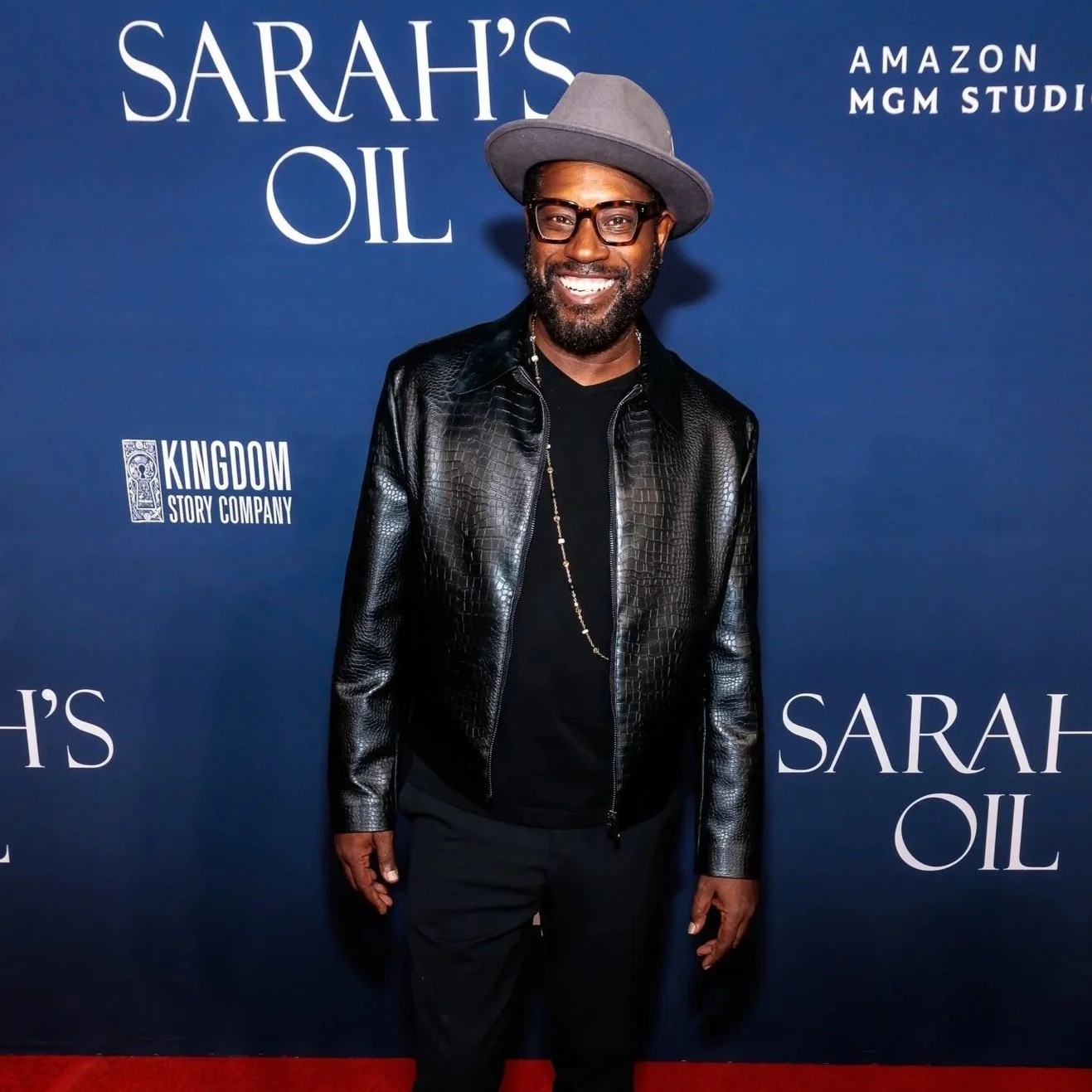
I’ve always believed that my job as a broadcaster for the Kansas City Royals is ultimately about telling stories. Over the course of the 162-game season, I connect a city to its team by sharing the human elements of our hometown baseball stars. It builds trust and keeps fans tuning in game after game, year after year.
The same principles apply every time I step onto a stage before keynoting on trust and culture. Credibility isn’t built overnight. But through consistency and showing people you understand their story, eventually it can be earned.
That’s why one recent conversation on Rounding the Bases meant so much to me. I was joined by a guest who has seen representation evolve in real time. His name is Shawn Edwards, a nationally acclaimed film critic whose career took him from Kansas City to Hollywood and back.
As one of cinemas most respected voices, Shawn has had a front-row seat to movie history in the making for more than a quarter of a century. He’s interviewed the worlds biggest stars, and now he’s bringing legacy to life with the Black Movie Hall of Fame.
His latest project is a celebration of cinematic trailblazers on and off the screen. But it’s also part of a bigger mission to keep their impact in the spotlight, long after the camera stops rolling.
SINGLE: hidden in plain sight
Shawn built a career on the movies, ultimately earning himself the title of longest serving Black film critic in history. By contrast, I have spent more than 30 years as a baseball broadcaster, and am proud to have recently become a Board member of the Negro Leagues Baseball Museum. Though they may seem different, the parallels between the two make perfect sense.
Both were born out of exclusion. Both created excellence outside of the mainstream. Both built loyal audiences without institutional support. But as much resistance as baseballs first Black ballplayers endured, the challenges in film were even greater.
“It followed the exact same path, except it was probably 10 times harder for Black actors and Black filmmakers,” Shawn said. And the reason was infrastructure.
In baseball, even segregated leagues had teams, ballparks and an organized network. In film, there was no equivalent of a “Black Hollywood” with marketing, financial backing or reliable distribution, which is critical to the success of a film. Anyone can create something brilliant, but if no one can see it…does it matter?
That’s where another critical piece of the ecosystem comes in: the Black press. Every major city had a Black newspaper, and every Black newspaper had a film critic. They were the essential connectors between filmmakers and audiences.
“You really relied on those Black film critics to, you know, write a great review so people could discover your movie,” Shawn explained. “You didn’t have a lot of money to place ads in the paper.”
Even when a film secured a theater, money added yet another layer of uncertainty.
“You have to trust the theater owner, that he’s going to give you a fair cut of the box office,” he said. “The theater owner could tell you maybe your movie made $100 this weekend, but the theater owner could tell you it only made $10, and then give you a percentage off of $10. And then he kept your $90.”
Filmmakers operating outside the mainstream already had to fight for screens. To not know whether you would see the full return on your own work? It’s an impossible prospect, and exactly what Shawn meant when he said it was “10 times harder.”
Black cinema didn’t lack talent, only access to the capital, distribution and transparency its white counterparts enjoyed. But despite those structural barriers, it survived. Audiences only needed to know where to look.
DOUBLE: more than one narrative
One misconception Shawn is working hard to dismantle through the Black Movie Hall of Fame is that Black cinema is either niche or American-only.
“This isn’t a United States thing,” he shared. “We will actually talk about, you know, Black cinema globally, because there’s a lot of Black cinema in Brazil and France and the UK and Nigeria that alot of people don’t know about.”
That global lens is critical, and from it, Shawn structured the Hall of Fame into a space that is as intentional about history as it is about storytelling. It’s brought to the forefront with artifacts, memorabilia and posters, each focusing on one of the seven periods of Black cinema.
“Well start with the early days, back all the way back to the early 1990s . . . then we’ll talk about film in the context of the Civil Rights movement. And the Blaxploitation era,” Shawn explained. “Beyond that, we’ll talk about hip hops impact on Hollywood. And then in the final area will be like today, and the super explosive growth of Black cinema in the past few years.”
The Black Movie Hall of Fame may be a museum, but even more significant, is that it’s also a blueprint.
TRIPLE: the power of modern black cinema
As important as historical movie making is, one contemporary film in particular caught both of our attention: Sinners. When I asked Shawn why the Oscar-nominated work lingers, he didn’t hesitate.
“The reason why you’re feeling that way is because it is a truly unique piece of cinema,” he said. “And I’m using cinema intentionally. It’s not a movie. Not film. It literally is bigger than that.”
That distinction - cinema - matters.
“The whole allegory of it all, and the injecting of blues and the history of blues into the plot of the film, has never really been done,” Shawn explained of the thematic innovation. “Blues is the foundation pretty much for most music. It’s the sound that traveled over from Africa on the slave ships.”
As Shawn put it, the film addresses civil rights, inequality and justice. Then, almost in a twist of brilliance, there’s the fact that it’s technically a horror movie. It’s Black storytelling at its finest, pushing boundaries to create a piece of history layered into art.
HOME RUN: a limitless legacy
What struck me most about our conversation is that all roads lead to legacy.
Shawn’s connection to the 18th & Vine district may be nostalgic, but it’s also foundational. The district represents jazz, entrepreneurship, resilience and Black excellence. Now, with the addition of the Black Movie Hall of Fame, it will represent cinematic history too.
Thanks to voices like Shawn Edwards, who stands on the shoulders of those early Black film critics, he is in a position to preserve and elevate the stories behind history’s greatest storytellers.
From midnight screenings to the global stage, the Black Movie Hall of Fame is about the culture that turned shared experiences into movements and critics into connectors.
It’s the same lesson I share on stages across the country: That trust creates access, and builds a legacy that’s even bigger than the movies.
Listen to the full interview here or tune in to Rounding the Bases every Tuesday, available wherever you get your podcasts.
LEARN MORE ABOUT legacy FROM JOEL
Book Joel Goldberg for your next corporate event. He draws on over 30 years of experience as a sports broadcaster. In addition, he brings unique perspectives and lessons learned from some of the world’s most successful organizations. Whatever your profession, Joel is the keynote speaker who can help your team achieve a championship state of mind.
FULL TRANSCRIPT
Joel Goldberg 0:00
Welcome everyone into another episode of Rounding the Bases presented by Community America Credit Union: Invested in You. Quick shout out to my friends, not just at Community America, but at Chief of Staff Kansas City. If you are in the market for a job, if you're looking to hire someone, if you're looking for just a good resource, great people, culture, energetic office. They're right on the state line in Kansas City, and if you're not in Kansas City, they still may be able to help you. So check them out. chiefofstaffkc.com. Making Connections That Matter. One of my favorite connections and one of my really, really close friends, almost like family. What really is family, is, is my family's dear friend, Kiona Sinks, formerly of the Negro Leagues Baseball Museum. The Negro Leagues Baseball Museum. I'm a proud board member there, and I love the 18th and Vine area. I bring all that up because Kiona had a great recommendation for me for the podcast. When we speak of connections, it does relate to 18th and Vine. So today, we've got real talk from the red carpet with a nationally acclaimed guest whose career took him from Kansas City to Hollywood and back again. His name is Shawn Edwards, the longest serving black film critic of all time and one of cinema's most respected voices for more than a quarter of a century. He's had a front row seat to movie history in the making, and now he's bringing legacy to life with the Black Movie Hall of Fame, premiering soon in Kansas City's historic 18th and Vine district. I'm so excited for this. It's a celebration of cinematic Trailblazers on and off the screen, and one part of a bigger mission to keep their impact in the spotlight long after the camera stops rolling. This is a big endeavor, an important one as well, and I am excited right now to bring to Rounding the Bases, Shawn Edwards. Shawn, how are you?
Shawn Edwards 2:01
Man, I, look. This is a definitely an honor and a privilege to be on the Rounding the Bases podcast. Because as a kid, growing up in Kansas City, Missouri, I wanted nothing more than to be a Major League Baseball player.
Joel Goldberg 2:15
Really?
Shawn Edwards 2:16
Played years and years and years of 3-2 baseball.
Joel Goldberg 2:20
Oh my gosh, yeah.
Shawn Edwards 2:21
Up on Bannister Road. Man. My all time favorite team was when I played for Sheet Metal. I know I'm dating myself, but we have one heck of a team.
Joel Goldberg 2:28
It's so interesting because, you know, I mean people, people know you as, as the movie guy, as entertainment, which, which you are, and you've, you've worked your whole career on that one. But it's always kind of fun to to hear about the childhood, and you would think that a guy that that is so deeply connected to cinema wanted to be a movie star. Wanted to be a Hollywood star. You were probably, I don't know, wanting to be Frank White or George Brett, or, I don't know who were you mimicking back then.
Shawn Edwards 2:58
Look, I played, I played center field. Then, you know, I grew up when the Royals were just like Megatron in the 1970s and would go toe to toe with the Yankees every year in the playoffs, when it was hard to make the playoffs. This is pre wild card. Like, you, you had to win the American League West, and then you played the winner of the American League East to go to the World Series. And there was no in between. And the first year we lost to the Yankees, and the second year we lost to the Yankees, and the third year we lost to the Yankees. We finally beat them the fourth year, like I was in tears for three years in a row in the 70s, like just heartbreak after heartbreak. You know, growing up, you know, watching the Royals going to the old K with the artificial turf
Joel Goldberg 3:39
Yeah.
Shawn Edwards 3:39
Watching Amos Otis in center field. Because I was, I played, I played center field. You know, most of my childhood in Little League Baseball, I was a center fielder. I was fast, true fact, I was not the fastest person in my own family. My younger sister was actually faster than me. I think she still holds some of the Missouri State Records in the 100 and 200. But, yeah, but I had enough. I had enough speed. And it's funny, because, like you said, most people know me as a film guy. And when people associate you with film, they either associate you with like, you know, the drama club, or, you know, some geeky kid growing up, and all he did was watch movies. But I got here because I actually got a football scholarship in college. So, you know, my college education was funded through my athletic abilities. So I played, I played wide receiver for Morehouse College in Atlanta, Georgia.
Joel Goldberg 4:31
Wow, amazing. And, you know, look at where the career went. So it was AO. AO, probably after and probably after that Willie Wilson, because, well, you know, he could do it all out there as well, whether he's in left field or center field, two guys, by the way. I mean, I've been here since, oh wait, so I didn't grow up with the Royals. Actually, funny thing is, so the Royals lose to the Yankees in the, for the pennant in 76,77, 78 as you mentioned, they don't make it in 79, their fourth crack at it in 80 they finally beat the Yankees, and they lose to and I was a little kid, but at that point, my family, until I was 13, lived outside of Philadelphia, so it's just, it's always been weird to me. I'm just telling you this because you'll you'll find it interesting that my childhood team, the Phillies, really my first World Series, that I really remember better than any is beating the Royals. And the irony of all that that World Series meant so much to a young kid is that maybe I've met a person or two. George Brett introduced me to Mike Schmidt at one point. That was certainly a career high. But everybody that was on the 80 team, at least those that are still alive, I know all those guys. Some of them are my friends now. It's like when I watch those highlights back. Yes, I've got my memories, but I'm like, but these are my friends. You know, these are broad- former broadcast partners. These are so, yeah, I'm more ingrained in Kansas City than I am anywhere else that I've lived because we've been here for 18 years. What I will say, This is my segue, is it doesn't matter where you live if you love movies, if you love going to the theater, doesn't matter where you are around the world. You know, it could be here, it could be overseas, whatever it is. There's still something to me that is special about the movies. And I was telling you, before we went on, we got away from going to the theater for a while. And some of that was just but also someone was just having kids and being busy. And being busy, and then people got away from the theaters, because look at what's on our TV right now. Pick any movie, any day of the week, and stuff's getting released right to Netflix. And you know, technology, technology, you could talk about what's going on with I heard somebody on an interview the other day, and this is when the Oscars were announced, about Warner Brothers has two big time chances to win the best film of the year, and Warner Brothers might not even exist anymore. So my question first to you is, how did you develop this love and expertise of cinema?
Shawn Edwards 6:51
Well, first, let's start with love, because love and expertise are two different things. The love, the love came as a kid. You know, my mom and dad were were big into movies. I remember going to the, you know, one of my first memories as a child is going to the, I remember going to the movies all the time, like all the time, like all the time. And it's funny how you mentioned how the Royals played the, you know, Philadelphia Phillies in the World Series. Well, my mom was born in Princeton, New Jersey. It's where my grandparents lived. My aunts and uncles lived in Princeton New Jersey. But Princeton, New Jersey, which is right outside Philadelphia. So I was, I was kind of torn. It was weird, you know, I got my family members rooting for the Phillies. I'm rooting for the Royals. Same thing with the past couple of Super Bowls. I got, I'm rooting for the Kansas City Chiefs, and I got family members rooting for the Philadelphia Eagles. It's a weird thing, because every summer we went to Princeton, New Jersey, and that's where we really watched a lot of movies as a kid. You know, Princeton is a small university town. They had one movie theater with one screen. And, you know, things worked a lot differently back then when it came to movie releases. You know, when a movie theater got a movie release, they would sit on it for weeks. There wasn't one of this thing where you flip it out, you know, you get a new movie this week and another one next week and another one after that. So movies would sit a while. So you would, you know, and it was, I could walk to the movie theater in Princeton from my grandparents house. And so you go up there, and it was the thing to do to kill time, and you would watch the same movie over and over again. And I literally learned the process of filmmaking from, you know, watching these movies over and over again, you know, in Princeton. And you know, when I lived here in Kansas City, Missouri, we went, we went all the time. And so the funny thing is, my mom was an educator. She was a school teacher. And anybody who grew up with a parent as a school teacher knows that's some tough sledding, right there. And so one day, I literally asked my mother. I was like, you know, I like movies. I'm really into movies, and I just want to know how they're made. And she wouldn't give me the answer. She wouldn't tell me how, but she had a, I remember that we had a blue Volkswagen Beetle. She threw me in the back. We didn't wear seat belts back then, you know, we didn't do we didn't have car seats and seat belts when I was a kid. And if anybody knows anything about the old school Volkswagen Beetle, they had that, they had that space behind the back seat, because, remember the engines in the front. So it's like a, just like a, it's like a playpen while you rolling around town to get in where you're going. So yeah, I would always play in that little back area. And so we literally drove to the Plaza library, and I proceeded to check out as many books as I could about how movies are made. And I read all these books and learned the process. And then after learning the process, I actually went to Crick camera store, which was located in Brookside, like there's a Price Chopper there. Now it was directly across the street from the Price Chopper, and there used to be a movie theater right there in Brookside. So I went to the old Crick's camera store and bought a super eight millimeter camera and just started making my own movies. And I just learned everything by trial and error from reading all these books I checked out at the Plaza library, and that's how it started. That was, that was where, that's my love of cinema. Came from watching movies all the time to making my own movies, and then I knew it was something I wanted to do when I was in elementary school. I kept shooting movies all through middle school. I kept shooting movies all through. High School, and I said, You know what? I'm going to go to school to learn this. And you know, that's where I enrolled at, you know, Morehouse College in Atlanta, Georgia. I had never been to Atlanta. I hadn't been anywhere in it. Well, I had been to Savannah, Georgia, because I think my family had some some connections in Savannah, but I had never been to Atlanta, Georgia, and so I went to Lincoln College Prep. Well, actually at four, four scholarship choices, one of which I wish I could go back in time and change. So I had a scholarship offer from UCLA, Howard University, Morehouse College and the University of Missouri. I knew I didn't want to go to University of Missouri because I wanted to get away and do something different. I was too afraid to go to UCLA because UCLA was Division One. I was like, whoo. That's, that's, that's, I don't know if I'm ready for that. And so my two choices came down to Howard and Morehouse. I chose Morehouse because the weather is better in Atlanta than Washington, DC. But unbeknownst to me, when I get to Morehouse, I've discovered it. That's the school where Spike Lee went to. So Spike Lee went to where I was college and graduate, and I actually ended up having some of Spike Lee's same professors on my communication film track at that school. And then that just accelerated things from there.
Joel Goldberg 7:37
Well, I think it's so cool. I mean, as you appear as a guest on this podcast in Black History Month, there's a lot going on in your world right now, you just talked about two great HBCUs.
Shawn Edwards 6:51
Yes.
Joel Goldberg 7:37
And you talked about one of the great not just filmmakers of all time, or, let me rephrase that, not one of the best Black Filmmakers of all Time, one of the greatest filmmakers of any time, no matter what the color of the skin. But I look at what you're doing in 18th and Vine, you know, I sit there and think about, you know, as someone that is obviously white, but that has been very fortunate enough to be able to tell some of the stories of the Negro Leagues Baseball players, because the platform that I have in baseball, because I tell people all the time that we, if we're affiliated with the Royals in television, are so lucky because we're the ones that are down the street from the museum, where everyone else around the country hopefully gets a chance to get Bob Kendrick, or before him, Buck O'Neil, and maybe they get to do that every now and then. I get to do it every year, and now being on the board, and so I constantly sit there and think about boy, I would love to go back in time, like they do in the movies, and just be at 18th and Vine to experience the jazz and the Monarchs when that place was the most hopping place in town, from what I hear and understand. Like, I just I want to experience and feel what that is like, even if I'm the white guy there, and I'm a little bit different than some of the others. That was a hopping, thriving place, and I feel still some remnants of that there you see it at the museum a little bit. We're building a new museum at the old YMCA, the old Paseo YMCA. You've got the jazz museum down there. You've got some good stuff, but it's got some work to do. I'll give a shout out to my friends over at Vine Street Brewing Company, Kevin Coleman's become a great friend. But I would love, more than anything, to see that area just start popping again. It'd be good for everyone, I believe. So tell me about your endeavors down there.
Shawn Edwards 13:27
Yeah, we're, we're 100% invested in the area. It's funny because I went to Lincoln College Prep, which sits on the hill at 22nd and Woodland. That's the area we used to frequent 18th and Vine before anybody thought about it. Sure was in a state of decay. But it was, it was a, it was a place we went and hung out. I actually shot a couple of student films in the area. And, you know, we, you know, it's just one of those things, you know, when we're growing up as kids, it was just, it was just part of the neighborhood. Look, I'm so old. When I was in middle school, no, I'm, I'm gonna tell you, when I was in middle school at Lincoln Middle School, municipal stadium was still standing like they didn't tear it down until, I think, like my freshman year in high school, but it was so you could, you could see old municipal stadium outside of your classroom windows. It was, it was still standing in that area. But no, I've been very familiar with 18th and Vine, you know, my parents talked about it. I'm actually, like, super linked to 18th and Vine through, through my family. My great aunt is Sarah Rector, who was my grandmother's sister on my father's side, you know, her mansion still standing, you know, on 12th and Euclid, and she was very entrenched with what was going on in Kansas City back in the 20s, 30s, 40s and 50s, because at one point she was like the richest black woman in America. They just released a movie about her called Sarah's Oil this past November. I think it's streaming on Amazon Prime Now. So I got a lot of stories about the area. To be fair, I got more stories about 12th and Vine, which, I think a lot of people don't understand it. 12th and Vine is where all the was, the was the party street. That's where the clubs and, you know, that's where you went to party and have fun. 18th and Vine was sort of like the business district where, you know, you went to go see the doctor or the dentist, or you wanted to buy furniture or buy a car, you went to 18th and Vine. But, you know, I was, I was very familiar with the history, and so it's always been sort of like entrenched in me. And, you know, this idea to do the Black Movie Hall of Fame is something that I had swirling in my head since, like, the early 2000s. Round like 2003, 2004, I remember coming up with the concept and designing I would envision it being laid out. And, you know, I've been a part of several development groups that have tried to get this particular project off the ground. I was part of a group back in around 2005 we couldn't do it, done with another group in 2010 and we couldn't do it. And I've finally found the right group, and we've gotten it off the ground. We're renovating the Boone Theater, 100 year old building, the biggest building now located in the 18th and Vine historic jazz district. So we're renovating this to be a multi use space. It will also house the black movie hall of fame. It will also include a movie theater, a movie screen, where we can actually show movies, real movies, if you if we want to screen centers, we can screen centers there. We want to screen old school movies. We'll screen old school movies there, and we think it's a vital part of the 18th and Vine historic jazz district. But more importantly, the Black Movie Hall of Fame really makes this area like a really rich area of black history, because now you'll have the American jazz museum where you can learn all about the greats of jazz, which is a true American art form. Then you go right across the hallway to the Negro Leagues Baseball Museum, which is about way more than just the sport of baseball. It is about baseball, but it's it's also about civil rights, but it's also it gives you a true blueprint of the history of the United States and how a certain group of people became really creative and entrepreneurial and just really did something really special that helped move the nation forward in a really positive manner. So I really did that. Museum is so important. And now we'll add the third component. You got music, you got sports, and now you'll have movies, because I don't think people realize the history and the legacy of black film that goes all the way back to the the beginnings of Hollywood. And we'll get to tell that story, and we'll we'll get to be like the third piece of this. Truly remarkable area of black history, and I cannot lie, I am literally mimicking and copying everything that Bob Kendrick and everyone associated with the Negro Leagues Baseball Museum has done, because I remember back in the day when the Negro Leagues Baseball museum existed in a closet inside the Lincoln It was literally they had all their memorabilia in a closet inside the Lincoln building. I I remember that this was, this was even before Buck O'Neil became an international superstar once he appeared on Ken Burns baseball documentary. I knew Buck before he became an international rock star like but things that, things that, things really exploded after the Ken Burns documentary. But I remember the Negro Leagues was was in the closet. So I tell everybody that to say that, look, it's going to be the same thing with the Black Movie Hall of Fame. We're getting the building renovated, and yes, it's going to open and we're going to start, but we're not gonna be at the same level as the Negro Leagues day one, because the Negro Leagues Baseball museum day one was in the closet, but so we'll be a little more elevated than the closet. But you know, over time, we will get to the level that Bob Kendrick and everyone associated with the museum has grown it to be.
Joel Goldberg 19:01
So what? What will people see when they come to the museum? And I know you've got a inaugural gala coming up at the end of February.
Shawn Edwards 19:08
Yeah, we've got some things coming up. So what they'll get to see when they come through is we're going to present like, sort of like a historical timeline of the history of black film. And you'll get to see artifacts and memorabilia and posters, and we're going to make it interactive with videos talking about the different periods of black cinema. And we've broken it down into seven specific periods, where we'll start with the early days, back in back all the way back to the early 1900s and then we'll talk about film in the context of the Civil Rights movement. And then we'll talk about the blaxploitation era. Then we'll talk about the contemporary, the contemporary film movement, which began around the late 80s. And then we'll also, you know, this isn't just a American thing this. This isn't a United States thing. We will actually talk about, you know, black cinema globally, because there's a lot of black cinema in Brazil and France and the UK and Nigeria that a lot of people don't know about. And then we'll talk about hip hop's impact on Hollywood. And then the final, the final area be like today and the super explosive growth of black cinema in the past few years.
Joel Goldberg 20:21
It's gonna be so good, I can't wait to come and check it out. And I need to do that when you're there too, because I got to get, I got to get that personal tour and see it all.
Shawn Edwards 20:30
And look, I'm modeling this after what Bob Kendrick does.
Joel Goldberg 20:34
Yeah. That's a great way to do it.
Shawn Edwards 20:36
I want to do a gazillion personal tours and talk to students and, you know, talk to tourists when they come in and just, you know, walk them through and, you know, share stories and antidotes. I mean, I want to do, I want to do all of that. I want to do because there's so much to talk about. Like, so much to talk about.
Joel Goldberg 20:53
Yeah, which is, which is awesome. I mean, it's as anyone that has been to the Negro Leagues Baseball Museum knows if you are lucky enough to be there when Bob is there doing a tour, if that's for you or not, just tag along, because you'll never forget it, and it never gets old to me, as someone that has seen it over and over and over again. You know that I can't call it a regret, I didn't do anything wrong. But we moved here in '08, and even in my time I worked in St Louis before here coming in with the Cardinals, I never met Buck O'Neill. He's got to be one of the few people that I've never met that I feel like I know. I feel him inside me and and I know that sounds weird, but if you know, you know, and it's just so it's such a privilege of mine to be able to to rep the museum in the smallest of ways and his legacy. I mean, nobody does that better than Bob. I still find that Joel Posnanski book The Soul of Baseball. Which, very much like the Negro Leagues Baseball Museum, is less about baseball and more about life and civil rights. And when I'm not saying when I'm down, I pick it up, but it's a great perspective refresher for me that when you pick up that book and you read all or some of it, you just see things the way Buck did.
Shawn Edwards 22:08
It's such a great read. But I do the same thing with the Negro Leagues Baseball Museum. Like, sometimes I'll just walk through just to get, like, revitalized.
Joel Goldberg 22:16
It's a feeling.
Shawn Edwards 22:17
Yeah, yeah. It's definitely feeling, but I remember meeting Buck because I've always been around in some form or facet in the Kansas City scene. Buck always called me Young Fella. He's like, that's that young fellow on TV. That's the young fella on TV.
Joel Goldberg 22:30
Pretty, pretty good, pretty cool thing.
Shawn Edwards 22:32
Yeah.
Joel Goldberg 22:33
To be able to hear that.
Shawn Edwards 22:35
Yes.
Joel Goldberg 22:36
So I mean, this museum is, is this? The fact that it's in Kansas City. Is obviously great for any of us in Kansas City, but this is a museum celebrating the history of black movies around the world, essentially.
Shawn Edwards 22:49
Around the world period. Yeah, around the world period, yeah. It's not a, it's not a specific Kansas City thing, although there are a lot of people from the area that are connected to the industry. But no, this is celebrating black film as a whole.
Joel Goldberg 23:01
Here's an interesting question, and I think I know the answer, but you'll have the best perspective on it is that, you know, I'm so familiar with the history of African American baseball because the museum and Bob and an extension to Buck and all of that. And, you know, I think that once you learn about it, you understand that those guys were good enough to play at any level if they had been allowed to do so. I still see arguments online with people just that the total garbage. It's all racist. Of you know, well, those stats shouldn't count, because Major League Baseball now made them all count. And it's like if Josh Gibson had been playing in Major League Baseball, as as Bob always says, you know, people, people knew Josh Gibson, not. It's not so much that he was the Babe Ruth of black baseball. Babe Ruth might have been the white Josh Gibson. I mean, he was that good. And you could go on and on to the list of legends, and it usually starts with Jackie Robinson, understandably breaking the color barrier. My question to you, Shawn, is this. I'm familiar with the with the plight of the African American baseball player, the amount of work, the traveling, everything that they had to do, which was at as good, if not a better, level, than their white counterparts. How similar was the plight of the black actor, actress, director, anybody in film, did it? Did it follow a similar path in terms of opportunity?
Shawn Edwards 24:28
I will say this, it followed the exact path, except it probably was 10 times harder for black actors and black filmmakers. Let me give you an example of why. Because, you know, the Negro Baseball Leagues were able to establish themselves as their own league. It didn't quite work the same way when it came to film, where you did have blacks like, shoot and write and produce their own movies. But they were never able to really develop a black Hollywood in the same way that the Negro Baseball leagues existed. It was, it was, it was a lot harder, because whereas the Negro Leagues were able to sometimes use facilities that they weren't allowed to use at certain times to play their games, the movie industry was set up a lot differently, particularly from a distribution mechanism. And so that's the thing that sort of prevented black filmmakers from creating their own black Hollywood, because whereas some of the black baseball teams were allowed to use stadiums that you know were owned by whites, the same didn't really work when it came to showing movies in theaters. There wasn't, there didn't seem to be the same forgiveness, or there wasn't the same ability. Now, there were some movie theaters that allowed black films to be shown, but generally, you would have to show your film at midnight, which is where the term Midnight Ramblers came from, if you were allowed to do it and do it at all. For example, I'll explain why it was so much more difficult. If you take Oscar Michelle, who's like The Godfather of black cinema, who produced over 41 films from like the 19 teens to about the 1940s I mean, I don't know how this guy did it, because he had to write his own, he wrote his films. He directed his films. He had to find actors. You got to remember, you know, being an actor back then isn't the same as right now. You know, you had to convince people this, because it's basically new technology, too, back then. And so, you know, he also had to distribute his own movies, market his own movies. I mean, he literally would, and, you know, it's expensive. Then he had to, you know, he had to find the money to get the movies produced. It wasn't like there were people running around handing him money, you know, to make his movies. And so then he would literally get in his car with one print of his movie and have to drive from city to city and go to a movie theater and beg the theater owner to show his film. Nine times out of 10, they said no, but if he did find a one theater that would allow him say he would drive from Kansas City to St. Louis, St. Louis to Indianapolis, Indianapolis, you know, to Chicago, Chicago to Milwaukee. Like, that's, that's how he had to get his film shown. And if he did find the one theater that said yes, they were like, you can show it, but you got to show it at midnight, because that's the only time we'll let Black people come to the movie theater. They got to come through the back and all this, all this other craziness. So then once they said yes, then he would get back in his car, literally drive to that city's black neighborhood and go from door to door to tell people he was showing this move. So that's the stuff. I mean, you know, thankfully, though, you did have the black press, because most major cities had a black newspaper, just like you have the Kansas City Star, and then back then you had The Star and The Sun and The Times, and then you had the black paper, The Kansas City Call, but you wouldn't always have enough money to advertise. And so you know that every black paper, which hasn't been really documented very well in history, every black paper had a had a film critic. You know, being a being a black film critic, isn't anything new. It may be new to the mainstream, but, you know, back in the 1920s, 30s, 40s, 50s, every black paper, Kansas City, Cleveland, Cincinnati, Los Angeles, New York, had a black film critic. And so you really rely, you know, on those black film critics to, you know, write a great review so people could discover your movie, because you didn't have a lot of money to place ads in the paper, and if you do, they were actually pretty small. There's some surviving ads. You can see they're real time. There was, it was a struggle. So it wasn't on the same level as the Negro Baseball Leagues. It was. It was much, much, much, much more difficult.
Joel Goldberg 29:00
Well, and what I hear the similarity, even while being more difficult, it's difficult for everybody, obviously, but, but there was, I think, what you're describing there, there was, all right, if you don't have the money to to advertise in the paper, then I'm going to go promote it myself, and I'm going to go knock on doors. So there's a barnstorming element to what he was doing, yes, that these guys did. If we can't play here, then we'll go find something for ourselves, right?
Shawn Edwards 29:31
You're exactly right. You relied on your, you relied on your cast and crew to spread the word. And then another thing that doesn't get talked about a lot, you have to trust the theater owner that he's going to give you a fair cut of the box office. You know, because the theater owner could tell you, like you, maybe your movie made $100 this weekend, but the theater owner could tell you it only made $10, and then give you a percentage off of 10, and then he kept your ninety. I mean, that's, what are you gonna, who you gonna call?
Joel Goldberg 30:06
All right, wow
Shawn Edwards 30:07
It's, I mean, look, I you, you mentioned earlier that you know, you would love to, know, travel back in time. And I would love to travel back in time as well, but there would have to be a clause that I could officially get back to my present day status, because I don't know if I get stuck there. I don't know if I don't know if I possess the moxie that my ancestors had to survive those times. Because those are those, you know, everything you read about here about, I mean, it's not science fiction and a lot of stuff. A lot of stuff wasn't a lot of stuff wasn't that long ago, like my mother told me when she first moved to Kansas City, Missouri in the 1960s just a couple of years before I was born, that she was not allowed to shop on the Country Club Plaza. So this stuff's not that far away. You know, it's not, it's like a lot of times we think it was like a long, long time ago in a galaxy far away, when really it was just like pretty recently. So I don't, I don't know if I, I don't know if I had the guts to be a time traveler. Is all I'm saying. I have to have the clause. There has to be a clause that I can get back to 2026.
Joel Goldberg 31:20
Just make sure that that Bill and Ted's phone booth works to get you back.
Shawn Edwards 31:25
Yes, yes, sir, yes, but it's but that's why we're doing the Black Movie Hall of Fame. Because a lot of people, they don't know the stories, they don't know the struggles, and they're, to me, they are negative, they're triumphant. Like to shoot a movie and only have one reel and drive from city to city to show. I mean, that's a that's, that's extreme levels of passion and extreme levels of being an entrepreneur. And the, you know, the one analogy I would like to make that I think you were where you were going, is like these filmmakers were just as good, just like Josh Gibson, Cool Papa Bell Satchel Paige were just as good as Babe Ruth and Lou Gehrig. Like these filmmakers were just as good and these stories were just as incredible, because they were doing things with their film that even Hollywood wasn't doing. I just think that you know what they were doing was triumphant, and also with their movies they were, they were doing things that even the movies in Hollywood weren't doing, because they were talking about civil rights, and they were, they were talking about the inequalities that existed in current day, and they were talking about, you know, fighting for justice. And they were, they were telling stories about their current condition. So they were almost like they were documenting what was going on and that was missing from mainstream movies. So they, not only were they were, not only were they filmmakers, they were like such they were like social justice warriors, and so what they were doing was very important.
Joel Goldberg 32:52
Still are today, but, yeah, different ways.
Shawn Edwards 32:52
Yeah, in different ways.
Joel Goldberg 32:52
All right, I've got a bunch of other questions, but I want but I want to get to my baseball themed questions. First, professionally speaking, not, not your early days of playing center field, but professionally speaking, what's the what's the biggest home run that you have hit? And maybe it's this project right now, I'm not sure.
Shawn Edwards 33:17
No, it's the project that led to this project. I think my biggest professional home run was the creation of an event called A Celebration of Black cCnema that we first started doing in Kansas City back in 2006. It was an idea that was cultivated in the offices at Fox Four News, because they were looking for a way to engage with the black community of Kansas City. And I was sitting in the meeting, and my contribution to the meeting was, why don't we do some sort of film event? Because that's all I knew. And I proposed that we do like a documentary on the history of black film, just to kind of give people an idea of the history of black filmmakers and all these beloved movies that you know, many blacks have watched since day one, and Fox Four said yes to the idea, and we got it done. And I produced this documentary with the assistance of Fox Four News, called the 100 Best Black Movies Ever. We showed it at the Gem Theater for the community for free. So many people came out, we had to turn people away. And that was this, that was, that was the spark. And then we did it again. In 2007, 2008, 2009, 2010. I produced a new documentary each year. The first year was called the 100 Best Black Movies Ever. The second year I focused on black comedy movies. You'll dig this. The third year I did the 25 best black sports movies ever, which was, was fabulous. And then.
Joel Goldberg 34:44
What's number, what's number one on that list?
Shawn Edwards 34:46
Remember the Titans was number one on that list. Yeah. Remember the Titans. I mean, it's just yeah, Remember that's not, I was fair. I went around and asked other film critics. And, you know, Remember the Titans came out to be number one. I mean, personally. Yeah, I was, I was a huge Brian Song person. I thought that was really great. I also like the 2001 movie, Ali, I think that movie is really underrated, starring Will Smith, I'm a huge fan of that. I like Soul of the Game. This predated 42. 42 is now on my list. I thought 42 is an amazing, excellent, yeah, Chad Bozeman as Jackie Robinson, but that this event predated that movie, and in the final year, we did the 25 most romantic Black movies. So we did those. We made it free. Each year, we screened each movie at the Gem Theater, and the idea kind of faded, but it was born again out in LA and we renamed it and we called it the Celebration of Black Cinema and Television, and we revived it in 2014 and that has opened up all kinds of doors for me. We're now on year eight. You can actually see it in Kansas City on February the 8th at 4pm on Fox Four. Or you can stream it right now. It's currently airing on Starz, if you have a Starz subscription. Super proud of that event, but that event elevated me professionally. So that is, without a doubt, the creation of that concept is my biggest professional home run. That's, that's a that's not even a professional home run. That's been a professional Grand Slam game seven. Bottom of the ninth.
Joel Goldberg 35:34
Doesn't get any better than that, unless you do it again, and you never know. How about a, how about a swing and a miss along the way? And what did you learn from it?
Shawn Edwards 36:19
There have been so many, there's been some, there been a ton of swing and misses. I've always wanted to do some sort of like major film festival in Kansas City, and have tried a couple of times, and like each time, just have struck out. I don't even know if I've hit a single with those ideas. I just, I just want to elevate the Kansas City Film community. And I've, I've tried a couple of times. We did the urban Film Festival that kind of fizzled out. I tinkered around with the Juneteenth Film Festival. That, that kind of really didn't get off the ground. I'm not sure if it's because there isn't a solid enough infrastructure, or if we just haven't figured out how to like finance it correctly, or if there's even a public want or need for it, but it just hasn't, it just hasn't worked. And I step up to the plate and swing and miss three times and go back and sit on the bench and try to figure it out.
Joel Goldberg 37:24
That's all you can do. The last baseball theme question is small ball? Shoot, if you were watching those Royals, you you were watching small ball. You were playing small ball. There's something, you know, it's not all about the home runs, it's the little things. What is small ball to you?
Shawn Edwards 37:40
Small ball, to me is, is networking, because you never know who's going to give you that next opportunity. Like my whole career has been based on unexpected, you know, opportunities. But with those opportunities, you have to be prepared to take advantage of the moment, because if the door opens and you walk through that doorway and you're not ready, it doesn't mean anything anyway, but you have to stay connected. Like when I first started off as a staff writer at The Pitch Weekly, it's because of unexpected door open, but I was ready to write. You know, Fox Four News, the door open. I had to, because that was it was purely accident, like I was minding my own business, and the opportunity came, but I had to be ready to seize the moment. You know you. But it was because all of these things happen because of networking, because you meet people, and you don't know when those people are going to come back into your life. And you have to be so prepared for that, but you never know who's who. And I kind of learned this from Buck O'Neil, where you you got to be friendly and engaged with everyone, even if it's somebody you meet on a, man, you could be on a bus stop, you could be on you could be on the subway, you could be at the airport, like that's, you know, through my I've met so many people on an airplane where you just coincidentally are sitting next to someone and you strike up a conversation. I remember that happened with Chase McNulty. We were both on a Southwest flight, and he had a he had a backpack, and he started talking to me about how he was going to start a t shirt line, and he showed me this t shirt. This is, I mean, this is long time ago. He showed me a t shirt, and he pulled it out, and it had, you know, heart on it, and KC in the middle. He's like, this is my shirt. And I'm, you know, I'm trying to launch it. And I was like, Well, man, I work at Fox. Like, give me a couple of shirts. I'll wear it on air, because I was technically the first person to wear that shirt on So, yeah, yeah, yeah, I wore that shirt on air. And then he gave me one on that flight. And I was flying to LA to do an interview with Halle Berry. I remember the very first I wore that shirt in front of Halle Berry, and they played the interview back. And I remember people started calling the station about that shirt. And so they didn't. I called Chase. It's like, man, people love this shirt, dude. And then we had Chase on. I had him on, he did a segment, and then, like, the rest was history. So that's what I'm saying. You never know. He just, I mean, because he looked like he was 12 when I first met him.
Joel Goldberg 40:02
Yeah, yeah. Well, now, now he looks 15, but if you're listening, Chase, I'm just messing with you. He's, he's a friend as well. And for those that don't know, well, if you live in Kansas City, you see the KC heart everywhere. Charlie Hustle, if you don't, we're one of those cities where we all wear KC stuff, and we're not tourists. So that's, that's the way it goes, even if Shawn today is wearing an LA hat, repping a little bit of your last, your last home, your temporary home.
Shawn Edwards 40:33
It's been, it's my second. I would say it's my second. Yeah, I know it's just second nature at this point. It's my sec. It's my second home. I got on my I got on my LA hat, and I got on my black wicked hoodie. Because I'm, like, it got shut out at the Oscars yesterday. Man, it was a protest. It's, it's actually keeping me very warm.
Joel Goldberg 40:54
Yeah. Need hoodie. Cold today in Kansas City. Okay, let's get to my four final questions. There's so many different places I can go with this. Before I talk about the Oscars, let's talk about just your endeavors as well. I know you'd love to be up on that stage one day. Right? You've been, I'm sure you've been to the Oscars a million times.
Shawn Edwards 41:15
I have been to the Oscars. Yeah, I would, I would love to be on this stage. I actually got a project up my sleeve right now that I think could get me there. So I got a good buddy by the name of I got a good buddy. We had a phone call about it today. I got a good buddy by the name of Gil Robertson, and we got a project that is very Oscar worthy.
Joel Goldberg 41:36
Stay tuned, as they say.
Shawn Edwards 41:40
I would love to be up on that stage. I would absolutely love it. I would be over mesmerized, but I would love it.
Joel Goldberg 41:47
And I would love to see that one day. I'm one of those guys that it's become harder. It used to be that when the Oscars came out, my wife and I would make sure that we went and if we hadn't seen it yet, we saw every single one. Now it's like, oh my gosh. We've only seen two out of the 10. Or we used to like to go to the AMC thing, where they show all of them, or, or some of the smaller theaters would do the the documentaries.
Shawn Edwards 42:12
Yeah, documentary shorts and animated shorts. Those are fun. It's just fun.
Joel Goldberg 42:16
You go in there and watch five shorts, and that's fun, but, but I love my wife's the same way. And I don't know what it is. I don't know that it's the glitz and glamour for me. I just love those awards. It's it's just
Shawn Edwards 42:26
It's fun. But before I know how you mentioned, you said, Do I want to go up on stage one day before I go up on stage, I need to get Don Cheadle up there first, who's from Kansas City.
Joel Goldberg 42:37
Yeah, he is. Yeah. Don needs an Oscar. Yeah. What a great actor. Never, great actor. Yeah. Never met him. Know the history that leads me to my second question. You've I asked this question so hesitantly, because people ask it to me all the time too, and it's like, I don't know where to start. But do you have a favorite or one or two or three interviews? Hollywood types, you know, actors, actors. You just mentioned Halle Berry that I would think would be a lot of people's favorites, at least, because she's one of the most beautiful women ever existed and a phenomenal actress. But do you have a favorite one or two or three?
Shawn Edwards 43:14
No, I actually love this question. Look, I grew up in an era where Eddie Murphy was everything. He was, like, he was 18 years old when he was on SNL, like the funniest person, which is saying a lot, because there's some greats on that show. But in my opinion, he was the funniest person ever. And then he broke out with 48 Hours. And then he was like Genius and Trading Places. And then all of a sudden he becomes mega with the Beverly Hills Cop movies. And then he's just, he's Eddie Murphy. Man, he's Eddie Murphy. So, yeah, the very first time I interviewed Eddie Murphy, I was as nervous as I've ever been in life, because it's look, it's Eddie Murphy, like I grew up worshiping Eddie Murphy. Then all of a sudden I'm in the same room with, with, with Eddie Murphy, and I got to compose myself and create a conversation with this guy that I've looked up to my entire life. So, yeah, Eddie, Eddie. Eddie Murphy stands out. But I get a thrill from from from the from the great like I had an opportunity to interview Kirk Douglas. Like Kirk freaking Douglas. I had an opportunity to interview Ruby D for American Gangsters. Like Ruby D, like a group. My grandparents used to talk about Ozzie Davis and Ruby D all of the time. And I got, I got an opportunity to interview like, like, Ruby D. Like, it's like, that was that, you know, so the greats are insane in the course the Steven Spielbergs, the Martin Scorsese, the George Lucases and the Spike Lees. Like, those are, like, those are cinematic gods. Like, it's like, oh my god, this, this, this Steven Spielberg man like Jaws and E.T. Like, these are movies of my childhood. I'm sitting here, you know, talking to Mr. Spielberg. It's like, it's nuts. So that's, I get a thrill from that. And then there are some people who are just, like, naturally fun to talk to. Like, I love talking to Reese Witherspoon, because Reese Witherspoon is so, so so genuine and so just normal and charismatic. I mean, I love Reese Witherspoon. And then I like talking to someone like the more sort of, like insane people, like Quentin Tarantino. Because, man, Quentin can just go on and on and like, Quentin's crazy. And then my all time favorite person to interview rest in peace was Robin Williams, because he was just so spastic. Like, you walk in a room with Robin Williams and like, he'll, he's, he's, like, doing improv for you during your like, he's, like, he was, he was an absolute man. He was, he was a he was just a whirlwind. He's, he's everything you think Robin Williams would be, if you got a chance to meet Robin Williams, like he's, he's more in the Genie, and he's all of that wrapped into one, like he's, he was, he was, oh my god, I love Robin.
Joel Goldberg 46:09
And what a ridiculous run he had of just incredible movies too, like, on top of being one of the funniest human beings I think, of our lifetime. I mean, go back and watch the clips of him on Letterman. And like, I don't even know when he was or wasn't on drugs, because, like, he rode at that level all the time. The two comedians growing up, who's at this point, it was cassette tapes who I would wear out their live show was Eddie Murphy and Robin Williams, over and over and over, still, like hear all the lines right now.
Shawn Edwards 46:46
Over and over. No, I agree. I did as a kid. I wasn't supposed to. I did dabble with some Richard Pryor records. It was above my com, I will admit, it was above my comprehension. I have since gone back and, you know, listen to all of that stuff. But as a kid, it was above my comprehension, but I could instantly connect with Robin Williams and Eddie Murphy.
Joel Goldberg 47:09
Richard Pryor, George Carlin, yeah, maybe this is easy. I'm not that smart, but I was just, I was gonna say Richard Pryor and George Carlin.
Shawn Edwards 47:18
They were too ophisticated for my young ears. Like, I didn't appreciate them until much later.
Joel Goldberg 47:23
Okay, third question. As we round the bases, I told you in advance, and I'll go there again, I can't stop. And as you and I are recording this, and as it runs, it'll still be before the Oscars and the people are listening to it after, you'll know who won or didn't, but I cannot stop thinking about Sinners. I wish we saw it in the theater. I hope it comes back to the theater.
Shawn Edwards 47:45
It's coming back, he's coming back. It's coming back soon.
Joel Goldberg 47:44
We're going, Yeah, it's got to in advance of the Oscars. But so help me with this. I always know the best films are the ones that you can't stop thinking about. I can't stop thinking about this. I don't even know what genre to put it in, and I don't even know if I want to put it in the one that people are going to say, because I don't want to do any spoilers, just in case. But I don't know that I've ever seen a movie like that, and I'm hoping, and by the way, if you're listening and you want to check it out, it's gory, so you know, if you can't handle that, don't see it. But it is so beautifully choreographed and so beautifully shot. And I don't know, I'm not a film guy, I'm just a consumer. Why do I feel this way? What was so unique about this? Because I think it's one of the better movies I've seen in a long time.
Shawn Edwards 48:35
No, the reason why you're feeling that way is because it is truly a unique piece of cinema. And I'm using cinema intentionally. It's not movie, not film. It was it literally is bigger than that. It's a it's a piece of cinema that really explore a couple of subjects that have never been explored, like the whole allegory. And these aren't spoilers, in case you know anybody's watching who hasn't seen it, but the whole allegory of it all, and the injecting blues and the history of blues into the plot of the film, has never really been done like you know, blues is the foundation pretty much for most music. I know jazz aficionados will debate back and forth, like, which genre really presented the foundation for country music and rock and roll and hip hop and punk rock and all that, I would argue that blues is the foundation more so than jazz, because blues is the sound that traveled over from Africa on the slave ships to not only the United States, but to South America, the Caribbean and even the UK. It's all right there, and there's never really been any exploration of that sound into this music, and the way that it's done and incorporated incorporated into the plot, without the movie becoming preachy or over educational, was brilliant. And I also like to say that Director Ryan Coogler put some sugar in the medicine, because the film also deals with Jim Crow and segregation and that whole thing without being heavy handed. But it's also one hell of a story, like the journey of the, you know, of the of the two twins, and you know, the backstory and the things that set the plot in motion are very entertaining and interesting. And we haven't even gotten to the fact that this is a, technically a horror movie about vampires, yeah, which I just thought was, which I just thought was brilliant. But, I mean, Michael B Jordan's performance playing two different characters was just, I mean, phenomenal. The way it's shot, the way things go into motion, because it isn't forced it. It is a very deliberately paced film, because it does take its time getting to the part of the where are the vampires, which I thought was great, because I like deliberate story. To tell me a story it tells it tells a story like it sinners actually felt the way Bob Kendrick tells stories about the Negro League like it has, that it has, that feel as it as it takes us along on the journey of these two twin brothers and their return home to the Mississippi Delta, and how they they want to capture their piece of the American Dream by becoming entrepreneurs. And it just there's a lot to it that made it a GREAT film. And you've never really seen a film structured the way it is, and the score is just out of this. The score is but look what Gorenson Look. John Williams is a genius. Hans Zimmer is a genius. But look what Gorenson won an Oscar for Black Panther and he won an Oscar for Oppenheimer. You cannot find two movies as opposite as Black Panther and Oppenheimer, yet he's able to create music that's perfect for both. But what he did was Sinners out tops both of those films put together.
Joel Goldberg 52:20
It was, I mean, the music, the choreography, the dance, somehow, somehow they manage, I know we're not giving anything away, but somehow they managed to have these, like, ridiculously choreographed scenes while there was unbelievable amounts of gore and violence going on all simultaneously. I just had never seen anything like it before, and you cannot label this a vampire movie, but I would just say to people this, if you, if you can't handle a lot of gore, then fine. It might not be for you. If you're not a vampire movie person, you still should see it, because it's not a vampire movie. It's really not.
Shawn Edwards 53:01
It's really not, it's not, it's a. It's like I said, it's a, it's a beautiful work of art. The cinematography gorgeous, like you it really, the film sucks you into that world in such an incredible way. And the film, like, stick around to the end. The film has the absolute best post credit scene ever. Like, I'll stop there.
Joel Goldberg 53:25
Yeah, stop there. As soon as it comes back to the theater, I would assume that'll be in February. I will go, my wife and I'll go and we will see it. Final question, as we round the bases, I like lists. Who doesn't like lists? Okay, so since it is Black History Month, since you are opening The Black Movie Hall of Fame here in Kansas City. Number one black film of all time.
Shawn Edwards 53:49
That's easy. This is my opinion. But I would say it all starts with Spike Lee's 1989 classic, Do The Right Thing. There's, there's a lot of reasons. Number one, number one, it's a it's a great film. Number two, it's an important film. Sadly, it's a film that's still relevant in 2026. I know that's a long time. 1989 was a long time ago, but it's still relevant. But as a piece of art, it's one of the most creative movies you can ever watch in your entire life. Like the writing is just dead on. All those characters feel authentic. The cinematography by Ernest Dickerson is just, super like, you feel it. Like it takes place on the hottest day in Brooklyn. Like that movie, you could watch that movie at any during any season. It will make you sweat. You feel the heat, you you feel the angst. You feel the anxiety and the music the way it's incorporated into the film, with the with the use of not like contemporary music, jazz, hip hop, though, the whole thing is just, it's a microcosm. You. Of modern day life of black people in the United States of America. It has it all. It deals with gentrification. It deals with segregation, it deals with racism. It deals with, you know, the police. It deals with it deals with all these issues. So it's so well done. It's look it was not nominated for Best Picture. Spike Lee was not nominated for Best Director. We get that you can't go back in the past. The starting point that is, that is the starting point do the right thing. Spike Lee's 1989 I know people overuse the word, but it is a true masterpiece to me.
Joel Goldberg 55:37
And I'm not an expert, but, but the wheelhouse in terms of time was good for me at my age. So it was either that or the other one to me that just I could never stop thinking about involved Ice Cube and Cuba Gooding Jr. and Boys in the Hood, which, which came a little bit after, but that, to me, was a huge movie.
Shawn Edwards 55:57
Just a couple, you're not that far after. It's a couple years after. But no. Boys in the Hood is a very important film. Rest in peace John Singleton, who became the youngest person ever to be nominated for Best Director for the film. Yeah, Boys in the Hood was, man so poignant. I still can't watch that movie without tearing up. And that's another movie that, sadly, is still relevant today. I mean, Jesus, like, yeah, it shouldn't be. It should not No, neither one of those movies should still be relevant. But they both are. They just-
Joel Goldberg 56:31
Almost makes them more poignant, thoug.
Shawn Edwards 56:33
No, 100, 100, No 100% yes, it, and that's the thing I always preach about film and cinema is like, the best movies are like, fine bottles of wine, like, you gotta let them just sit and breathe. And you know, as time goes by, is when you determine how great a movie is. Like, I love the Academy Awards and the Oscars like anybody else. I just think what they should do is like, wait like, do like, the Hall of Fame. Wait five years. Yeah, because no time. Time changes. A lot of things like, but I do think, though Sinners broke the record with 16 nominations, I do think Sinners will be a movie that we talk about 5, 10, 15, 20, 25 years from now. And I don't think any other movie that came out in 2025 will be.
Joel Goldberg 57:23
Yeah, I hope that it wins. I know there's some good competition. I hope Michael B Jordan wins. Yes, I know they're saying that Timothy Chalamet might and he was, by the way, he was great too, and one of the most deplorable characters that you could ever play. So people like, I didn't like that movie. You didn't like the movie because the guy was a bad guy. Yeah, I didn't like, Well, he did a good job with it. You can't say
Shawn Edwards 57:43
You can't say you don't like a movie because you don't like the character, because the character was supposed to be that way. I hate when, yeah, I'm with you on that. That's a that's an inaccurate assessment. Great. He just played despicable, just like Lynn Al capro was despicable. And Catch Me If You Can. But the movie was great, yeah, yeah. That's, yeah, you know, Wesley Snipes was despicable as Nino Brown in New Jack City, but the movie was great. So, yeah, you can't, you can't use that.
Joel Goldberg 58:09
A good movie is a good movie and a great movie. Like Sinners. I can't wait to get back and see it in the theaters if you can.
Shawn Edwards 58:16
And if you can't, the IMAX format is, like, I don't know if it's coming back. I mean, I got if it is, I'll see that. Yeah, yeah. The IMAX format is just like, yeah, it's mind blowing.
Joel Goldberg 58:29
And more significantly, so excited for you and everyone involved in the Hall of Fame, yeah. Can't wait to see that, to come check it out, and to see all the success and and and all the impact that it makes with the storytelling and chronicling the history.
Shawn Edwards 58:43
Yeah, I appreciate that. And also, like, I, you know, if you get a chance, like, I think we're going to do a small exhibit during Black History Month. So if you want to check that out, we're going to give people a small glimpse of what it's going to look like at the black archives of Mid America. So, you know, we just want to, you know, we will make sure people understand what we're doing, and hopefully they'll get behind it and support it. But we're super excited about coming online in the 18th and Vine historic jazz district. I can't wait. There's there's so many different elements of improvement happening in that area. It's exciting. It's super exciting. It really is super exciting to be a part of it.
Joel Goldberg 59:20
If you're in Kansas City, or you're coming to Kansas City, go check that out. The Black Movie Hall of Fame. Shawn Edwards big project, and he's had plenty of projects in terms of in terms of cinema and movies, and something else that is is lingering, that we'll find out about itself. You know what? One of my four questions. But I got too carried up in carried away with the movies, which is okay, was so I'll just thank you for your service, Second Lieutenant in the US Army, so you've done it all. But right now, I know that you are, you are living these dreams out, and it's so cool.
Shawn Edwards 59:52
That's the one thing that blows people's mind. I was like, Yeah, I got a little man. It's like, you hit. Certain periods in life and you just want to redirect. And I had gotten to the point where it's like, I needed to redirect. And like, you know, going into the Army was one of the best things I ever did. Like, it taught me a lot of things on a lot of different levels. But the most important thing was, I do believe it made me a better leader, and it gave me a better appreciation for a lot of things. Like, I actually think, I know I might be in the minority, though. I actually think that, you know, every young person should serve at least a couple of years in the military, because I definitely think it would give people a whole different perspective on a lot of different things.
Joel Goldberg 1:00:35
Well, I never did, but I am around so many that did just with you know, you're around sports, and you get to meet so many people some of the best leaders. Some of the best leaders, the most discipline and all that that I know. We recently had on a retired three star general who Wow, was what was in command of a base that his great grandfather was stationed at, but he was in the labor camps. You know, they wouldn't let them fight. I mean, it's the same story. It's the same story as the movies, the same stories of sports. So that's a whole nother discussion. Shawn, good luck with everything. I'm really appreciative of you coming on. I've been a fan of your work from a distance for a number of years, listening watching that. And so we could do this forever, because I could talk about movies and and cinema forever. So I really, really enjoyed doing that. And good luck with the Hall of Fame. I appreciate it
Shawn Edwards 1:01:27
When we get it all done, I'll give you that personal tour. And congratulations on all the work you do for the Negro Baseball Leagues Museum. I know you guys got some big plans ahead as well as we become neighbors in the 18th and Vine historic jazz district.
Joel Goldberg 1:01:40
Best of neighbors. Much more coming ahead. Shawn, thanks so much.
Shawn Edwards 1:01:44
Thank you. Appreciate it.