
Justin Ricklefs: Transformation Through Silence and Presence
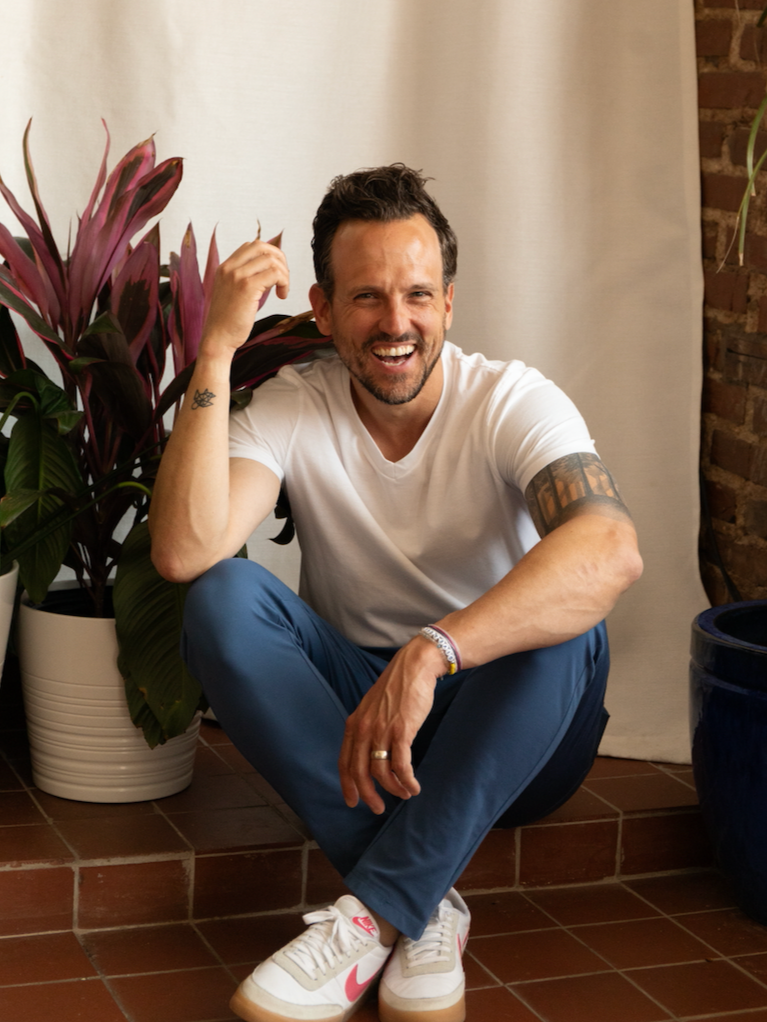
Rounding the Bases is my podcast about culture and leadership with a baseball twist. A few minutes before a recent interview, I remember thinking the conversation I was about to have would probably be about leadership in branding. Maybe business growth or employee culture, but definitely within the usual territory.
In practice, it became a conversation about peace, perspective, and purpose…three values my guest didn’t always live by.
Justin Ricklefs is the Founder and CEO of The Guild Collective, a brand consultancy closing the gap between organizational beliefs and behaviors. He’s also the author of Give a Damn, the new book for leaders that positions care as the most underutilized competitive advantage in modern business.
A few days earlier while co-presenting at a charity event, I spoke about my own P’s: positivity, practice, people, and purpose. They’re themes I revisit often, both in my keynotes and player interviews as a KC Royals broadcaster.
But in this conversation, they became the foundation of a deep conversation about how not to lose yourself while building something great. It’s a weight many, especially high achievers, carry with them daily, even if they don’t admit (or realize) it.
SINGLE: contracting to expand
Before Justin Ricklefs founded his business, The Guild Collective, he was on the sales team for the Kansas City Chiefs. He left to pursue entrepreneurship because he wanted more balance, and more alignment between his passions, skills, and work. After a few years on his own, he chose to actually shrink his business, not because it wasn’t working…but because it was.
He was consumed by a “more, more, more” attitude that had become crushing, and he began to feel the impact of constantly carrying the mental burden. The voice that says every opportunity matters is one I know well. Even though it sounds like another chance to grow, sometimes it’s actually just anxiety with better PR.
“Back in the day, I was like, ‘No, no, we can do this, we can do this,” he explained. “I had all of these rocks in my backpack, and all of a sudden its like, wait a second. Let’s just go slower and be more strategic and simple.”
He scaled back his team and narrowed The Guild Collective’s service offering. In a culture where constant expansion is rewarded, it was refreshing to hear a successful businessperson talk openly about choosing peace over growth.
“The fearful part of me was like, oh, if we get really small and simple, then we’ll exclude all this other work,” Justin said. “But the inverse is really true. When you get clear on who you are and who you serve and what you’re actually awesome at…then the work starts to show up in was that are much more value aligned.”
Listening to him, it made me think about the rocks in my own backpack. Broadcasting. Speaking. Podcasts. Travel. Boards. Deadlines. Expectations. I love it all, but can also appreciate the weight of being everywhere and nowhere all at once. Sometimes, protecting your energy is even more important than adding another line on your resume.
DOUBLE: presence is built, not wished for.
Justin and I have both had recent collisions with the idea of presence.
For him, it was a silent retreat at Conception Abbey where he spent two days with no phone, no laptop, and no talking.
“I was so exhausted…when I got there, you put your phone away and you can’t talk for 48 hours. For guys like you and me, it’s tough,” he explained. “I just had to sit there and soak it in and receive and be present.”
The first night, he caught himself reaching for a phone that wasn’t there, desperate to learn more about the monks and their routines. Instead, he simply had to watch and wonder.
Around the same time, I attended a four-day business retreat. It wasn’t silent, but our phones were held in a box during sessions, which everything about the way we live now. We don’t even reach for our phones because we need something, its just because stillness has begun to feel unnatural. Even though the experience of disconnecting was uncomfortable, it forced an important shift in each of us.
“When you go on a walk without your phone, crazy stuff happens,” Justin said. “Little downloads for creative projects…you just start to see stuff.”
Many of us are so overstimulated that we can’t even hear our own thoughts anymore. For me, finding the discipline to do just one thing at a time is the key to mental recovery, before a constant state of anxiety becomes the norm.
TRIPLE: anxiety in disguise
I found myself wondering how many high performers look successful on the outside while feeling completely overwhelmed on the inside. During the interview, we pulled back the curtain on this in different ways.
“There’s this current underneath building something that is the exact opposite of presence, peace, and purpose,” he told me. “I’ve lived it.”
That sentence landed hard with me. Ambitious people live inside that current every day, and if I’m honest, left unchecked, I put the same pressure to produce on myself. I’d bet I’m in good company with many others who do the same. But the question becomes…when does it stop? Justin used a powerful analogy from the Shawshank Redemption to illustrate.
“Change is really gradual…you don’t see it in the moment,” he said, describing the scene of Andy Dufresne chipping away at a rock over time. “Then you look back and, like, holy crap. I’m a different person.”
I again thought about my business retreat. When I came home, I was staring at two days packed with work before Royals Opening Day. A few years ago, that version of the schedule would have derailed my entire mindset but now, the panic wasn’t there. And maybe that’s what growth looks like sometimes. It’s the daily practice of boundaries that don’t eliminate the stressors, but over time, change how you respond.
HOME RUN: choosing kind, not nice.
Justin’s book title, Give a Damn, sounds simple. Living it is not. I expected it to focus mostly on encouragement and culture, but it actually has a strong emphasis on courage. Specifically, the courage to be honest.
Reflecting on his days at the Kansas City Chiefs, Justin shared a story about having to let an employee go. His regret wasn’t the decision itself, but realizing he hadn’t been truthful enough leading up to it.
“I had to fire someone on the team who was underperforming, and everybody knew it, except the individual,” Justin shared. “I wasn’t courageous enough to tell that individual the truth along the way. [They said], ‘All you ever told me is that I was doing a good job.’”
You could hear how much that still bothered him, and honestly, I respected it. There are leaders who want to be liked so badly that they avoid clarity all together. Justin referenced the idea of ruinous empathy, when people avoid difficult truths to protect their own comfort. That hit home for me too.
“They’re so much evidence of my leadership that was nice, not kind,” he explained. “It’s a self-protective move. I want you to think highly of me, so I’ll just be nice, as opposed to ‘This is wrong right now,’ and I’ll be clear regardless of what you think about me.”
Unclear communication can create anxiety in any relationship. People have a way of feeling the instability, even when nobody says it out loud. It’s why Justin chose to illustrate his book with an image of a match. It represents the power that each of us holds in every conversation, every day. Like the match, we can burn people with our words, or we can have honest conversations that light the way for them.
That’s leadership. And it’s mental health, too.
Listen to the full interview here or tune in to Rounding the Bases every Tuesday, available wherever you get your podcasts.
LEARN MORE ABOUT presence and purpose FROM JOEL
Book Joel Goldberg for your next corporate event. He draws on over 30 years of experience as a sports broadcaster. In addition, he brings unique perspectives and lessons learned from some of the world’s most successful organizations. Whatever your profession, Joel is the keynote speaker who can help your team achieve a championship state of mind.
FULL TRANSCRIPT
Joel Goldberg 0:01
Welcome in to Rounding the Bases presented by Community America Credit Union: Invested in You. A shout out as always to my friends at Chief of Staff Kansas City. If you're looking for a job, looking to hire someone, looking for just a really good resource of people that care about people and culture, that's your spot. That's why I partner with them on a regular basis. Love going over to their office, love the energy there. So, check them out: chiefofstaffkc.com. Making Connections That Matter. Oh, by the way, I'm Joel Goldberg, hopefully you know that at this point, and I've got a phenomenal guest today. Somebody that I've known for a while, and we live on, I don't know, different parts of town, and don't see each other a whole lot, but I think I follow him from afar, and maybe he does the same thing as well on the other end, and so it's good to be able to sometimes just connect in a forum like this in the midst of all the chaos. So today on Rounding the Bases, I'm joined by an entrepreneur who dared to ask, what happens when care comes first? And spent a decade proving what happens when it does. Justin Rickleffs is founder and CEO of The Guild Collective, a brand consultancy closing the gap between organizational beliefs and behaviors. His new book, Give a Damn, is a catalyst for leaders who want to capitalize on the most underutilized competitive advantage in modern business. It's anything but average, and that is exactly the point. I am happy right now to get to reconnect. Oh, we connected for a few minutes before we came on with my friend Justin. Justin, congrats on the book and all of your success, and I know so much more coming. How are you, sir?
Justin Ricklefs 1:36
Oh, I'm just.. I'm honored to be with you. And it's fun to, fun to follow your footsteps here, Joel, 100% following along with your journey, and I think there's there's a couple things that came to mind when you're reading the intro. One is how awesome is Community America? That, they go back to my Chiefs days, putting that first program together, and then the Chief of Staff crew. Casey and Lisa, and that Kendall in that group, they're just the best, and it is Kansas City at its finest. And our oldest daughter is living in Phoenix. She graduated college, she started to look for jobs in Kansas City, and that was the very first thing I told her. I was like, "You gotta call the Chief of Staff folks, they'll help you find your way. And yeah, so anyway, glad to be here, man.
Joel Goldberg 2:19
Let's clip that for them and send it over to Chief of Staff and the Community America. They already know that we love them both, but that's cool. That is so Kansas City, without a doubt. You are so Kansas City as well. And I just...I don't know when we met. Probably six, seven years ago? Or I don't know. I probably should have gone back and looked at my notes. I just know that wherever we were at then we have grown like everybody else, and we're in a different place. And I do want to talk about the book, but I want to talk about your business first, because I know that it's evolved and continued to grow. Tell me about the business.
Justin Ricklefs 2:54
Yeah, man, it was...I think we had lunch at Red Door, of all places?
Joel Goldberg 2:58
We did have lunch at Red Door. That's weird. I could picture that. I just, yeah, no idea if it was like I think it was. It was pre-pandemic, but it would have been like 18 or 19 or something like that. Anyway, not for anybody else cares, but I had the same image of Red Door. There's another Kansas City shout out. Red Door should be a sponsor. Anyway.
Justin Ricklefs 3:14
Yeah, they definitely should. I mean, gosh, yeah, the business has changed a ton, and we're what's what's wild is that we're nine years in, which on one hand feels like an eternity, and on another hand feels like we're just getting started, and we've just.. I think you know, I've changed, and most fundamentally I believe now what I didn't believe at the start, which was, hey, the road to my core values, which are peace, purpose, and presence, are not going to be found by continuing to chase and add and be spread thin and diluted. It's actually, and I didn't believe this advice back in the day, when people are like, "Hey, you got to niche down, you got to be super specific, you got to find a really focused lane. I was like, "No, no, we can do this, we can do this, we can do this, we can do this, and clients are asking us for all this stuff, and this person will solve all these problems, and.. and I've gone on a journey, but therefore our business has gone on a journey of getting really strategic and tight and focused and simple, and to develop a system of how do we help brands discover their heartbeat? Because from a from a Guild perspective, we believe that if a brand can discover their heartbeat and become a human-first brand, that all the downstream tactics will start to be illuminated and clarified, as opposed to us trying to do all that for them or find the right people to hire, or whatever. So all that to say, the business is, has, in a lot of ways shrunk. Frankly both in team size, we're a team of seven, where at one point we were a team of 14, and so our team has has gotten more strategic and more sophisticated and more simple, and in a lot of ways it feels like we're kind of climbing this mountain, and I had all these like rocks in my backpack, and all of a sudden it's like, wait a second, let's just go slower and be more strategic and simple, and so what's interesting is, you know, the fearful part of me was like, oh, if we do that, if we get really small and simple, then we'll exclude all this other work, and we won't, you know, we won't grow, or we won't make payroll, or whatever else, but the inverse is really true, is that, like, oh, when you get clear on who you are and who you serve, and what you're actually awesome at, not just what you say you're awesome at. Then, then the work starts to show up in ways that is much more value aligned for everybody involved, and it's actually more delightful for everybody involved.
Joel Goldberg 5:59
There's a lot there, and here's where my mind went; To start knowing the best of ways. It means that I'm just gonna, you know, go down this tangent. I'm a tangent guy,
Justin Ricklefs 6:09
Same.
Joel Goldberg 6:09
It's just interesting as you were talking about peace, purpose, presence, because I was doing a short speech last night for charity, and I was co-presenting, and my co-presenter, former guest on this podcast, who you might know, Chuck Cuda, and Chuck was doing, and he is, you know, that's why I thought you might know him, but he's got a phenomenal charity or foundation, The Opus Foundation. And they are raising tons of money for pediatric cancer, and so we did a little event just to continue to raise money. They've got a big gala over the summer, anyway. Cool, because we were doing the two perspectives of very successful, highly successful entrepreneur, and me. From my sports background. And, intended joke, but I'm an entrepreneur too, but, but you know, two different backgrounds, really, and two different stories, and so he told me he was going to do the 4c's and so I thought, well, I'll do the 4p's. And my 4p were positivity, practice people and purpose, but I'm not sure. As I was thinking about this, not that I had to go back and change that, or but are you always thinking about the next time in a certain situation? That's not my usual speech, but I thought my four Ps of practice, positivity, practice, people, and purpose happen if you're present, and I think the purpose leads to peace, or maybe the peace leads to purpose. I'm not really sure. That's just where my mind went. And I was thinking that they're all. this is obviously not planned, right? I'm kind of riffing off of what you said, which is at least my favorite way to do it, but I think they're all tied together, you know? I just...and we could get into this too, because even like on the Guild Collective website, the headline says Cultivating Connection, Cultivating Clarity, Cultivating Creativity. But Cultivating Connection, I don't think any of that happens without presence. I don't think it happens without purpose. Everything that we're saying, it's all, it's all intertwined. And then my belief is, is that all leads to greater peace. I'm curious, your thoughts, because I'm just, I'm kind of like I said, I'm riffing off of where you went with that.
Justin Ricklefs 8:41
I am grateful that you did, because it, I think, part of, part of what doesn't get discussed much, especially in the entrepreneurial circle. I walked into a very quote unquote successful CEO last summer, and we were, we were meeting for the first time, and he shared with me, and I won't name his name, is his story, but he shared with me, he's like, it was like on a Thursday, he goes, last Friday, I, my wife checked me into the hospital because I was having a panic attack, and they hooked me up to the heart thing, and it wasn't going great, and I think there's this - I've lived it - there's this current underneath building something that is the exact opposite of presence, peace, and purpose. The purpose piece might be a little bit clear, but the absence of peace for me shows up, and, and again, it's.. it's.. I'm dealing with it. I'm working. I love your word, practice. I'm practicing peace, because you have to receive peace. You can't.. you can't like create it, because what I create is anxiety. I create this like chase of like, we gotta like go do stuff. If we gotta like make more money, we gotta like it's just this frenetic, like constant hum of anxiety, and so for me, what what started to happen was, man, I just, I got exhausted. Like, last summer I went to a silent retreat at Conception Abbey, I'm not even Catholic, but I had a friend who had gone up there, and he was like, 'Dude, just go up and hang out with the monks for a couple days, and I was, I was so exhausted that when I got there, you, you like, put your phone away, no laptops, and you, you can't talk for 48 hours, which, for guys like you and me, is tough, and and I just had to sit there and soak it in and receive and be and present. And the lack of presence in my life was pretty evident, because it's like, man, I was just kind of, you know, it's just what you do, you're never divorced from it, you're always with it. The thing. The building of a thing. You're always with it. And, and I'm glad you went there, because I think it's, it's a piece that, man, it's like, yeah, cool, we, we do have a pretty website, we say cool things on the internet, and it's like, quote unquote, successful, and like, if, if you don't reckon with your own relationship to it, as, as an owner or a partner, it will consume you. And, and I think that's, I love your four Ps, I love Chuck's 4c's Like, we obviously are alliterative in our nature too, but I think that that presence, just to like, right this moment, is enough. It's good, like having a conversation with you, Joel Goldberg. Are you kidding me? Like, it's just really good.
Joel Goldberg 11:37
Well, that feeling truly is mutual, and because I, I'm reminded of the depth that that you bring, and so these are these are such great conversations, like I don't even know where the rest of this is going to go, but I promise we'll get to your book, that that is why I wanted to have you on, but then I'm like, yeah, but but this is all like this is all great deep stuff, and so now my tangent goes to the silent retreat. I'm just coming off of a four day retreat that was not silent, but it required ridiculous amounts of presence. It was.. I don't.. it's a business group that I'm in, but I don't know, you could call it a wellness deal, but I mean, it was like. I can't get into and properly explain it, other than to say that, that it, you know, it touched me and everyone there at deep parts of our souls that, you know, just like I walked out of there physically and spiritually feeling different, and so I bring that up because I'm guessing that after 48 hours of not being able to talk, which is scary for a lot of us. And then not having your electronic devices might be even scarier. That part to me, I actually, yeah, I actually like that part better. So I will say, like, in my four day retreat, anytime we were in session, you had to either put your phone in a box or leave it in your room, and it was so peaceful. It was so nice to get away from that, that it just has me saying, How about we leave the phone in the room every now and then, and just don't have it by our fingertips? How about leave it in your pocket when you're driving, not just for the safety, the obvious safety, as we watch everybody driving around us all swerving because they're looking at their phones, that's not a rant, we all see it, some of us do it, but how about the piece of just driving or actually listening and paying attention to one thing, and we've lost that ability, so you know when you talk about connection on the website, you gotta, we gotta model it first. And how many of us are actually present in any conversation, myself included, that this is what society has created, created this is what the algorithms have created, this is what our kids have only ever known, we have modeled that for them, and then we wonder why they're so messed up. Oh, that's a rant that I wasn't expecting to go on, but it's affecting us too. So, my question is, What did you feel like when you walked out of that silent whatever retreat? What did you feel physically and spiritually, and what did it feel like to utter those first words?
Justin Ricklefs 14:18
Dude, I felt the same way you did after your four days, which was, I was, I was surprised, I was literally shocked at how fast, I mean, for like on the phone part, I was the first night, you know, the literally the very first thing was like to go that the monks have evening prayers, they call them vespers, I think. Are my the Catholic friends on this podcast can correct me if I'm wrong, which I probably am.
Joel Goldberg 14:50
Don't ask the Jewish guy.
Justin Ricklefs 14:52
Yeah, but they, but the monks are, they've got an organ, and then they're all facing each other. Are like a choir, and they're they're chanting back and forth, and just read, they're reading psalms, essentially. And so there's like these 15 retreat tents, these dudes I didn't know were all in this massive church called the Basilica, watching them. And, legitimately, dude, I was like grabbing my pocket for my phone, which I didn't have to. I wanted to learn about them. I wanted to search, like, what's the monastic life? How do these guys do this forever? How many times do they like quit? Like, why? Why are they in black robes? Like, I wanted to find out information, but I couldn't,
Joel Goldberg 15:31
Because, because our brains want to get those answers immediately, because we've been trained to search for whatever pops into our head.
Justin Ricklefs 15:39
100%. And instead I was forced to sit there and just watch them and be present to them and to wonder about them, and then to ultimately like be to experience them, and what I'm building up to the how I felt when I left was I was shocked and surprised at how quick all of that stuff came right to the surface. It's not like it's really not a damn mystery. When you have the phone in a different room, and, dude, I'm as addicted to the phone as they get, right? Like, it's a hardcore addiction for me that I'm trying hard to divorce myself from, as practically as this morning, when I go on my morning walks, I leave the phone at the, at the house. Well, what if so and so texts, or what if this happens, or what if somebody needs me, or a kid gets sick, and it's like, dude, it's 40 minutes. Like, the world is not going to burn down. And when you go on a walk without your phone, you crazy stuff happens. Like little downloads for creative projects. Oh, here's a title for an article. Here's a blue bird who's mating with another blue bird. That's weird. Like, how's that happen? Like, you just start to see stuff, and, and what.. what I was struck by, and I did tell the story in the book, at the very end, is I'm sitting in this pond, it's a July summer morning, and I'm in silence, and I'm journaling and reading and doing stuff, and they have at Conception Abbey, there are those big on the outside of their property, there are those big, I call windmills, but they're they're like the huge metal turbines, like the wind turbines, electricity generators, and I'm watching this thing, and it's like spinning, and it's making these awful, like, whoosh, whoosh, like those noises, right? And I'm sitting there, and I'm like, oh, damn, the, the windmill doesn't, isn't responsible for wi-, for the wind. Like the windmill doesn't create the wind. The windmill receives the wind. And I was like, man, How much are we out here in life and in business and relationship and whatever, like we're just trying to make the wind go, we're trying to blow the wind, we're trying to hustle and create and like generate the wind, as opposed to just receiving what is. And so all that long-windedness to say, Joel, like, what came up for me as I left was like I just felt light, I felt free. I felt present. I felt okay. I felt like I was enough. And I think the, the constant hum of like, you got to go create it, you got to go chase it, you got to go build it, you got to go do it, you got. Like, it's so...it's such a lie. Like, it's not reliant on me. The universe is going to be fine without me, and that the last thing I'll say is, as I was walking out, they've got a, they've got a cemetery right next to the monastery, and all these tombstones say, like, Brother Jacob, or whatever, born in 1812, died in 1863. And like all these 1800s and I'm like, yo, dude, like, we're literally all gonna be dead in the next 60 plus years or so. Why are we so afraid? What am I so afraid of?
Joel Goldberg 15:39
Oh, so good.
Justin Ricklefs 16:25
And so, anyway, that was a long...
Joel Goldberg 16:25
That's so good.
Justin Ricklefs 16:25
In return.
Joel Goldberg 16:25
No, it's, in return, and well received as well. I get the feeling light, and you look, I came back and came back to having 48 hours to get 60 hours worth of stuff done before I head out for as we're recording this for for the Royals opening day on the road, and and and yeah, it was stressful and sleep deprived, but then I'm like, I'll be all right, like, just do what you can do, and the rest will be there. Or not. And it's okay. And, and I don't know, it's, it's, I guess the fear is that you go back to where you were before, but I'm not sure that you totally do. You're not going to get to the end, you may never get to the end, but I feel like you walk out of, I assume, the 48 hours of silence, I walk out of three days of this retreat, and and you just, you take with you what you experienced, and you can't, I don't think you can unwind that, and that's, and I find myself just in the last 48 hours seeing things and stopping. Thought processes before they evolve to becoming more detrimental, that voice in our head, that thing we tell ourselves, or living with it and experiencing it and feeling it, instead of running away from it. And so somebody had said to me, you will, you will feel different, and you will take it with you, even if you don't realize it. Like, stop trying to take so many notes, stop trying to over analyze it, and just experience it, and I'm like, "Shit, they were right."
Justin Ricklefs 20:24
Yeah.
Joel Goldberg 20:25
I don't even know, but I'm sure you feel the same way.
Justin Ricklefs 20:29
Yeah, I relate it to, like, you know, the scene in Shawshank Redemption, when Andy Dufresne's like chipping away at the rock for, for months, years, decades, whatever, right? He's just got that little hammer and chisel. Corey Shear gave me one of those on book release days, so thoughtful of him, because I use the same analogy with him. But, like, you don't, you don't see in the moment these little rocks are chipping away. Like, change is really gradual. You start to, you start to shift and change, and all sudden it's like, boom, you break through, and then you get the benefit of, okay, and then you got to climb through the shit tunnel for a mile, and then at some point he's in the lake, and the rain's coming down, and he's got his hands over his head, and it's like that's liberation, but like, in the process of transformation is freaking brutal, it's really hard, but those little gradual changes over time are are imperceptible in the moment, but then you, you, you look back and, like, holy crap, I'm, I'm a different person.
Joel Goldberg 21:27
Yeah, and just embrace it. Embrace wherever it's going. Okay, I could go so deep into this, but I want to talk about the book, and, and you know, some of it, as you mentioned, may apply to this as well, but let's talk about it. Give a Damn. The Catalyst for Caring Companies: A Book Bbout How to Use Care as Your Competitive Advantage. I love that, because you know one of the things I say to every audience is what makes you different, and it can't be that your product is better because somebody else has a product that is on the same level, maybe better, maybe a little bit worse. Somebody has something that matches your level. There's a good chance a lot of people have what matches your level. To me, the competitive advantage is trust, it's connection. But you know, talk about the 4c's throw care into there. So, let's talk about that, and the inspiration for the book.
Justin Ricklefs 22:21
Yeah, I, yeah, in its most simple form, Give a Damn was a phrase that that I found myself saying when I was at the, in the Chief's front office, and and then we brought into the Guild environment when we started the business. We put it on t-shirts and stickers and coffee mugs, and we said, like, hey, you got to give a damn, right? We didn't make up the phrase, other people have said it, but over time I started to get asked these questions, like, well, cool, it's it's cute, but like, what's it mean? Like, how do you give a damn? What's it look like? What's the framework? And, and for me, the creative process was, okay, I'm gonna...it was...it was equal parts mystery, and kind of those downloads, you know, from use or source, whatever you want to say, and the discipline in the practice, to use your word. Of sitting in the seat and doing the work, but...but the thesis, like the kind of a curiosity thread I kept pulling on was like, can companies prioritize care as the competitive advantage? And as I, as I started to extract, like, okay, that is, that is true, and the evidence is all over the place when you start paying attention to it, and it's, it's true at a local restaurant, it's true at a B2B company, it's true at scale, it's true in every environment, every industry is that when, when you care, it does change the fundamental human connection, and the emotion that gets evoked. Nobody walks around saying it, but you feel you feel a certain way when you engage with someone who gives a damn. And, my gosh, like, I like, think about, I know there's a million other examples, but I think about you in 2015 on the sideline, or you know, next to the dugout, and then Salvy is dumping water over your head, like Gatorade. It's like, like those moments are, he doesn't like, yeah, it's like the reporter guy that's like, no, no, you, you forged connection with him, and those, those moments, I know there's a million others now, but like those moments get like saturated into our psyche, and they hang with us, and then all of a sudden you're like, oh, Salvy Splash. Joel Goldberg. Cool, Royals want, like, you associate it with a, with a, with a joyful moment, and I, that's that's what I started to try to discover, which is like, hey, can you.. it's not perfect, it's not easy, it's not linear, it's not black and white, and it doesn't happen immediately, but if, if a company, and therefore its leaders can prioritize being curious, being clear, being compassionate, and being consistent. That over time you build this really long runway to your point of trust and growth and goodness that makes people feel better than like hey this certain company has another freaking sale and they're jamming ads down my email inbox and like maybe with some reluctance I'll buy their stuff because I'm kind of annoyed by it, and it's cheap, but it doesn't, it doesn't leave the world any better.
Joel Goldberg 25:25
In the Amazon description, it says drawing on real leadership failures, hard-earned lessons, and stories from high-performing organizations. You worked for a very high-performing organization in the Chiefs, we've all had those failures along the way. I think it's what makes most of us better. I'll ask you about the swing and miss question in a little bit, and there'll be a lesson there, but when the description says drawing on real leadership failures, dive into that a little bit deeper for me.
Justin Ricklefs 26:01
Well, when I was, when I was leading a team at the Chiefs, and in my early 30s as a director, and I had to fire someone on the team who was underperforming, and everybody knew it, except the individual, because I wasn't courageous enough to tell that individual the truth along the way of how his or her performance wasn't matching expectations of the business. And him or her, when I relieved him or her of their duties, said, 'Oh my god, like, all you've ever told me is that I was doing a good job. That's like, 'Yeah, well, you weren't, and I was not courageous enough to be honest with you, right? So, like, that's a failure. What's what's also a failure is I was on the receiving end of plenty, and this is a different, different business, different conversation, but was, was told at one point that we are in that the sales team was an embarrassment to the organization. To the owner specifically. And it's like, man, like, is that like, we get, we treat people like that here? This is how, this is how it goes? And instantly in that moment I was like, wait, is it true? And then if it is true, like, maybe I am a damn embarrassment. And you, you leave feeling like you're bad, wrong, inadequate, insecure, right? And so I think those, those moments, you know, get lumped into like, oh, it's just business, don't take it personally, and it's like, no, you definitely take that stuff personally, and it carries with you for a long time.
Joel Goldberg 27:36
Yeah,
Justin Ricklefs 27:36
And so, yeah, those are those are a couple that come to mind.
Joel Goldberg 27:39
That's, it's, that's good stuff. They're great lessons to learn, and I know, for me personally, I, I learned just listening to that. Wait a minute, you know, I need to be better with this, I need to be better with that. It's all a learning process.
Justin Ricklefs 27:52
Yes.
Joel Goldberg 27:52
The two websites I want people to know about, and then I want to get to the baseball themed questions. GuildCollective.com. We'll put this in the show notes, GuildCollective.com for Justin's agency, and then his website is justinrickleffs.com, and within there you'll find the book, which leads you to how to purchase it, and all of those things. Let's go baseball theme questions. What's the biggest home run that you've hit in your career?
Justin Ricklefs 28:17
Whew, honestly, I'm looking at your Monarch's pendant behind you, and the Buck O'Neil bobblehead. Like for a long time we got the pleasure of working alongside Bob, and when Kiona Sinks was at the Negro Leagues Baseball Museum, and, and, and they weren't our quote unquote biggest client, or whatever, but like to sit in the offices of the Negro Leagues Baseball Museum as a kid from Kansas City, and to listen to Bob Kendrick tell stories, it's just like chills, man, chills.
Joel Goldberg 28:52
Yeah, I'll just say this real quick, and I joined their Board of Directors last year, my first meeting as a member of the board at the old YMCA, which we're going to, you know, turn into the new museum and build that, and that's, you know, coming up here, but my first meeting last year on the board was on the one to the day, the 105-year anniversary of the creation of the Negro Leagues, which were formed right in that building, and I'm like,
Justin Ricklefs 29:20
That's insane. Insane.
Joel Goldberg 29:22
How am I here right now? I mean, just, you can feel it all right. Let's go back to the failures. Sorry, biggest swing and miss, and what did you learn from it?
Justin Ricklefs 29:34
Biggest swing and miss, I think that, yeah, I mean, I tell some of those stories in the book of the times when I wasn't courageous enough to be clear. And I think the hesitation to, you know, if you can excuse, like you can kind of, at least for me, drift into this nice bucket of like, oh, he's a nice guy, he's a good guy. As opposed to kindness and clear, and there's so much evidence of my leadership that was nice, not kind. And that swing and miss was that firing story. One of, one of several, which was like, oh man, I didn't have the courage to like, represent myself. To name what the damn standard was and what the, what excellence looks like here. And so I think there's, there's a whole trail of my leadership that's marked with, man, he was a really nice guy, but he didn't tell me the truth, and that, that's those are deep regrets for me.
Joel Goldberg 30:33
I so relate to that, because I've always been someone that cared so much about making people feel good, not wanting to disappoint people, that in the end you lose sight of what they need the most, which is the truth.
Justin Ricklefs 30:47
That's right. And it's such a selfish...I've gotten work from a counselor on this. It's a really self-protective move. It's a really egocentric move. To you know, Kim Scott, in her book, Radical Candor, calls it ruinous empathy. It's a, it's a self-protective move. I want you to think highly of me, so I'll just be nice, as opposed to, hey, this is wrong right now, and I'll be clear, regardless of what you think about me.
Joel Goldberg 31:12
Wow, yeah, so strong, so, so good. We all, some of us are better at that than others, but certainly many of us are a work in progress. Okay, small ball. What are the little things that add up to big results for you?
Justin Ricklefs 31:27
I think the simple moves of man, like I just read Essentialism from Greg McCowan. I'm like, 12 years late to his party, but it's like we actually don't need to do more stuff, it's actually doing less stuff better. So for me it's like, okay, how every day can I write? Because writing is helpful for me to articulate thoughts and help connect to our audience, and how do I prioritize the right in-person meetings? And so I think getting clear organizationally and by role on what are people actually awesome and gifted at and come alive doing, and so I think those, those simple practices of prioritizing presence on the things you're actually good at are are really helpful over the long haul.
Joel Goldberg 32:11
It's great, great. Oh, that's so good. Four final questions as we round the bases. Let's start with this one, and I love that my amazing assistant and producer Ashleigh digs up some fun stuff all the time, so my notes say that you were originally at first named after George Brett, and something changed in that story. So I've never really thought of you as a George or a Brett. What happened?
Justin Ricklefs 32:39
Brett was my birth name, and I was born in game six of the 1980 World Series against the Phillies, which we lost. My dad went to game five, and my brother at the time was 10. He's 10 years older than me. His name's Brad, and so as a 10 year old in a baseball town with the Royals rockin' powder blue at the height of the existence, he's like my baby brother's gonna be named after number five? Like that's, that's bs. And so I love Brad, I love you, bro. And I could have been Brett Rickliffs instead of Justin Rickles, but yeah, then my parents are like, alright, alright, man, like we'll just, we'll shift his name, he will never know about it.
Joel Goldberg 33:19
So basically, like any kid born around that time, there was going to be a Brett in the Rickleff family until Brad said no.
Justin Ricklefs 33:29
That's exactly right. That's exactly right, because he's like, I wasn't named after anybody famous, right? Like George Brett.
Joel Goldberg 33:35
Well, in 1970 if that's when he was born, George, George wasn't, you know, that wasn't a thing yet, or they're more Bretts than George. Yeah, anyway, okay.
Justin Ricklefs 33:46
Yeah.
Joel Goldberg 33:46
Second question, that's a great story. Second question, as we were on the basis, she had this one too. I thought this was good, not the, not so much the first part, but maybe the second part says started his work life as a cook in a Mizzou fraternity kitchen. All right, some other people have done that. At the time was a newlywed with a baby on the way. That, that's a whole nother, everything to balance. How did you guys do it? You guys got married young, but what do you remember about those days? I know that's a lifetime ago.
Justin Ricklefs 34:16
Yeah, I will be brief, because it is, it could be a long story, and I know we've got timelines for you to keep and get out of town, but yeah, my shout out to Leslie Jett. He was the, he owned a company called Jet Foods, he was the house dad of the Agro house, and I met him, got a, we got a part-time job in college, and then when I graduated in May of 2003 he was like, "Can you work full time for a while until you find something else, and so Brooke and I did get married my senior year. She was out of school, so we got married in January, and then she was pregnant by, I think, April or May. So, right when I started full time with Jet, that was when we found out. We're having Camden, who is now full circle having conversations with the Chief of Staff to find a full-time job in Kansas City. So, yeah, it's...it's a wild...that was a long freaking time ago, but, man, like, we had a $400 a month apartment, and I was slinging chicken fingers and tater tots at the at the Agro house, and we had a baby comin' and we were, you know, in a lot of ways, is like really simple and beautiful, but we're ready for, for something else too.
Joel Goldberg 35:27
Five kids later, and you know, career change and all that. Here, here you are. So, I want to go with my third question. What, what did your time with the, with the Chiefs? Man, I'm sure there's some people that say, oh man, you missed, you missed your time there, you could have been there when they were winning all the Super Bowls, and all that kind of stuff. I'm sure you get that all the time. To me, I'm like, no, you went off and started something amazing, and, and I'm, I'm thinking and guessing it was a springboard to the next chapter in your life. What did you take from the Chiefs that put you to where you're at today?
Justin Ricklefs 35:57
Oh my gosh, nothing but respect and reverence, like, yeah, for that stage of my career. To have that level of access, exposure, relationships. You know, I was just so fortunate. Learned from Clark and Mark and Tyler Epp and Tammy Fruit, like all these wonderful people have great friends with Sean Long and Adam Rossbach and Brian Johnston, and so I think, you know, Chris Stat, those Colin Potter, like there's the relational access, there was unmatched. And you know, I mean, you're, you're in it. What was also true is I was at the season of life with five kids and these desires, and also trying to figure out who I am and what, what I really want to be in life. And so, yeah, March 17 of 2017 I left, and then in late April they drafted Mahomes. So it was like, you know, in a gift kind of way, like I don't think I ever would have left unless I got fired or run out or whatever, but I don't think I would have left had I been there when it was.
Joel Goldberg 36:54
Would have been too hard.
Justin Ricklefs 36:55
Would have been too hard. And so cheering for them, it's been such a fun ride, and there's part of me that's like, oh, wow, you guys got hella good after I, after I bounced.
Joel Goldberg 37:06
Ah, good stuff. All right, final question, the walk off, ultimately, what do you want people to take from the book, Give a Damn?
Justin Ricklefs 37:15
The, the, I've got, I've got a book right here on the cover is this one really simple piece of art. It's a, it's a match. It's a lit match. And I took that from Father Paul at the monastery, actually at Conception Abbey, because every time he'd start our sessions, he would strike this match, and he was very deliberate and intentional about his practice, and I took that smell, that program, that practice with me, and as I was reading the book, or writing the book, we got to the very end, and Jason Muir, who did all the design and layout, he's a, he's our Guild Senior Art Director, he's terrific, he was like, what do we want on the cover, this and that, and I'll make the super long story short. There's the, there was a lot of references to flames in the, in the conversation, both like unhelpful and helpful flames in the book, and he was like, oh dude, that's been staring at us the whole time. The, the art is is a match. And in the simple thing I'm starting, and I want to follow your footsteps on the speaking side, but I'm starting to share with leaders, is this from a from a speaking perspective, is we all carry around this matchbox with us every day, and we've got the ability to strike a match and cause harm and hurt and inflict pain, which I definitely did. I shared a few of those stories. Right now, or you've got the ability to strike the match, and like a good candlelight service, you light someone else's flame. And so I think, in its simple form, it's like giving a damn is free, it doesn't cost anything, but it's got the ability to really be helpful, and so I think in a simple way it's like, hey, where's I'm digging for this matchbox, it's like you've got these simple, cheap Walmart matches, like light one and help somebody else versus light one and cause pain, so the match is the is the simple thing I hope people will take with them.
Joel Goldberg 39:21
That's the care, that's the, the, yeah, I mean, we all can do that without a doubt, and that leads to everything that we've talked about, I believe. So, congrats on on everything, your family first and foremost, but the work you're doing on yourself, the work you're doing with your company, the work you're doing for your people, for your clients, and everyone, and it'll keep multiplying. It'll start to multiply at a higher level on stage, and so much more. And so I hope everyone takes some inspiration from that, because we all could use more of it in a day and age where we're less connected than ever before in the. In the fast-paced world that we're moving, and the automation we are, we've all gone into our own silos, and it is a competitive advantage. And so you're modeling that, and so I, I love what you're doing. I encourage everybody to go check out the book. You can check out the websites as well that I mentioned before, Guildcollective.com, Justin rickleffs.com So good to catch up with you. Thank you, my friend.
Justin Ricklefs 40:27
Really grateful, man. I'm really
Joel Goldberg 40:29
Likewise. The feeling again is mutual, and good luck with all of it, and the book. And it's great to catch up.
Justin Ricklefs 40:36
Go Royals! Let's go, baby.