
We spend a lot of time trying to figure out what comes next.
In baseball, we study the scouting report to prepare for the next at-bat, hoping the work we put in pays off when the moment arrives. As a broadcaster, some of the most compelling stories I’ve told are the ones that unfolded in completely unexpected ways. And as a keynote speaker, I’ve seen how often the moments that shape us most are the ones we never could have planned.
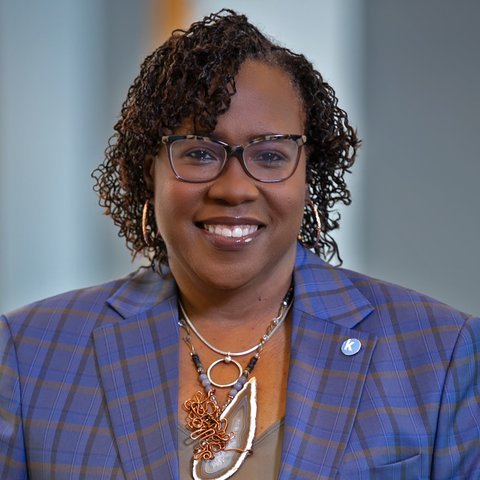
Dr. DeAngela Burns-Wallace knows that story well. She shared it recently when she joined me on Rounding the Bases.
A first-generation college student from Kansas City, she went on to Stanford, became a U.S. diplomat, held leadership roles in higher education and public service, and ultimately became president and CEO of the Ewing Marion Kauffman Foundation. Her journey is impressive, but what it reveals about growth stands out even more. Because while talent and ambition are important, sustained growth takes access, curiosity, and discipline to maintain impact after we arrive.
I often talk about how growth is rarely linear, and our conversation reinforced just how true that is. We all need people in our corner who believe in our potential. Because growth was never meant to be just about what we accomplish for ourselves. It's also about recognizing possibilities we couldn't see before and helping others discover what's possible for them.
SINGLE: when opportunity meets talent
Potential is everywhere. Opportunity is not.
That distinction sits at the heart of Dr. Burns-Wallace’s story. Her journey to Stanford was a significant personal achievement, but it wasn't one she had to navigate alone.
“Talent can be universal,” she said. “Talent is in a lot of place, but when you don’t have access to opportunity with that talent, that’s when the unlock really happens.”
That idea reaches well beyond education. In organizations, on teams, and throughout our communities, we often talk about finding the next great leader. But recognizing potential is only the beginning. What happens next matters just as much. Does that person have access to the right resources? Is there an advocate willing to share knowledge, make an introduction, or open a door that might otherwise remain closed?
“How do you create access to opportunity,” Burns-Wallace asked of this responsibility. “How do you take a dream and give people the resources and the know-how to truly operationalize that dream into a reality?”
They’re questions that get to the heart of trust and culture. People are more likely to take a chance on themselves when they know someone else is willing to take a chance on them. The strongest cultures create the conditions that celebrate those who have made it, while still creating space for even more people to succeed.
Sometimes, the difference between a dream and a destination is someone who believes in you enough to help you get started, even if there’s no guarantee where those doors will lead.
DOUBLE: not a linear plan
We all like a good roadmap. The best ones help you set a goal, establish the milestones, follow the plan, and arrive at the destination on schedule. But life and leadership rarely cooperate quite that neatly.
Consider Dr. Burns-Wallace’s journey. Diplomacy led to higher education. Higher education led to public service in Kansas. And public service eventually led to leading one of the country's prominent philanthropic foundations. Each role built on the experience before it, but no one could have drawn a straight line from the beginning to where she stands today.
“There’s no way you could draw that. There’s no way you could imagine from one step to another,” she said, reflecting on the path her career has taken. “You don’t know who will carry you where.”
It's a powerful lesson about relationships and the work we do when nobody is keeping score. Sometimes, an opportunity comes because someone noticed something in us that we didn't recognize ourselves. The growth comes when they mention your name in a room you aren’t in.
You can't schedule a moment like that, but you can influence whether you're ready when it arrives.
I see a parallel in broadcasting. You can prepare for a game and study all the stats. But when the game takes an unexpected turn, the most memorable story might emerge from a place you never saw coming. The same is true in life. Preparation matters, but so does remaining open to the outcomes you could never predict.
TRIPLE: curiosity and connection
Sometimes, the next step forward begins with a willingness to go somewhere unfamiliar.
Dr. Burns-Wallace understands that the value of a new experience isn't always obvious at first. It may not lead to the destination we expected, but it can introduce a new perspective or experience that has the power to change everything.
“I just encourage this next generation, these leaders that are coming in, our young people, to explore, to try things, to do something that’s uncomfortable,” she explained. “You never know what it’s going to lead to.”
Curiosity, however, isn't only about the experiences we pursue. It's also about the people we meet along the way.
Throughout my career, I've had the privilege of telling stories across different walks of life. Every one of them has reinforced something I value in both speaking and broadcasting: connection doesn't require us to be the same. It requires a willingness to listen, to learn, and to look for common ground without pretending our differences don't exist.
Burns-Wallace sees those connections as essential, even in a world where technology makes communication easier than ever.
“Making connections and real connections is still something that is really, really important,” she said. “The power and beauty of our world is that we do bring such a richness of differences and experiences.”
Knowing someone's name and knowing someone's story are two very different things. One may take an introduction. The other takes curiosity, time, and consistency to look beyond a person's title or background and really understand what shaped them.
In leadership, that distinction matters. The best teams don't need everyone to think alike. They need people who respect one another enough to learn from their differences and work toward something bigger together.
We can't know which unfamiliar experience will change the course of our life, but we can choose to remain curious enough to find out. And as our own horizons expand, so does our understanding of what growth can mean . . . for us and the people around us.
HOME RUN: sustaining your impact
Looking back at Dr. Burns-Wallace’s journey, it’s tempting to focus on the titles and milestones. But the more meaningful story is what made each of her achievements possible, and what she is doing with the opportunities she’s earned.
Her growth may have began with access, but it continued through unexpected turns, unfamiliar experiences, and meaningful relationships. It also required an honest look at the demands of leadership, and the recognition that lasting impact takes more than individual effort.
It highlights a responsibility we are each charged with carrying, whether we lead a family, a sports team, or a major corporation: To help others grow.
“How do you help individuals see an opportunity, make it their reality,” she asked. “And put that power, potential, and hope back into their hands for their future?”
We may not be able to predict every turn our journey will take, but we can choose how we connect and show up for others.
In my work as a broadcaster and a speaker, I often talk abut trust and culture because they shape what people believe is possible. Growth is part of that story, and it’s never just about getting to the next base. It’s the people who help us, the lessons we carry, and the opportunities we create for those coming up next.
Because growth was never meant to be a destination. It’s a journey…and one that’s best when shared.
Listen to the full interview here or tune in to Rounding the Bases every Tuesday, available wherever you get your podcasts.
LEARN MORE ABOUT growth FROM JOEL
Book Joel Goldberg for your next corporate event. He draws on over 30 years of experience as a sports broadcaster. In addition, he brings unique perspectives and lessons learned from some of the world’s most successful organizations. Whatever your profession, Joel is the keynote speaker who can help your team achieve a championship state of mind.
FULL TRANSCRIPT
Joel Goldberg 0:01
Welcome into another episode of Rounding the Bases, presented by Community America Credit Union: Invested In You. Phenomenal guest today, we'll get to in just a moment. As always, I want to give a shout out to my friends at Chief of Staff Kansas City. Whether you are in Kansas City, like my guest is, whether you are around the country, these guys are...I don't ever call them a recruiting firm. They're just great people that understand culture and teamwork and leadership. And so, if you're looking for a job, if you're looking to hire someone, if you're looking for just great people to connect with, check them out. ChiefOfStaffKc.com. Making Connections That Matter. My connection today came through my good friend Andre Davis, who at some point I need to start giving referral fees to, or something, if there was such a thing, because he introduces me to the coolest and best people. Some people lead, others change the way we think about leadership itself. Today, I'm joined by an extraordinary guest who does just that. Dr. DeAngela Burns-Wallace is President and CEO of the Ewing Marion Kaufman Foundation. Throughout her storied career, she has turned purpose into progress, expanding opportunities across the globe as a U.S. diplomat, political trailblazer, and higher education leader. Now she's challenging others to think bigger about what they're capable of becoming. Opening doors along the way, and helping people discover not only what they're made of but what's possible when they step into the life they were made to lead. I'm so happy to be joined right now by Dr. DeAngela Burns Wallace, who has a big smile here on a Monday as we're recording. And I'd like to say it's been a while since we've seen each other. It's been a little bit, but we we spent about 20 minutes just catching up beforehand. That happens sometimes in the quote-unquote green room. How are you, my friend?
Dr. DeAngela Burns-Wallace 1:41
I am good. Good morning. It is good to be with you today.
Joel Goldberg 1:46
Well, there's so much going on. There always is in your role at at the Kauffman Foundation. I mean, this is, if you're in Kansas City, I think you have an idea of what that is. If you're out of Kansas City, there is probably some version of it in the city that you're in, although it would take the the spirit of the Kaufman family and and the vision that that they had many, many years ago. For those that do not know, and you're not the first CEO from this organization, so it's been a little while. I had your predecessor on, and I will always take anyone in your role over there because it's such a powerful and important organization. Fill, fill my listeners in, for those that don't know, about the work that goes on over at the Kauffman Foundation.
Dr. DeAngela Burns-Wallace 2:31
So, Mr. Kaufman believed, as an entrepreneur himself, that every individual should have the ability to control their own economic future. So, our work really is about removing barriers, so individuals can grow, thrive, and be successful. And we do our work through investing in education, entrepreneurship, and workforce and career development. Um, really leaning into that space and place of how do people kind of build and sustain those things that allow their economic future to be broader? We are based here in Kansas City. We fund into our region at about a pretty high level, but we also are a national funder, so we have partners all over the country and nation as well. And so I'm excited to just kind of share a little bit of our work and the things that have you know led me to this work. It have really been a career in public service that is in and about how do you serve and represent and lean into communities and help those communities thrive. That's what the Kauffman Foundation is about: the communities in our backyard and the individuals of those communities thriving, succeeding, and accessing opportunities. So that's us in a nutshell. And excited to be with you all today.
Joel Goldberg 3:58
Yeah, I'm so excited to have you. I know that that a bunch of months back, I don't remember what, sometime before baseball season started, I got to sit there in your boardroom over there, and we caught up on life and this and that, and and it was so good to to be able to connect with you. And I understood, what I have come to understand with so many CEOs in positions like you, or running organizations, that you are very busy people. You are on the go. Oh, also by the way, trying to be mom and do all those type of things too. It means that you've always got something, a lot of things going on. Let me start with that, and then I want to backtrack to how you got here. But what what are the burning issues, or what are the what are the top two or three big things that are on your mind at the moment?
Dr. DeAngela Burns-Wallace 4:46
Oh, if I say the top two or three things on my mind, I know it's more than that. It is right, and so I'll start at the top. The day to day work right now we're in a grant season, so we are evaluating. Evaluating grants through a couple of our pathways and getting ready to push dollars out, which we are always excited about. That means work is happening in community; things are moving. So that is kind of top of mind. But two, I mentioned as we were chatting, I just hit my three-year anniversary, so we're also in a learning, evaluation, reflective mode. What, you know, what's working? What's not working? Where where we have an immediate impact? Where might we need to tweak things? And what does that look like? And making sure we're we're paying attention. And then, as you mentioned, you know, my day job is here at the foundation, and my all the time job is mom. I have a senior in high school. A 17, 18, I'm sorry, his birthday was last week. An 18 year old young man. I was going to say boy, who is going through the college and all things process right now. So every few days he reminds me the things I have to do for his future.
Joel Goldberg 6:05
Well, I, you know, that brings me to a great segue into your background because you know here's your son getting ready to embark on, on that, that next level education. I know that you were a first generation college graduate, and by the way, I think that any first generation college graduate, no matter where they go to school, is breaking some type of a cycle, whether that be in terms of opportunity or whatever it might be. And everyone in their family at some point has gone through, or hopefully will go through something like that. And by the way, it may not be college either. I mean, it might be something else. The world has changed with that. I know that when I was growing up, it was like, you have to go to college. And now, look, that might not be for everyone. So I want to be careful in the way that I say that. But in terms of you, and in terms of being a first-generation college graduate, I'll just brag on you a little bit. She, she didn't just jump in. I mean, Stanford for a dual bachelor's in international relations and African American studies, Princeton for a master's of public administration with focus in international affairs, and Penn with a doctorate in higher education. So those are three Ivy Leaguers. And Stanford's essentially the Ivy League of the West. What what was that? I mean, obviously you were smart smart kid, and and and you were destined for that, and I'm sure you created a lot of that destiny by hard work and and and those type of things too. But was that for a Kansas City kid who didn't have family members having gone to college. First off, and I always think like when when you see kids that haven't gone go to college or they graduate high school, I always think like the celebrations from those families in the in the bleachers are always the best because, it's like, there's taking none of it for granted, right? Like, this is a huge thing. Oh, by the way, we're going to go to Stanford now, and then you don't realize it at the time. You're going to go to Princeton, and then you're going to go to Penn. Was that daunting? Was that exciting? Like, take me back to a young DeAngela, and and what what was going through your head at that point?
Dr. DeAngela Burns-Wallace 8:04
So I will say I am a lover of learning. So I've always liked school. I was the kid in in kindergarten that like packed my backpack like and had it by the front door and all things like that. That's just been me. I will be honest. So when it came time to think about my next steps, I knew that I wanted to go far and wide. I knew that Kansas City is home, but I wanted to see the world. I have always had a love of, I don't know why or where it comes from, like languages and learning and trying to understand different cultures and ideas and backgrounds, which kind of led me to my path in international all things, but college was like a game changer. It was this unlock to create a space where I could try things, I could reinvent myself, I could go anywhere in the world, like all of these things. And so when I started looking at schools, like I like swung for like the stars, right? And so I landed at Stanford, and it truly was, you know, kind of a dream come true. A first gen girl going to Stanford. My dad was a telephone repair man. My mom was an accountant clerk. I grew up in inner city KC, but my family has been on that journey. So from Stanford to Princeton to Penn, like every, like, my Stanford graduation, I had 35 family members who came out from Kansas City, like like granny, grandma, aunties, uncles, cousins, everybody came, right? Because it was a community celebration. To your point, it was us all lifting and celebrating me, and that has been part of my journey, and it's also then I think led to how I've lived my career in service because it's that talent. Talent can be universal. Talent is in a lot of places, but when you don't have access to opportunity with that talent, that's when the unlock really happens. And for me, that came through higher education and my family supporting, not even knowing what it was or what I was doing or where I was going. They just came along with me on each part of that journey.
Joel Goldberg 10:11
I mean that story, and you just touched on it briefly, it's where my mind went to immediately. That story you're describing of lifting everyone up and that celebration at Stanford for anyone and everyone who could get out there is essentially the work that you do now, right? I mean, that's that that that is all these years later, in a nutshell, on a grander scale, what you're doing, right?
Dr. DeAngela Burns-Wallace 10:30
Yeah, 100%. I think it is that. How do we create access to opportunity? How do you take a dream and give people the resources and the know-how to truly operationalize that dream into a reality, that they then have the tools. It's one thing, you know, the the old parable. You know, you you can you know feed a person, you can lead them to feed them, or you can teach them how to fish, right? And so in this work, it is how do you give people the opportunities, the skill set, the connection to resources. And those resources might be dollars, but sometimes those resources are knowledge. Sometimes those resources are networks, right? Sometimes it's that understanding that helps a person take an idea to a reality. Particularly when we start to talk about our work with entrepreneurs, right? And so, for me, the one thing about stepping into this role at the Kauffman Foundation here in Kansas City is that it gives me an opportunity to give back to a community that helped make me. Like, I couldn't have been successful in those environments without people in this community showing me a pathway, being a mentor. My godmother, if people remember TWA, they were headquartered here, and my godmother worked for TWA. Well, that's how I got back and forth to college, right? Like we hadn't flown before, and she was like, "Let's get you to school, right?" And so, without that community, I couldn't have taken advantage of those opportunities. And so, to be in a role where I can work to leverage our resources to a community that helped me be successful. It is my full circle taking it to baseball, rounding the bases, like hitting it out the park moment. So yeah.
Joel Goldberg 12:12
I mean, for a kid that wanted to see the world, you know, just going to the West Coast and to the Bay Area is quite a change from you know, from Kansas City, I remember the first time I covered an NFL game in San Francisco. I'd never been to California, and this was many years ago. And I thought, wow, this is a whole different world. This feels so different. So that's one thing, but then it's another thing to be trained in French and Mandarin Chinese and serving in diplomatic postings in China, South Africa, Washington D.C. I mean, you weren't, you know, you weren't undershooting here when you said, "I want to see the world," were you?
Dr. DeAngela Burns-Wallace 12:50
Just a little. But for me, again, like I started in undergrad and studied abroad, and then I got the bug. And so I always tell students if you have an opportunity while you're still a student to go overseas, it's the best time. But it was just a bug for me, and it was like the languages, the cultures, moving around, but to experience those different cultures. And during that time, I was a diplomat, and so not only to experience those, but also to serve your country, to be the representative Internationally, it was many different things. I remember in China, I would be talking. My best conversations were with taxi drivers, and they would ask me where I was from, and we'd have a conversation in Chinese. And I would say, "Oh, I'm from America," and they were like, "No, where are you from?" And I was like, "I'm African American. I grew up in America." And I would talk about like my history and my family, and when I would engage people in you know all over the world, when we talk about what a U.S. diplomat looks like or where they're from, right? I was from Missouri. I grew up in Missouri, right, in middle of the country. I'm a woman. I'm African American, and I had people even when I was in South Africa representing the U.S. government that said, like, I hadn't seen a U.S. diplomat like that looked like you. And for me, that was a joy to say, yes, we come in all shapes and sizes and colors and places and our representation, and that's the beauty of our country and our history that that diplomat representing the U.S. government can be that first-gen girl from Kansas City who grew up in the inner city who lands in South Africa and is the press attache that is helping, you know, former President Carter and former President Mandela have a conversation, and I'm the control officer. Like, how does that happen and come together for that little girl from 66th Street in Kansas City, right?
Joel Goldberg 14:51
And how cool is that? I mean, you want to talk about an example to set for everyone, you know? So often, I'll have I'll have women on the show that that are in incredibly inspirational, powerful in whatever their roles are, and you know, oftentimes ask the question if they you know have daughters. The message for their young girls who who may be seeing opportunity that say they didn't know that they had, or that their mothers didn't know that they had. I've said this many times, and I wrote it in my second book that my mom graduated from college and was told that you know back in the '60s that that a woman graduating college can either be a nurse or a teacher, and so she became a music teacher and and she enjoyed that. But, but her calling was something greater than that, and it took going back to community college and getting a degree and and becoming a computer programmer and eventually becoming you know management, traveling all over the world to Japan and England and all these places that that she could have never known because she was told it wasn't possible. And so I I wonder the same thing for you. And it doesn't have to be a daughter; it could be your 18 year old son that looks and says, "My mom did this. I can do anything," or anyone else in the community and beyond too. How much do you think about that? Because to me, that's I don't know how much we can measure that.
Dr. DeAngela Burns-Wallace 16:07
Yeah, for me, it is an important piece in our stories. When we share our stories, when we share our journeys, you know, I wrote my first book earlier this year. It is a leadership memoir. Didn't I didn't mean for it to be a memoir, but it came out that way. It was supposed to be leadership lessons, but part of it, and the reason it turned into a memoir, was because I learned in that journey telling my story was really about how do you inspire others to tell their own story, right? To like take a look and say, where's the learning in my own story? What are the things that I am made for, and that I am just uniquely situated to do and be a part of, or change the trajectory for? Right? And so there's a piece of it that when we really sit in our stories, when we think about who we are, my son, as I mentioned, he is looking at colleges, but he's also an artist. So we're having a conversation and visiting art and design schools as well as four-year and two-year institutions because he has a passion for and talent in animation. So I've had to open up my world to understand, like, what doesn't like someone who he does digital drawing, animation, game design, like those fields weren't the same when I was going through college, even as you know, as a first gen student, you know, x number of years ago. So we've been on this journey of exploration of like, what does that mean, and what does that look like? And what are the job opportunities? And let me tell you, it's amazing. Like it's like game changing. But it's I would say as I talk to my son, as I talk to this next generation of amazing leaders, that I just encourage them to explore. We talked earlier about limiting, right? We have we as just humans have a tendency to limit ourselves, or to say I can do this, or I'm going to do this, and then I'm going to do this, and that's going to lead to this. If I look at my journey and moving from, you know, a diplomat to a higher ed administrator to a cabinet member at the state level to now leading a foundation. There's no way that you could draw that. There's no way that you could imagine from one step to the other. And sometimes when we don't explore, when we don't, when we put limits on ourselves, we actually are decreasing our potential and our opportunities, or even how somebody else might see your next step or opportunity. So, I just encourage this next generation, these leaders that are coming up, our young people, to explore, to try things, to do something that's uncomfortable or that's different, because you never know what it's going to lead to, and when you try it, people see you in different ways, in different lights. One of the ways that I found my way at the state and leading at the state was that someone else saw the work that I was doing in higher ed, and said to the governor, "Hey, this is somebody you might want to look at as you're building your cabinet." I was unaware of it. I was not a part of that conversation. I didn't have relationships like in that administration, but it was someone who saw the potential and saw the impact that I was having that carried my name into a different room in a different space. And when we open ourselves up and we explore and we are doing things that we love and we're having impact. You don't know who will carry you where, and that is what I hope this next generation holds on to.
Joel Goldberg 19:49
Couldn't agree with you more. And you just never know unless you try it. This is true also with the people that you meet. Like I've said this many times before that that I, one of the questions that we ask all of our podcast guests are who do you know that we should have on the show because it opens up network and then you start. So I don't really ever worry about who's coming on this podcast because it just sort of happens, you know, and and people are introducing and and and then you're not in that same group and you never know where can lead in terms of storytelling, in terms of connections, in terms of information, on and on. I have one last question before I get to my baseball theme questions, and by the way, she's referring to her former role as Secretary of Administration and Chief Information Technology Officer for the State of Kansas under Governor Laura Kelly, which is also another segue for me to say, without getting too deep into politics, just because it's such a painful thing to do right now, although an important thing too. But, I don't know. I'm glad I get to talk about baseball and culture and leadership, and and and sometimes it crosses into there a little bit. But how how does a diplomat, or any leader for that matter in this day and age of so much divisiveness, bring people together? That seems to be the secret sauce that some are looking for. Not everyone. I'd love to just vote for people that bring people together, not split people apart. But we live in this world now with social media, AI, automation, instantaneous everything, which is a real challenge for your son and my kids because they've never known any other way of just letting it breathe a little bit. Everything is right now, and it's it's changed the world. How do we navigate that? Whether it's, it doesn't have to be as a diplomat, but I mean, this seems to be the you know the what do we used to say back in the day? The $64,000 question. Like, how do we? I'm dating myself. How how do we navigate this? Because we have to.
Dr. DeAngela Burns-Wallace 21:44
Yeah, I think for me it is, it goes back to I think a simple place of one relationship at a time, right? Making connections and real connections is still something that is really, really important, and particularly when we talk about our young people, like because their world of connectivity has been digital and that they can get to almost anyone, anywhere. There's this belief of like you know they they have all of those connections, but that those real connections, creating space to like we did when we first met, just like sit down and connect and and and talk about our backgrounds and talk about the things that we are passionate about and the things that we have in common. I'm a date myself as well. We used to play the game, you know, Seven Degrees of Kevin Bacon, right? Yes. Right. It's a dating of us. I get it, right? But we would laugh and joke. But in my professional spaces, like I can do about three to four degrees for me to many different places, spaces, and environments, right? And I try to use that on a day-to-day basis. I will have the most random side conversation in passing, and I work really hard to figure out: Can I introduce him to somebody else? Is there somebody else that would be really good to be in their circle, or that would open up an opportunity? The more and more we see each other just as individuals, as humans, as peoples and communities that are going through the same things, that are coming from the same places, that have gone through the same journeys, and that at the end of the day have the same hope and aspirations for our lives, the lives of our communities, our children, and the way we break that down is by thinking about and not focusing solely in that space of difference, but in that space of commonality. We don't have to be the same. We actually don't have to think the same. The power and the beauty of our world is that we do bring such a richness of differences and experiences, and until we get back to a place where we have a depth of that full appreciation of that, we have to start just on that individual level. How are individuals making those relationships? How are organizations building those relationships? How are communities right? And then how we grow to like, and then our institutions, right. So for me, it is everyday relationships. It is telling and connecting our stories. It is how do we bring people together with the commonalities and celebrate, honor the differences, but how do we get to a space where we're not using them as that space of divisiveness? Right? How that we're not leveraging them to show the differences, but there's an appreciation of the differences, but there's also.a celebration of the commonalities that actually bring us together. That's not easy. It's not, it's not something that can, you know, happen in every pocket or space. But the more of us that do it on the individual level, then you start to see that momentum again, which I think is a very powerful piece of like we do crowdsourcing and all other things. So.
Joel Goldberg 25:24
Well said. I just I don't know. I feel lucky and and you know different path than yours. But with all my years in TV, especially my early years, covering a lot of high school sports, where I always knew that I could walk into a farming community into their high school one day. Rural America, not anything I ever grew up in, and and I still needed to tell those stories. I could then the next day walk into say an inner city school. There might be metal detectors, and I knew a lot of people that looked like me that said, "Wait, you went there? Was it safe?" Yes, it was safe. It was fine. People are people, and but I've always enjoyed getting around people that are different than me, and found out that we do have more in common than we realize, and and what is a challenge is when I hear other people from any side, whatever side it is. Wait, you went there? Wait, were you were you okay? Yes, I was okay. I had somebody say to me this weekend. I was doing an event around a crowd that I wouldn't usually be around, and they were relying on me, and and I took a lot of pride in that, and somebody, I see, I've always kind of in my role been a chameleon. I could I could blend in anywhere. I'm not trying to fake it. I just I'm comfortable around anyone, more comfortable, less comfortable, whatever. I'm I'm okay with that. And and she said to me, "You're a chameleon who knows your colors." So I still know who I am, but I don't want to just stay in that space. And I think that if we all could do a little bit better with that, of just stepping a little outside of whether it's your comfort zone or just mixing it up a little bit, we start to have better conversations. That's just that's my little piece of it. So I think we're saying around the same thing. Okay, we got 10 minutes left. I got a bunch I want to hit. Let's go to my baseball theme questions. I know, I know you've thought about those a little bit. What's the biggest home run that you have hit in your long and storied career? With of course much more to go.
Dr. DeAngela Burns-Wallace 27:28
So I would say my biggest home run. I think back to my time in higher education, and I was a higher ed administrator at Stanford, my undergraduate alma mater, University of Missouri, and the University of Kansas. And when I wrote all of that work up, when we were at the University of Kansas, we were able to move graduation rates, first year retention rates, like real percentage points, and had the highest graduation rates and retention rates at the time in the University history year over year. The reason why that was like big in that home run was because the reality is that when you move a retention rate, that means more students are retaining, more students are graduating, more students are on that path, and a lot of times, as universities or institutions, we can get very stuck in saying we can't make a difference. Like it's so big, it's such a large issue that number will, there's too many factors. That number will never move. And we figured out a bit of that secret sauce, which was really about understanding who our students were, where they were starting their journey, not trying to force them into a certain path, but recognizing their success depended on us understanding who they were and the strengths that they brought to the table, and then the institution had to change to be able to help and support and to make them successful. So for every student who made it through, when you see a graduation rate that jumps by three to five percentage points, sometimes in higher ed, that's unheard of in a short period of time. But that can be at an institution like a University of Kansas, literally hundreds of students who are now graduating and moving on to that next step in that career. So that was my home run.
Joel Goldberg 29:25
That's a great home run. It's a really good one. How about a swing and a miss along the way? And what did you learn from it?
Dr. DeAngela Burns-Wallace 29:32
Swing and a miss. So I was thinking about this, and Joel, you know, that's that's hard for a high achiever, an overachiever, when you say I swung and missed, so I turned the question a little bit. I swung, I hit the ball. It was sailing out of the ballpark, and then it was kind of turned into. They got me out as I was rounding third. So let's do it that way. Okay.
Joel Goldberg 29:58
All right. It was a good trip. It was a good triple.
Dr. DeAngela Burns-Wallace 30:00
Thank you. So, I started at the state, and we literally were in those seats in those roles. That administration took over at 20 in 2019. One year into our administration, we found ourselves facing a worldwide pandemic, like many other leaders across the country. The work that we did in the time, those early kind of two years of COVID, I think was tremendous. It was impactful. We helped to ensure that lives, businesses, communities were strong and safe and survive through something that we had just a level of uncertainty that was unmatched. For me, where kind of that that moment in which I got out happened was as we rounded that work after three and a half years of focusing at such a level around what we had to react to, I found myself not being the leader that I knew I needed to be. I was showing up in ways in which my empathy, my compassion wasn't at the level that I wanted. My responsiveness had taken a hit, and my mom even said that I was not a nice person to live with because my parents live in my basement, and I was a part of an amazing administration. But the at the end of the first term, once Governor Kelly was reelected for her second term, I decided to step down from her administration because I wasn't the best person, leader, mother, daughter that I needed to be, and I knew that I needed to step away from that work. And so, very proud of the work. Believe in the work. Know that we had the impact that we intended to. But it is really important as leaders that we also have a sense of how we are showing up, when we are most effective, and sometimes we talk about rest as something that we earn or do in between leading. How do we turn rest into a leadership skill that allows us to sustain and to continue. That was my biggest lesson from that period of time.
Joel Goldberg 32:29
That's actually one of the best lessons I've heard from a swing and miss question, and I've been asking that question for almost 10 years because it just it's also the first time we've turned a triple into an out. Usually the ball just goes foul, or there's a strikeout, or whatever baseball terms, obviously. But no, I love it because you did something really good. But there was work to do to get better, and and the mistakes that were made, even with that progress, very powerful. And yes, the ability. So many of us, high achievers, hard workers, always had the belief that that it was a weakness to slow down, and coming to realize myself included that actually I'm better off when I can pick those spots to slow down and and take better care of myself and all that. So I I love that. How about small ball? What are the little things that add up to big results for you?
Dr. DeAngela Burns-Wallace 33:16
My small ball is actually the most powerful one. It is building amazing teams and talent. I love talent identification, working to identify leaders, pouring into them, building them, losing them because you build them so well. Someone else comes and takes them from you. But those small balls, like every little one, you're like with one more, with one more with one more. We're building a field. We're building new leaders, and I tell you, when that small ball like has the greatest impact is really when you can step out of an environment or a role in which you are leading, and you know that you have built a team that will continue to do that work, and that that work isn't depending on you and your personality and your drive, but that it has truly been institutionalized in the organization for long-term impact. That small ball, that one leader at a time that you are building for me, those are the best. Like every time you see it, just kind of go just a little bit further, you see that as your greatest impact.
Joel Goldberg 34:30
I love all of it. I'm so glad you shared all that and you thought about it because just just just so much depth to it, and and I think that it inspires me. I hope it'll inspire everybody else as well. I got four quick ones. We got a couple minutes left, so we'll round the bases with rapid fire here. First one of all of your travels. I know you haven't seen all of the world. There'll always be more to see. Did you have a favorite place along the way to visit?
Dr. DeAngela Burns-Wallace 34:54
My favorite place is Cape Town, South Africa. Absolutely breathtaking.
Joel Goldberg 34:59
Okay. It's on my list. Have not been, but it's on my list. I'd love to get to China one day. I have been to France. I used to be able to speak semi-fluent French. Didn't really help me much in baseball. That was a mistake. Should have taken Spanish. But clearly, you have a love of languages as well. So my second question: French, Chinese. I don't know what else. Those are two totally different worlds. I'm sure I struggle with Spanish, even though French is similar to that. I couldn't imagine Chinese too. Did you always have that love of languages, and was one easier than the other?
Dr. DeAngela Burns-Wallace 35:31
French by far is way easier than Chinese. Chinese, you have to learn like a completely different structure, alphabet, all the things. But I loved learning Chinese. It was amazing, fascinating. It was hard, all the things. But most importantly, I love being able to surprise people when I was in country and have a language, have a conversation with them in that language. I would start speaking Chinese, and they would tell me, "I don't speak English," and I would say, "No, I'm speaking in Chinese", but they mentally couldn't see it. It was fascinating.
Joel Goldberg 36:04
That's so interesting.
Dr. DeAngela Burns-Wallace 36:05
It is, but love, love, love the languages. And I just encourage people pick up any one something. When you learn a language, you learn more about the culture and people as well as how to speak the language.
Joel Goldberg 36:19
Yeah, totally agree with that. Okay, third question. You referenced it, and I wanted to be able to touch on it a little bit more. Your new book came out in March. I've got a copy of it myself, Made For This. You talked about it turning into a memoir. That wasn't necessarily the expectation. Easy process? Hard process? Turning the turning the the the lens on you?
Dr. DeAngela Burns-Wallace 36:42
Well, very, very hard. Almost very hard. But I would say what was actually the most eye-opening part was that when you tell your story, you actually are telling other people's story along with your story, and so I took great care as I was sharing my story of how I characterized others in that story. And anyone who is cited in my memoir, I reached out to them and shared and asked them were they comfortable with the characterization and the stories that I shared. That was actually harder than I had ever anticipated. Was sharing their stories through my lens and ensuring that I didn't do a disservice to them.
Joel Goldberg 37:32
Oh, that's really good. I want to encourage everybody to to pick up the book. You'll you'll certainly learn and be inspired. And also, if you want to learn more about DeAngela, Doctor DRdeangela.com is her website, and if you want to learn more, and this is my final question as well about the Kauffman Foundation, that is super easy. You can just go to their website kaufman.org. So if there is one big thing, and I know there's a lot of them, what what's one big lofty goal you have over at the Kauffman Foundation in your many years to come?
Dr. DeAngela Burns-Wallace 38:14
So, the biggest goal is that we are changing how we think about equitable economic mobility, increasing more individuals that have the power within their hands to see their economic future move differently, and whatever that looks like. Again, it might be dollars, it might be knowledge, it might be access to training and opportunity, but changing how people see their future, how people understand the hope and the potential, and how we invest in ensuring that that talent that is universal is able to access the depth of opportunities that are available. Each of us has the power to do a little bit of that. Maybe it's through dollars through Kaufman. Maybe it's through a local nonprofit that you're a part of. Maybe it's through a contribution or volunteerism. How do you help individuals see an opportunity, make it their reality, and put that power, potential, and hope back into their hands for their future? So whether you're doing it through the foundation or not, that's what I charge us all to do.
Joel Goldberg 39:28
Well, a lot of great things coming. A lot already done. Three years in for you, and many more successful ones to come. DeAngela, thank you so much for all the insight. Dr. DeAngela Burns Wallace is president and CEO of the Ewing Marion Kaufman Foundation. It is so good to see you, to catch up, and to share so much of your wisdom. Appreciate you spending time.
Dr. DeAngela Burns-Wallace 39:49
Thank you. I appreciate it.