
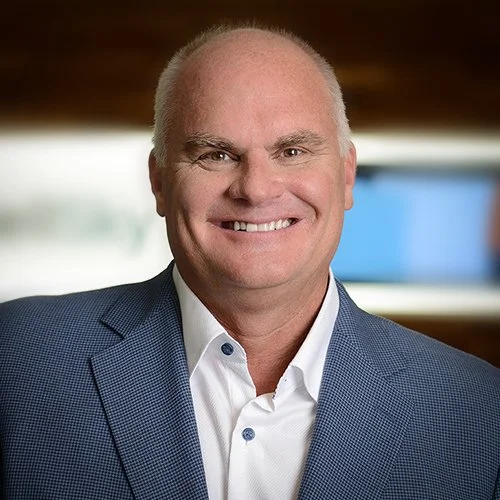
Bill Miller: The Hidden Power of Company Culture
In my world, connection is everything.
On a typical night at Kauffman Stadium, I’m watching balls and strikes. But I’m also watching body language in the dugout, quiet conversations in the tunnel, and a hand on a young player’s shoulder after a tough at‑bat. Those little, often invisible moments are where trust is built and teams are made.
Off the field, when I’m on stage as a keynote speaker talking about trust, leadership, and culture, I see the same patterns. The best teams and organizations execute at game time, but they also connect to each other and the purpose they serve.
That’s why a recent interview on my podcast Rounding the Bases stuck with me.
Bill Miller is the CEO of WellSky, the global healthcare IT company. Its a powerhouse that sits at the center of the care continuum, connecting providers and caregivers with communities. He’s grown WellSky from a small, relatively unknown business into a major player that touches millions of lives each year.
The scale of his company’s impact is impressive, but not as much as the theme we kept coming back to: That in a world obsessed with technology and AI, connection still wins.
SINGLE: connection is the cure
If you’ve ever helped a loved one navigate the US healthcare system, you will understand the feeling that sometimes it doesn’t feel like a system after all. Instead, it can be more like a series of disconnected episodes, and is an experience that Bill see’s up close, every day.
“Working in healthcare, there’s something about it that ends up being very personal,” he explained. “Because every other week, there’s somebody in the throes of a crisis . . . and sometimes it doesn’t go well.”
I’ve watched teams play that way too. Just because nine individuals are wearing the same uniform doesn’t mean they’re really playing together. When there’s no shared context, fans and opponents alike can feel it.
Bill’s vision for WellSky is to reconnect those dots so caregivers can spend more time with their patients, and less time wrestling with technology.
“The history in healthcare . . . has been [that] systems actually can make the job harder,” Bill said. “More documentation and more time away from the patient, as opposed to face-to-face at the bedside.”
His goal isn’t technology for its own sake. It’s connection so that caretakers have the context, the tools, and, most importantly, the time to actually care. He framed it in deeply personal terms, describing a day in the future when somebody shows up to his own house ready to take care of him. He hopes the equipment they will use has the WellSky name on it, because he knows WellSky allows better work to be done.
As someone who tells stories for a living, I can’t help but love that image. At some point, each of us will become part of a similar story. It’s why connection in healthcare is the difference between your parent, your spouse, your child, or even you, feeling like a case number…or a human being.
DOUBLE: Clubhouse connection
WellSky has made 15 acquisitions in recent years, so it makes sense that we spent time talking about growth. Yet despite that incredible expansion, Bill remained adamant that growth without connection does not work.
“The company has a really good reputation of being good at acquisitions, and that was earned on position,” Bill explained. “You’re buying them for some specific reason, you’re not buying them just to make it conform fundamentally to who you are. They become additive to who you are.”
Then came a brilliant metaphor, especially for a broadcaster like me who basically lives in a clubhouse for six months each year.
“When the new set of kids move in the block and they’re not invited to the clubhouse, how does that feel?” he questioned. “We’re up in the clubhouse, but we have new members who need to be up in the clubhouse with us . . . they ultimately make the company better.”
In baseball, when a top free agent or trade acquisition walks in, the culture either expands to include them or closes ranks to protect itself. The difference often hinges on whether the leaders in that room are intentional about connection.
Bill models the same approach. Because when you’re building a culture based on connection, slogans on the wall aren’t enough. It takes the entire teams willingness to welcome new people into the clubhouse when the roster changes.
TRIPLE: c0nnection wins the game.
Lately I’ve been telling audiences that whether or not you consider yourself a “tech person”, these days, we’re all in the technology business, thanks to the speed at which AI has become a part of everyone’s job.
But that raises an even bigger question: If everyone has access to similar technology, what actually sets you apart?
There’s a danger that we all become the same thing, which is why I believe that the culture, trust, relationships, and the connection of it all, matters now more than it ever has before. Bill agreed.
“We will never take for granted the advantageous market share that we have . . . the good will that we have with our clients to give us an excuse not to be progressive and aggressive with respect to AI,” he said emphatically. “What is sacred is our relationship with our clients, and that’s hard to duplicate, because we’ve earned that over a lot of decades.”
At the same time, he is also realistic about what rapid expansion of AI may bring.
“There’s some things that are going to get commoditized,” Bill explained. “But what can’t get commoditized is the history we have with them, our reputation with them. And we can’t take that for granted.”
In baseball terms, AI is like advanced analytics. Every team has data and video, so the edge is no longer about who owns numbers. That comes from who the players trust to interpret those numbers and translate them in a way that builds confidence instead of anxiety.
Put differently, technology might get you in the game. Connection is what wins it.
HOME RUN: connection compounded.
The longer we talked, the more it became clear that connection is a way of life for Bill.
“Everybody that works for me directly . . . I had some relationship that I had fostered over the years and years and years. In the back of my notebook I always would have this list of 40-45 people I would call on if I ever needed somebody,” he explained. “Everybody that works here was in that book at some point in time.”
As someone who has built a career on relationships, from players and coaches to executives and community leaders, that resonated with me. The people you invest in over decades often become your future teammates and partners. It’s like connection…compounded.
Then there’s the WellSky Foundation, which supports vulnerable populations and the organizations that serve them. For many companies, missions such as these are side projects. To Bill, it’s central to WellSky’s identity.
“Part of building that culture was starting our own foundation, and at the time it seemed crazy,” Bill told me. “But if WellSky is the body of this company, the brain of the company…the foundation is the heart.”
Younger generations, including my own kids, want to work someplace where they can belong and contribute, not just collect a paycheck. The Foundation gives WellSky’s people a tangible way to connect their daily work to a larger purpose.
To me, using influence to connect resources to real human need is leadership at its best. Because in every arena I’ve been privileged to work in, whether sports, business or community, one truth shows up on every scoreboard. When we choose connection, we give ourselves a chance to win the long game.
Listen to the full interview here or tune in to Rounding the Bases every Tuesday, available wherever you get your podcasts.
LEARN MORE ABOUT connection FROM JOEL
Book Joel Goldberg for your next corporate event. He draws on over 30 years of experience as a sports broadcaster. In addition, he brings unique perspectives and lessons learned from some of the world’s most successful organizations. Whatever your profession, Joel is the keynote speaker who can help your team achieve a championship state of mind.
FULL TRANSCRIPT
Joel Goldberg 0:24
Welcome in to Rounding the bases presented by Community America Credit Union. I'm Joel Goldberg. Shout out not just to my friends at Community America Credit Union Invested In You, but all the good folks over at Chief of Staff Kansas City. Whether you're in Kansas City, my guest today is, or around the country, Chief of Staff, I love to partner with them. We do on a very regular basis. They believe in people, in culture. If you're looking for a job, looking to hire someone, looking for a great resource, check them out. Chiefofstaffkc.com. Making Connections That Matter. One of the best people that I know in terms of helping me make connections, and I give him a shout out whenever appropriate, is my good friend Howie Fleischer, who introduced me to today's guest, and I'm so excited and grateful that he did. We're talking today about the future of healthcare with a visionary leader who spent decades at the center of its transformation. Bill Miller is CEO of WellSky, the global technology powerhouse connecting providers, caregivers, and communities across the continuum of care. Over the course of his rich career, his groundbreaking growth strategies have been the secret weapon behind the industry's most influential businesses, not only transforming the marketplace but driving innovation and improving outcomes for millions of people around the world. I am excited right now to be joined by Bill, and Bill, it's always good to see you, and to be able to talk to you a little bit. You know. I'm curious, when we, before we started the podcast, you said, you know, you're busy with this, you're busy with this, you're traveling here, you got this going on. I think I know the answer to this. I do know you unplug and get away at times, but when are you not busy?
Bill Miller 2:09
I'm always pretty busy, but I mean, I get my, I get my rest on the weekends, but I keep the weekends pretty busy with my other activities that are end up being a good way to kind of decompress from the week, so largely outdoors, and enjoying, and now starting to enjoy the good humidity in the Midwest.
Joel Goldberg 2:33
It is that time of year, as we're recording, it's so earlier part of June, and it feels like July or August already, with that humidity ramping up. Let's talk about this business. I know where it's at now. We'll talk about where it's going, but I want to talk about where it started, because you have built something massive and something that that is truly remarkable, and something that that really affects a lot of people, a lot of lives, a lot of businesses. How did this all start?
Bill Miller 3:04
So, you know, the funny little secret about WellSky, it was, it was at one point a called Mediware, and it was a publicly traded company. Really small, kind of primarily had been a like, a blood business, so doing a lot of the technical work between blood collections and transfusion and blood storage and blood, blood management, and it's sort of, you know, kind of trundled along. It got taken private in the early 2000s maybe mid 90s, and had a couple of owners along the way, but really kind of never broke out. It stayed relatively small, you know, hovering around less than $100 million You know, when I came here was three, 400 people, and so I, you know, I nobody really knew about the company in Kansas City. It worked in a, ironically, a strip mall that years ago I had started a company in, but it was floundering. I mean, I think it was really struggling to find its identity and its place, and more importantly, where it was going to go and its growth strategy. So I joined in 20-, late 2017 and like I said, it was about 100 million, about three, 400 people, was not growing very, very much, but had, you know, what I like to describe, it had some good bones. It had some pretty interesting assets inside. It had some great people inside, high integrity people, but I think it was just struggling for where it was going to go next.
Joel Goldberg 4:43
Obviously that's that's changed a lot in your time. I know you've got great people as well, and, and really scaled too. When you, when you jumped in, was the vision that you had then where you're at now? Is it, has it changed in ways? How has that all played out for you?
Bill Miller 5:04
It's been one of the few times where I think I maybe, as you get older, you get more accurate about your guesses and your, and your hunches. But I mean, if you look back at the original deck that I put together when I came over here in 2017, we're largely where we thought we would be in terms of the strategy and the capabilities that we were going to build. It didn't go in perfect sequential order, but for the most part it has followed the plan better than anything I've ever done in my life. And so still plenty of work to do, and a lot of tailwinds, and a lot of great directions to go, but the those early thoughts about healthcare, in particular, where Mediware, now WellSky, was going to fit in and play, and what it would evolve to has largely come true. And we've made 15 acquisitions along the way to bolster that, to get in that position, but there's a lot of been a lot of just good, old-fashioned, organic, de novo type of growth as well along the way, and that's been more of the emphasis lately. We, we've been a little less acquisitive lately, but those early, that first three years was a mad dash, a real scramble to get into a really good position, make some really good strategic acquisitions to rebrand the company. You know, we started building our world headquarters at that time, and, and then Covid hit, and that was a whole set of interesting challenges, and we actually, you know, did amazingly well through Covid. I think a lot of what we do, and a lot of what our software supports, actually became in higher demand during that time.
Joel Goldberg 6:46
Yeah, it's interesting. I mean, there by no means is every business did every business struggle, or I mean, everybody had to figure out and do new things, certainly during Covid, but there are a lot of businesses that were very well set up for this, or were able to.. I don't want to use the word capitalized, that's not what it was, but, but I think about that too. Like I mean, if you know, if you're taking over in 2019 or 2020 that's a whole nother level of sprinting and having to figure things out, you at least had three years worth of runway before Covid, and now I would think the last couple of years, it's this this AI push and everything that's going on in terms of technology right now, too. How would you assess those first few years leading into Covid? And then I'm curious, kind of where things are at right now, where it feels to me like everybody is, if scrambling is not the right word, like everybody's trying to figure some things out right now. I know you guys are on the cutting edge of technology, but it feels like everybody is in a race again right now.
Bill Miller 7:48
Yeah, I mean, I'm a pretty simple person. I looked at those three years, and I say this to the team all the time, and I said it at the time, that first three years was easy. There was so much to do and so much to focus on internally, there were acquisitions to make, there was some processes and people that weren't here that just fundamentally had to be part of a scaled up company, and so I liken that first year to buying a house that's broken down and really all you're doing is picking up the yard, painting the house, having a garage sale, getting the place in order, and that was easy. It may have looked hard, but I think in my mind it was easy. There were just fundamental, go do this and then do this next, and the team was all about it and excited about where we were heading. And along the way, you were building identity of branding, you were building a world headquarters, you were making acquisitions that were clearly going to put you in a different position, and so when we got to Covid in 2020 and we did a recap, and it was now the next phase of WellSky, i.e. 2020 to now, I always signaled to everybody this was going to be the harder part. Whether you're going to have to get to legitimate integrations of the things that you've bought, you were going to have to really have a robust organic strategy. Your team was going to continue to evolve, and you were going to be in a little more of a fight amongst your competitors and clients, where also demands were going to go up and up and up as more investment poured into our space. That all has been true. This phase has been it's not been any less exciting or fun. It's just been harder. I like it. Its checkers versus chess. We're playing chess now, because the stakes are higher, the competition is greater, the expectations from clients is greater, and our healthcare system is complicated, and isn't getting any simpler. And our role in that as a technology player still is getting more pronounced, and now it's getting in some ways, I think you know, now we're playing in some ways, I'd say chess under water with how does AI revolutionize what we do, let alone the world around us, and the other aspects of the healthcare structure that works around and with WellSky.
Joel Goldberg 10:12
I think it is such a fascinating time, because whether you're in the technology industry or not, everybody has to be in the technology industry right now. I mean, I suppose you could ignore what's going on and fall way behind, and obviously some know how to use it, some don't. One of the things that I've been saying to audiences now on a very regular basis is, you know, we've got to, we got to stay nimble, we got to adapt, we've got to, none of us want to get left behind, but at the same time I really believe that the culture, the relationships, the trust matter more than ever, because if everybody is leaning in on the technology and I know not everybody has the same thing, then we're all in some form or another living in that world, right? I mean, if all of your competitors have AI and have that too, the danger is that we all become the same thing. I'm not suggesting in any way that WellSky is, because you guys, I think are thinking we're well ahead of the curve, but I'm wondering, as you've scaled, as you've acquired companies, and that's one of the hardest things, right? When companies scale and they grow is to make sure they maintain their identity and they maintain their culture, and I'm just curious, the effort that has gone into that as everybody is sprinting, and you guys, while maybe many are playing checkers, maybe they're playing speed checkers now, and you're playing chess, or you're playing it at an even higher level as others try to play it at that higher level. I hope I'm describing all of that right. What you've been able to do to maintain that WellSky identity and to be able to take care of your people?
Bill Miller 11:50
Well, I mean, honestly, it's a really good point, because I think the company has a really good reputation of being good at acquisitions, and that that was an earned position. I, I, and some of my team here worked at Optum, and we bought 15 companies there, and so trust me, there were some of the early ones we did not do well. We didn't integrate them well, we didn't understand the sensitivities and the soft spots of those business, and I think, as I got to WellSky, that was, that was probably one of the company's strengths, and the team around us really understood what are the fundamental reasons are you buying these companies, and what are you going to do not to break them? You're buying them for some specific reason, you're not buying them just to make it conform fundamentally to who you are. They become additive to who you are, and how do you maintain the good parts of their culture, but still operate one culture and one set of clients and one set of identities and one voice to them, and that's, that sounds, well, I think a lot of companies make it hard. It's not as hard as it should be. It can be done. We are a great example of it being done, but we've had to really be intentional, intentional about maintaining our culture, growing our culture, being inclusive of the new companies that we've acquired, being sensitive about the things that could set them back, being sensitive that you know, when the new set of kids move in the block and they're not invited to the clubhouse, how does that feel? And that's, that's the, that's a little bit of the analogy I use, that we're up in the clubhouse, but we have new members that need to be in this clubhouse with us. How are they going to be additive to what we do, and how do they ultimately make the company better, but we have had to also just really continue in spite of all the distractions and the benefits of AI. One, I would say the adage we apply all the time is we're never going to be the lazy incumbent. We will never take advantage or take for granted the advantage, advantageous market share that we have, the advantageous position we have, the goodwill that we have with our clients to give us an excuse not to be progressive and aggressive with respect to AI and disintermediate ourselves. There's no, I guess, sacred jobs. There are no sacred cattle here. What is sacred is our relationship, as you noted, with our clients, and that's hard to duplicate, because we've earned that over lot of decades, and, and don't take that for granted, and in some ways you're right, I mean, there's, there's, there's some things that are going to get commoditized that maybe used to be special that WellSky did four years ago won't be. They'll be getting commoditized, and they should, and the price of a lot of what we do should come down, but what can't get commoditized is the history we have with them, our reputation with them, and we can't take for that for granted, and they're relying on us, they're relying on us to be fast and progressive.
Joel Goldberg 15:00
It's so interesting, as you're talking about that. I, I think about the book, The Infinite Game, Simon Sinek. Nothing lasts forever, but I don't know that he said it quite that way. It can last forever if you're nimble, if you're adjusting, if you're not just resting on "this is what we always are". It sounds to me as though you and your leadership team and, and all of your people are constantly thinking of ways to evolve, so that you're staying ahead of the game, as you talked about, and I've never heard it put that way about welcoming new people to the clubhouse, so to speak, right? I mean, WellsSky has a heck of a clubhouse, so to speak, WellsSky is a place that people are going to want to go, and I would think that with all these acquisitions, as they come in, like anybody else. What am I getting into here? Are they as good as I think? Are they not? Am I going to be included? Am I not? How critical is that for your scaling? You touched on it a little bit, because when you have something as good as you guys have, it would be easy to rest on your laurels, and it sounds to me as though that inclusivity piece is maybe one of the secret ingredients.
Bill Miller 16:08
It is, I think. We get the most out of our acquisitions. We don't look at them, I mean, our batting average on them being accretive and good is - I'd put it against anybody - but we've had to be very intentional not to alienate the teams, not to see mass exodus. We've been really intentional about reaching out to the clients, because often clients get nervous, who bought you, and what are they going to do with you, and are they going to continue to invest, or my relationships going to stay intact? I wouldn't say we have a...the reality is we don't have a playbook because every acquisition is different. That you make them for different reasons. And each company is different. But there is a fundamental set of philosophies, and it starts with primarily do no harm, and we don't want to harm the business that we just paid hundreds of millions of dollars for, but I'd also include that does not mean do no change. There are some things that are non-negotiable around when you come into WellSky, like around security. There's, we can't allow an acquisition to have a different set of security protocols that are somehow not consistent or not as stringent as our own, because the number one thing that protects our relationship, frankly, with our clients is protecting their data, protecting the sanctity of the business. So, there's some things from the acquisition standpoint that are non-negotiable, but the rest of it, you kind of look at that company and what are they great at, you know, are they great at innovating, building things, are they great because they have a competitive offering that fits right into ours. I mean, there's a lot of, you know, combinations that makes a company appealing, but we really do apply the do no harm in our approach to them. We don't immediately make them start changing their business cards or immediately start making, you know, wearing different shirts or anything like that. It's a little more, I'd say it's a lot more thoughtful about what's going to make one plus one equal three. And most importantly, how does this acquisition make life better for our clients? It's one thing to measure it, you know, from my standpoint, about was it accretive? Did it grow WellSky? But the real fundamental centering point is, how is it going to make us allow for and use our technology for clients to see more patients and have better outcomes. Bottom line.
Joel Goldberg 18:36
You guys support what more than 5 million in my numbers right on that. Care providers, something.
Bill Miller 18:43
Well, care providers were more like in the 150-160.
Joel Goldberg 18:47
I'm getting that wrong. Okay.
Bill Miller 18:48
And they're they're supporting somewhere between five and 6 million places. Yeah.
Joel Goldberg 18:54
Okay.
Bill Miller 18:54
So I think 20,000 different clients across primarily the US, but in some other geographies, and then lots and lots of people going into homes every day, taking care of your aunt. That's the one thing about working in healthcare, and I would say WellSky, like many other companies, and no disrespect to playing baseball or running a restaurant, or you know, paving sidewalks. Working in healthcare, there's something about it that is ends up eventually, if not always, being very personal, because every other week, particularly with the size of my family, or the my management team, there's somebody in the throes of a crisis in the health care system, and sometimes, as you know, and I'm sure it's happened to you, Joel, and your family, it doesn't go well. It doesn't feel like a system. It feels like an episodic treatment that doesn't have context to anything else that's happened with your loved one. Historically, and maybe even the condition they find themselves in now, and that's that makes it easy to get up early and come here and work late, you know, stay, stay put, if you will.
Joel Goldberg 20:13
When, when you're serving that many groups and ultimately that many people, I mean, the 5 million, we start to talk about all the people that are affected by the work of WellSky, are you generally hearing the same thing? Right? I mean, when the fears, the concerns, the challenges of those that you're serving, is that you know, across the United States and even beyond, is that generally following the same pattern? I mean, I know in the simplest form it's look, take care of people. If you take care of people, you're going to be successful. That, by the way, is true in everything, even baseball too. I mean, that's a pretty simple golden rule. But in a world that you're talking about, where oftentimes.. I mean, I'll use the same example, when you go - no offense to a lot of those out there - but when you go to get your car fixed, you wonder whether you're being treated right, and you always feel like you're being wronged. That for sure is the case in the healthcare industry for so many of us. And what do you hear? Do you generally hear the same thing, or does it vary?
Bill Miller 21:16
It varies a little bit, but thematically our clients need, so all of them are suffering from workforce issues, just not enough people for the amount of work that's to be done there, and so anything you can do to help drive retention, make make the people that they hire stay, make their job easier, make signing on and using technology, not don't turn them into technicians, make them better clinicians, so make the make the technology easier to use, that is a consistent thing that we hear. And related to that is simpler. Just make it simpler. You know, all of us use our iPhones every day, and for the most part, it's amazing the how productive these things make you. The history in healthcare, it has been the systems actually make, actually can make the job harder and more laborious, and more documentation and more time away from the patient, as opposed to face to face at the bedside with the patient that is stayed consistent, unfortunately, probably in my whole career in healthcare IT. And I'd like to think I know we're making it better, it never feels if, if people are here late and running fast and traveling everywhere, it's because we never feel like we're moving fast enough, and AI is speeding it up and speeding up innovation at light speed, and so you know, I, I say this, and I want to be careful how I say it, but I'll be transparent, AI has made running a software company fun again, because the speed at which things are being innovated and adopted just really keeps you on your toes. It's intellectually really challenging and fun. It is also pretty rewarding that some of the things that we haven't been able to do, for, you know, some of our road maps used to measure in quarters. Now we're measuring them in days and weeks. That is exhilarating. But you also have to understand we got to do it in the context of being very careful and really responsible, going back to that data sanctity issue, and, and, and making sure that we're not running any red lights.
Joel Goldberg 23:46
With all that, so that's so fascinating to the excitement of something new. I think about the, you know, the, you mentioned the iPhone, the genius of Apple and the iPhones, along with all the money they make, is the simplicity. You don't get a new phone or a new computer from them and pull out a manual. It's a one page thing at most that you don't even need to look at, right? And so they figured that out, but change is always hard for people, and I just wonder what you're hearing about the anxiety over how fast the change is. As exhilarating as it is, it could be dizzying and head spinning as well.
Bill Miller 24:31
Yeah, some of the anxiety is, is what you would expect, which is, is this job displacement. Somehow these agentic kind of capabilities going to replace me as a caregiver? If you look at all the things we're building and people are adopting, they're really just making that clinician way more effective. They're not having to do all this crazy documentation, because now with ambient listening, it's all done for them. All I have to do is kind of proof it, and check it. Boom. Like, the speed at which we're making up for the lack of people who are taking these jobs, and the other thing our clients would also tell you, I forgot to mention, was these people don't get paid enough money. The reimbursement levels do not match the difficulty of this job, and the importance of that job, and I hope Capitol Hill, while it is obviously hopelessly gridlocked, I hope, and we're doing our part in that to, I think, lobby and work on the behalf of our clients, that they should be getting paid a lot more money for the services that they're rendering. And that will help, I think, work on the retention and work on the quality going up, but in the meantime, most of what we're building, and is allaying the fears of our clients. That we're not building agentic robots that are going in the house and and working with your mother and help really rehabilitate her knee, it's really all the things that are around it that the caregivers have had to do manually that they shouldn't have to do anymore, and that's been a goal for a long time. I think the fascinating thing about AI, and particularly cloud code and things like it is just how easy it has become to do that and have a finished solution that's tested and in the market like in a week or two weeks and that would have been work that you know would take months and months.
Joel Goldberg 26:40
The pace is just mind boggling. Mind-boggling and exhilarating, as you mentioned, all at once. Alright, I want to get to my baseball-themed questions. Very long and storied career for you, professionally speaking. What's the biggest home run that you've hit?
Bill Miller 26:54
Well, I can't help to veer off the professional part of that question and say, I, you know, my kids are a home run. I, my kids are just amazing. I have three, and they amaze me every day about how good, what great people they are, and what a difference they're making. But if I had to switch back to the professional thing, I've had some interesting stops along the way, everything from startups to mid-caps, like Cerner, a Kansas City-based company, to United Health Group, a Fortune Five company, to now WellsSky, you know, at the time a pretty small company that has grown into something a lot bigger. But if I had to assess all of that, the WellSky progression and how it has happened, kind of on schedule, I am proud of that. It takes, you have to kind of pause and go take it in for a minute, because it's been pretty remarkable, and I am proud of it. But then it's easy to just put that in the closet, because who cares? Because I live in a world, and I live with a bunch of clients, and God bless them, they should have this expectation. What have you done for me lately? And I think that's the, that's the pressure you feel every day, in spite of the fact that I'm extremely proud of how much it has grown, the market share that it has, and the difference it's legitimately making in people's lives, and and that's people that work here, but it's also the caregivers, and, and most importantly, the people those caregivers take care of.
Joel Goldberg 28:34
You can do the greatest job in the world. It's still going to be, what have you done for me lately? That will always, sure, sure, what's what's what's happening today. What happened yesterday is great, but we move on. You turn the page, good, good, or bad. How about a swing and a miss along the way? And what did you learn from it?
Bill Miller 28:52
Yeah, I think in my earlier career I maybe got deal fever, and I, and United in particular, it was fun to acquire businesses. It was a first time I'd done it, you know, serially, and there was one along the way where I got involved in it, kind of emotionally. Wanted to win at all costs. There were other people bidding on it, and I ran some red lights. I, I ignored what were some red lights with respect to what was really going on in that company, and it turned to be, it turned out to be an abject failure. It's the, it's the one acquisition on my, on my, in my historical batting average that is a whiff, but I learned, I think, to be disciplined in looking, not getting caught up in just the winning of it. But this, but it had to be a great company, it had to have a great management team, it had to have solid financials, it had to have a good culture, and when I sense those things, well, let's put it this way. That acquisition and how it failed has informed some, you know, 25 acquisitions thereafter, because every time I go back to not let's not make that mistake that I made back in early 2000.
Joel Goldberg 30:20
You learn from them, and, and I think you may circle back, you may not, but we, I feel like we've talked probably a lot about this, so we'll see where you go with it, but small ball to you, What are the little things that lead the big results at WealthSky, and for you?
Bill Miller 30:35
Well, I'd say, for me personally, I think you know Howie's a great example, and Howie, he's a great, a great model for this of maintaining and building your network, and that has, that has helped me in so many ways, but particularly at WellSky, I'd say everybody that works for me directly, of the executive management team, I had some relationship that I had fostered over the years and years and years, and in the back of my notebook I always would have this list of 45, 45 people I would call on if I ever needed somebody to come in and work with me on some concept, and everybody that works here was in that book at some point in time. And, but it takes effort, and this is what I love about Howie. I mean, he just is, you know, you know him as well as I do. He's just tireless in staying connected in his network and promoting connections between them. I'd say, and I did touch on this, I would say, you know, just not taking anything for granted. You get taught that lesson all the time about things that you've been counting on in business that were true yesterday that aren't true today. AI has been a great example of it, but he also personally, you know, I'm, you know, health encounters with my brothers, my sisters, my friends always kind of pull that into focus, and you know, remember to kind of live each day as if it were your last, and I think this team around WellSky thinks that way and does think about being decisive and not lazy, and then I'd say the last thing, you know, along with the golden rule, but just stay curious, and I think it's related to not taking things for granted. I mean, there is so many times you can feel relatively set, particularly at my age, that I am who I am, but AI has been a great example of the things that I have had to learn and wanted to learn and stayed curious, and being able to, I always said this, I'm not a technologist by my practice, I'm a technologist by proxy. I've never coded a line of code in my life until now, you know, 58 years old, 59 years old, I, I coded the first thing I've ever really coded in my life with Cloud Code. I, that's, I think it's what it takes to I think stay hungry and continue to innovate, and I take that personally, but I know that's that is a philosophy inside of WellSky every day, the way we think about our jobs.
Joel Goldberg 33:18
Well said, and I'll echo everything you said about Howie, and a reminder that it doesn't matter how you do it, Howie's going to do it more in an old school way, whether you're doing it in an old school way, a new school way. I'm pretty sure that Howie, and if you're listening to this, Howie, you can call me, because it won't be a text, it'll definitely be a call, old school, and let me know that you actually are using AI. I'm guessing he's probably not using a whole lot of it, but yet he is the master of relationships and connections, and leaning into those and paying attention to them every single day. That's a golden rule that never goes away. How you get there might change, but the ability to connect with people, take care of people, never goes away. It really is the ultimate small ball. So, I just wanted to highlight that, because anyone that knows Howie Fleischer knows that he is as good at this as anyone. You don't have to do it the exact way he does it, but you have to have the daily habits of doing it. That's what he does so well.
Bill Miller 34:14
Yep. So, I think he genuinely just cares about people
Joel Goldberg 34:18
100% You can't, you can't fake that.
Bill Miller 34:21
No, no.
Joel Goldberg 34:22
I can't fake, you can fake it for a little bit. You can't fake it every day.
Bill Miller 34:25
Yeah.
Joel Goldberg 34:26
Day after day, week after week, month after month, year after year. Okay. Four final questions as we round the basis. First thing, let me talk a little bit about your background. What, what did your background.. you said, like, so many different, you know, small big startups established your background at Cerner, Optum Insight. What did those do to shape you to the leader that you've become today?
Bill Miller 34:51
Well, I think each of them, even my startups, the startups probably had the biggest effect on me because I was younger. In those formative years. I wasn't married. I didn't have a lot of risk, and I learned the old adage that I'm only, only going to eat what I kill. And I think it does make you really focus on your priorities. You realize that nothing's going to happen unless you do it, and those habits and that way of thinking I'm glad I did that at the beginning of my career, because I don't know many people that would jump off the cliff and do that later in their career, and the lessons you learn don't all, I think, perfectly export into bigger companies, but if you're still kind of ultimately competitive, and you think about winning, and you understand how you got to do more with less. That all these lessons that startups teach you, and you're going to win on creativity and hustle, that's that are those have been great lessons to carry into a Cerner and United, because, and while I'm a proud alum of those organizations, if I had to be critical, when you get in those big bureaucracies, that type of thinking one doesn't always get noticed or awarded, and two, you're often a kind of a singular voice in that capacity, because those big bureaucracies tend to, there's groupthink, there's protectionism. And that being said, at Cerner and at Optum and United, I learned how to scale things, and I don't know that I had that skill set inside of a startup. While the startups grew and did well, there were things I just didn't understand about scale and building it to last, and really understanding the infrastructure you needed to become a publicly traded company or a billion dollar company, and so I learned also to think much bigger, particularly at Optum, and working for Steve Emsley and others, you really got to think on a scale that was worldwide, was nationwide, was I often say United had the ability to make its own weather, to work at a company like that was tremendously informative and complicated, but it was, it was also really rewarding that you could do things at a state level or at a government level that you could see actually changing and affecting policy or outcomes, and didn't always go our way, if you will, but those were really good lessons to watch, and at the feet of some very talented executives, in spite of the fact that company has been through a lot of turmoil and a lot of bad change, and a lot of ways they're they're recreating themselves and and putting it back together, but it was, it was really fun to be a part of a growth spurt that was just, you know, hard, hard to ever going to recreate
Joel Goldberg 38:05
A second question, as we round the bases, and I don't want to overlook this, even though I have had your executive director, Brett Fuller, on, there's so much great work being done with the WellSky Foundation, and that's a, that's a massive piece, I believe, of the identity of WellSky. Can you talk about that? Because you're really impacting a lot of lives in a different way there.
Bill Miller 38:27
Yeah, I, I light up when we get to talk about the foundation, because running WellSky is great, and I love it, and it's a great culture, but part of building that culture was starting our own foundation, and at the time it seemed crazy. I came into the company, and there was so much to do in that first three years, as I mentioned, like building a foundation on the side of it. People looked at me like we had three heads, but there was a lot really good reasons to do it. One, if you looked at the software that we build and who it supports, then you look a little bit, click down and see who's supporting those organizations, who's supporting these foster care organizations, these hospice organizations, these anywhere these vulnerable populations exist. It's a pretty skinny gene pool of supporting those organizations financially, and so there's a great external reason to do it, but the internal reason to do it, to have our teammates rally around their own thing, their own foundation that could make a difference, and you, we can say what we want about millennials, and some of this, you know, some of the genially type of science, but I, this my kids are great examples. They go to places where they feel like they can give back, and the foundation actually became a great way to recruit people. And I say this about the foundation all the time. If, if WellSky is the body of this company, the brain of this company, the foundation is the heart. It's our chance to give back, both with time and money, and it's made a big impact. It has, it continues to get bigger and bigger every year. Brett's doing a great job, but almost to a person here at WellSky, both Kansas City and countrywide, everybody's participating in it in one way or another, to try to give back and make a difference.
Joel Goldberg 40:25
Pretty, pretty cool stuff. And for anyone that wants to learn more, WellSkyfoundation.org. The website for WellSky is WellSky.com. We'll get both of those in the show notes, but WellSkyfoundation.org doing great work, and, and you know, oftentimes not talked about, but I think it's important to talk about that as well. Very interesting, too, that that's become a recruiting tool for you. Okay. Third question, as we round the bases, we'll start to wrap this up here. What keeps you up at night in terms of technology or business?
Bill Miller 41:00
Yeah, I think the thing we're constantly vigilant about is just security. That's the thing that you know, it's we're any software companies chronically getting attacked. You've heard about some of the breaches that have heard some in healthcare. That's the thing that just, you know, we always feel like we've got to be, and we are on our toes 24 by seven, but that's the thing I do, and you know, I lament it a little bit, because it's so much money has to get poured into that, that really doesn't do any good for our clients, it's money wasted combating, you know, frankly, you know, individuals and organizations that aren't out to do any good, you know, and that's that's money that we have to spend to protect our clients and protect ourselves, but I wish it was, it was being dumped in more beneficial.
Joel Goldberg 41:56
Cost of doing business, I guess.
Bill Miller 41:58
It is.
Joel Goldberg 41:58
Nowadays. Final question, the walk off. You're coming up, what? Next year? On 10 years since, since taking over, I guess, right? 2017 and 2027 Where do you want to see this? You're not going to work forever. I'm not asking you when you're stopping, but where do you want to see WellSky in 10 years?
Bill Miller 42:17
Yeah, so I, you know, that's a really interesting question to ask in the context of Kansas City, because the unfortunate thing about Kansas City, and there are some really great examples, obviously, what Peter Maluk is doing, but we'd all have to admit there's a lot of great companies that aren't here anymore that has dissolved over time, some of which I worked at or worked with this company. This city has had a hard time really holding on to its WHQs, and I really wanted to see this company continue to grow, be a great company and a contributor and an organization that gives back to Kansas City as its headquarters. Stay here. It's got a ton of runway ahead of us. Certainly, what we do is in high demand, and so over the next 10 years, I'd like to see it quadruple in growth as it has over the past few years, and employ a great set of people that are as passionate about the people that are here now, to you know, making health care better. And if I had to put it in selfish terms, that someday when someone rolls up to my house getting ready to take care of me, they're using a great tool that makes them a better caregiver, and the name on it is WellSky, and that would make me proud. That has happened, actually, to members of my family, and it does make you feel like you're, you're in, you're, you're, you're in it for good reasons, and for great outcomes. And I, I would love to see WellSky continue that on, and with a great leader, and a great set of teammates that want to just continue the mission.
Joel Goldberg 44:00
It'd be nice to see that all happen here in Kansas City, and if anyone listening, if you're in Kansas City, and you're not sure if you're familiar with WellSky, you've passed their buildings many times on 69 highway. If you look on the west side by college and 69 highway, it's right there, and growing. Seems like it's always, always growing, which would certainly pertain to everything that we've talked about today. The websites again for WellSky, if you want to check it out, wellsky.com the foundation, wellskyfoundation.org. Bill, thanks so much for spending time. I know you're a busy man, I really appreciate it. I could talk about the culture, the scaling, and everything that you're doing, the purpose all day long, but really grateful for the 40 plus minutes that you're able to give us today.
Bill Miller 44:43
Hey, Joel, man, I really appreciate you reaching out and wanting to do it. You've had some really heavy hitters on this thing. I don't consider myself in their, in their league, but it's sure fun to talk to you, and, and also your dedication to to this city, and obviously the Royals, and great. Things happening there, and I'm excited about what happens next, and what part you've played in helping us and the team get there. So, thank you.
Joel Goldberg 45:08
I appreciate that. 19 years been here and not going anywhere anytime soon, or hopefully ever, because it is - it's a great place to live, and you know that. I know that, Bill. Thanks again so much.
Bill Miller 45:18
You bet. Thanks, Joel. Bye.